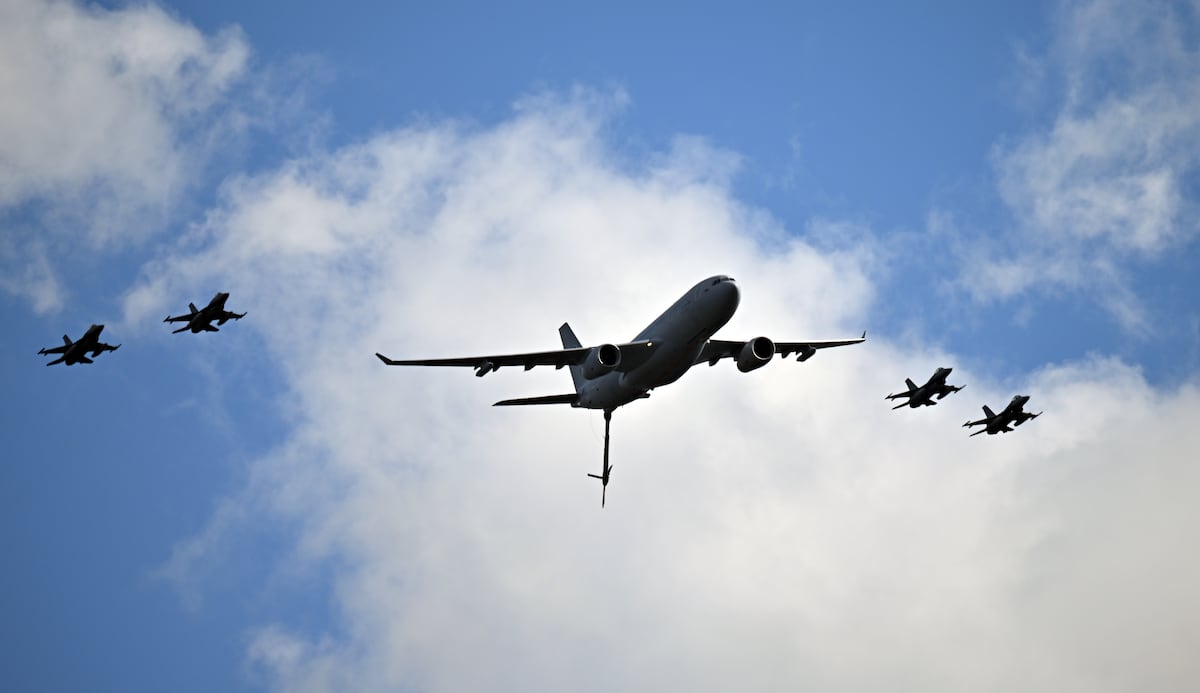
Italy will buy six Airbus A330 MRTT tanker aircraft in a €1.4 billion ($1.6 billion) deal, replacing a planned Boeing KC-46 acquisition after suspending that order in 2024. The contract includes 10 years of logistic support and appears to have been won by Airbus as the sole bidder. The move underscores a broader European preference for common defense platforms and reduced reliance on U.S. suppliers.
This is a modest but directionally negative signal for BA because it reinforces a broader procurement pattern shift away from U.S. platforms in a segment where after-sales support, fleet commonality, and multi-year spares contracts matter more than the initial hull sale. The second-order issue is not the lost unit order itself; it is the cumulative erosion of NATO-standard procurement preference, which can weigh on future tanker, ISR, and support-aircraft competitions across Europe over the next 12-36 months.
The competitive read-through is better for Airbus than the headline implies. Once one large European air force commits to a platform with a long logistic tail, it strengthens the case for pooling, training interoperability, and mission-system standardization, creating a self-reinforcing funnel for follow-on maintenance and retrofit revenue. That puts pressure on BA’s defense narrative at the margin, especially because this is a category where program timing slippage and cost overruns can push buyers toward perceived certainty rather than technical superiority.
The contrarian view is that investors may over-index the geopolitical symbolism and underweight the small absolute financial impact. For BA equity, this is not a near-term earnings event; it is a sentiment and pipeline event with low single-digit basis point impact on revenue, but it matters if repeated across allied procurements. The key risk to the bearish read is that U.S. policy or pricing concessions could rapidly re-open future bids, so the signal is strongest over the next two quarters rather than as a permanent loss of franchise.
For defense suppliers, the bigger implication is that Europe is increasingly treating strategic autonomy as a purchasing criterion, which could redirect spend toward European primes and away from U.S. platforms in any tender involving sustainment dependence or sovereign readiness. If that spreads, BA’s commercial defense adjacencies face more competitive friction than this one order suggests, and the market may not be fully pricing a gradual narrowing of addressable share in allied support aircraft.
AI-powered research, real-time alerts, and portfolio analytics for institutional investors.
Request DemoOverall Sentiment
neutral
Sentiment Score
0.15
Ticker Sentiment
