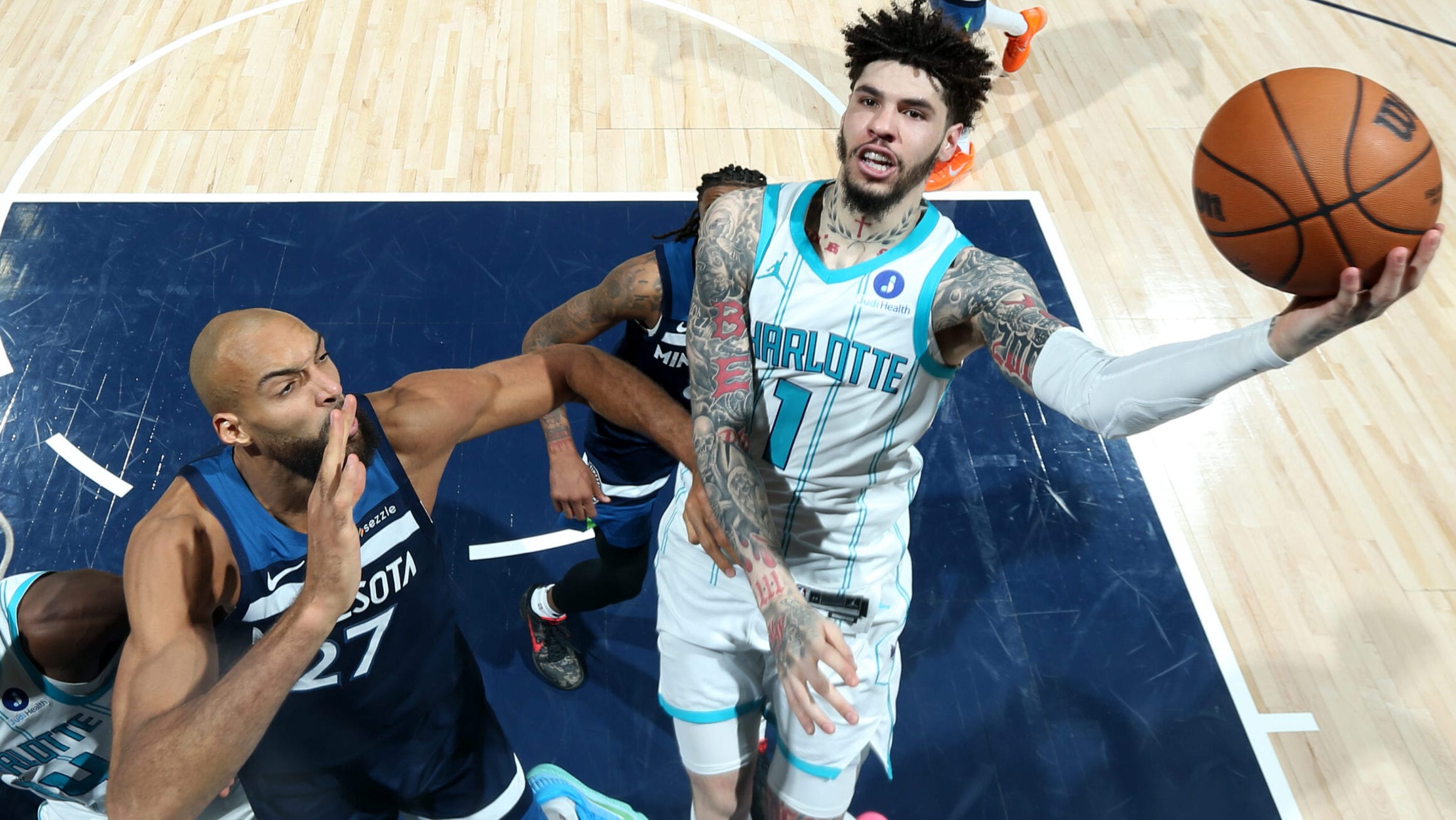
The Minnesota Timberwolves reportedly acquired LaMelo Ball and Josh Green from Charlotte for Naz Reid, a first-round pick, three first-round pick swaps and three second-round picks. The deal materially reshapes both teams: Minnesota gains a high-end playmaker for Anthony Edwards, while Charlotte loses Ball after posting a 123.2 offensive rating with him on court versus 110.6 off. The article focuses on fit and lineup impact rather than broader financial or market implications.
This is less a single-player swap than a portfolio re-optimization around one scarce asset: high-level shot creation. Minnesota is effectively betting that Ball’s passing gravity raises Edwards’ efficiency enough to offset the loss of frontcourt scoring redundancy. The second-order effect is that the Wolves’ offensive variance should fall in late-clock possessions, but their defensive floor may become more fragile if they can’t replace Reid/Randle with a playable forward quickly; that makes the next 4-8 weeks about roster construction, not just chemistry. The market should underappreciate how much the downside is concentrated in lineup imbalance. Gobert’s value is highest when he can stay anchored next to a credible four; if Minnesota is forced into more small-ball or developmental minutes at the four, his on-off impact becomes more volatile and easier to attack in playoff matchups. That creates a structural risk that the trade improves regular-season aesthetics while worsening postseason adaptability unless they add a spacing forward with real size. Charlotte is the more interesting contrarian setup. The consensus will likely treat this as a reset, but the offense may not collapse as much as the star-exit headline implies if White can inherit the pace/creation burden and the new spacing is cleaner with Reid. The key question is whether the Hornets were a “Ball-dependent good offense” or a “Ball-enabled ecosystem” — if it’s the latter, the team can preserve enough scoring to keep the rebuild on schedule while improving possession quality for Miller and Knueppel over the next 1-2 seasons. From a timing perspective, the first catalyst window is preseason/early regular season rotation evidence. If Minnesota’s non-Gobert minutes remain negative and the team is forced back into a two-big look, the trade will be judged as a short-term creation gain but a long-term asset allocation mistake. If Charlotte’s offense stays top-half without Ball, the move reads as a durable re-rating event for the roster, not a tank signal.
AI-powered research, real-time alerts, and portfolio analytics for institutional investors.
Overall Sentiment
neutral
Sentiment Score
0.05
Ticker Sentiment
