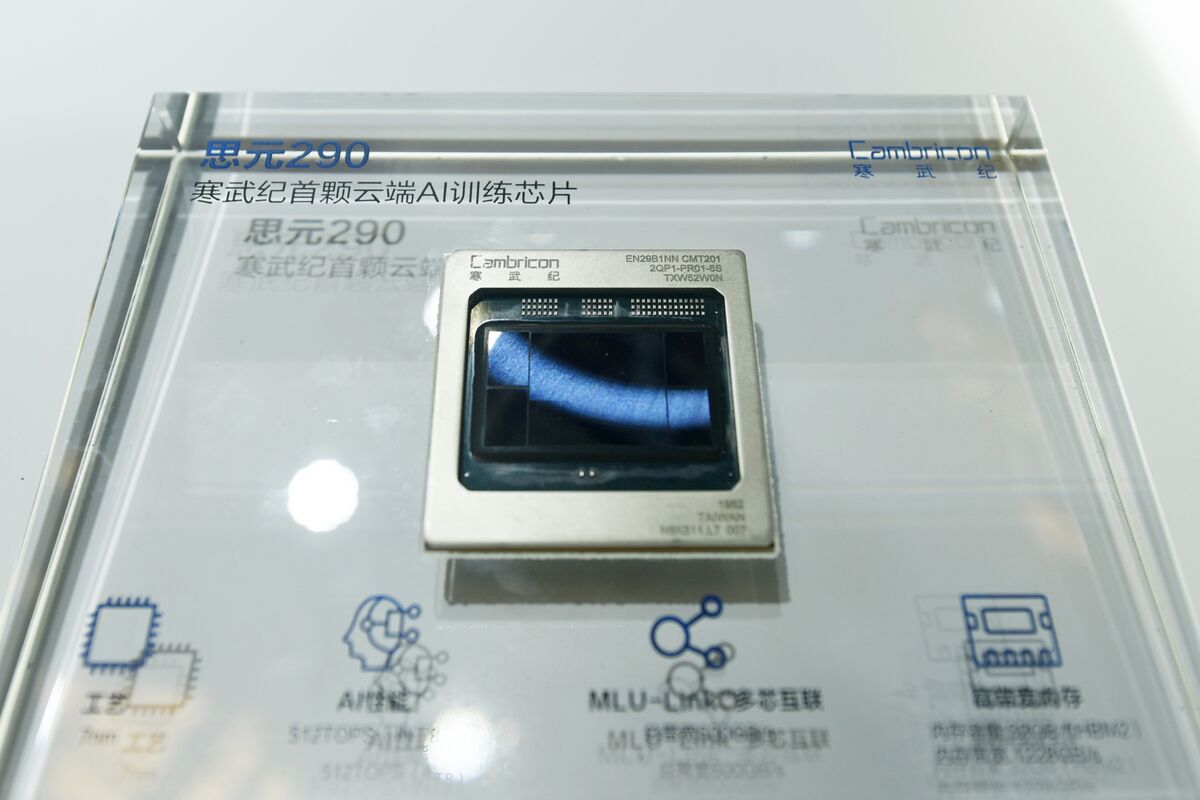
Cambricon plans to more than triple AI chip production in 2026, targeting delivery of about 500,000 accelerators including up to 300,000 units of its high-end Siyuan 590 and 690 models. The Beijing-based firm aims to capture share from Huawei and fill a gap left by Nvidia’s enforced exit by relying primarily on SMIC's N+2 7-nanometer process. The scale-up signals a significant push to reshape China’s AI accelerator supply chain and could materially affect domestic semiconductor competition and supplier demand.
Winners are Cambricon and upstream foundry SMIC (0981.HK) plus Chinese cloud/data-center operators that can buy lower-cost local accelerators; losers are NVIDIA (NVDA) exposure to China, reseller ecosystems and any premium-priced imported GPU suppliers as local chips can undercut prices by an estimated 15–30% in-market. Competitive dynamics point to fast near-term share shifts inside China (target: Cambricon 300k high-end units of 500k total in 2026) that will erode NVDA’s pricing power in China even if NVDA retains global leadership.
A 500k-unit local supply lift materially tightens the China-specific supply curve while leaving global demand intact; expect greater foundry utilization at SMIC and upward pressure on wafer/substrate and specialty-chemicals suppliers (single-digit to low-teens % incremental demand). Cross-asset: NVDA equity/IV is most sensitive (headline-driven intraday moves ±5–15%), CNH may strengthen modestly on tech self-sufficiency narratives, and Chinese sovereign/corporate spreads could tighten for semiconductor names if capex ramps are confirmed.
Tail risks: fresh US export controls, missed N+2 yields at SMIC (<60% yield by ramp) or software/driver failures that prevent customer switch are low-probability/high-impact negatives. Time horizons: immediate (days) — NVDA headline volatility; short-term (3–12 months) — re-rating of SMIC/Cambricon-linked names; long-term (2+ years) — structural market share shift in China up to 10–25% of high-end accelerator spend.
Catalysts to watch that will accelerate or reverse this trend: public SMIC N+2 yield reports, Cambricon verified shipment numbers (quarterly), Chinese customs imports of NVIDIA datacenter GPUs, and any US/ALLIED export-control announcements within 90 days. Absent these confirmations, the market may be underestimating execution risk despite the optimistic narrative.
AI-powered research, real-time alerts, and portfolio analytics for institutional investors.
Request DemoOverall Sentiment
moderately positive
Sentiment Score
0.45
Ticker Sentiment
