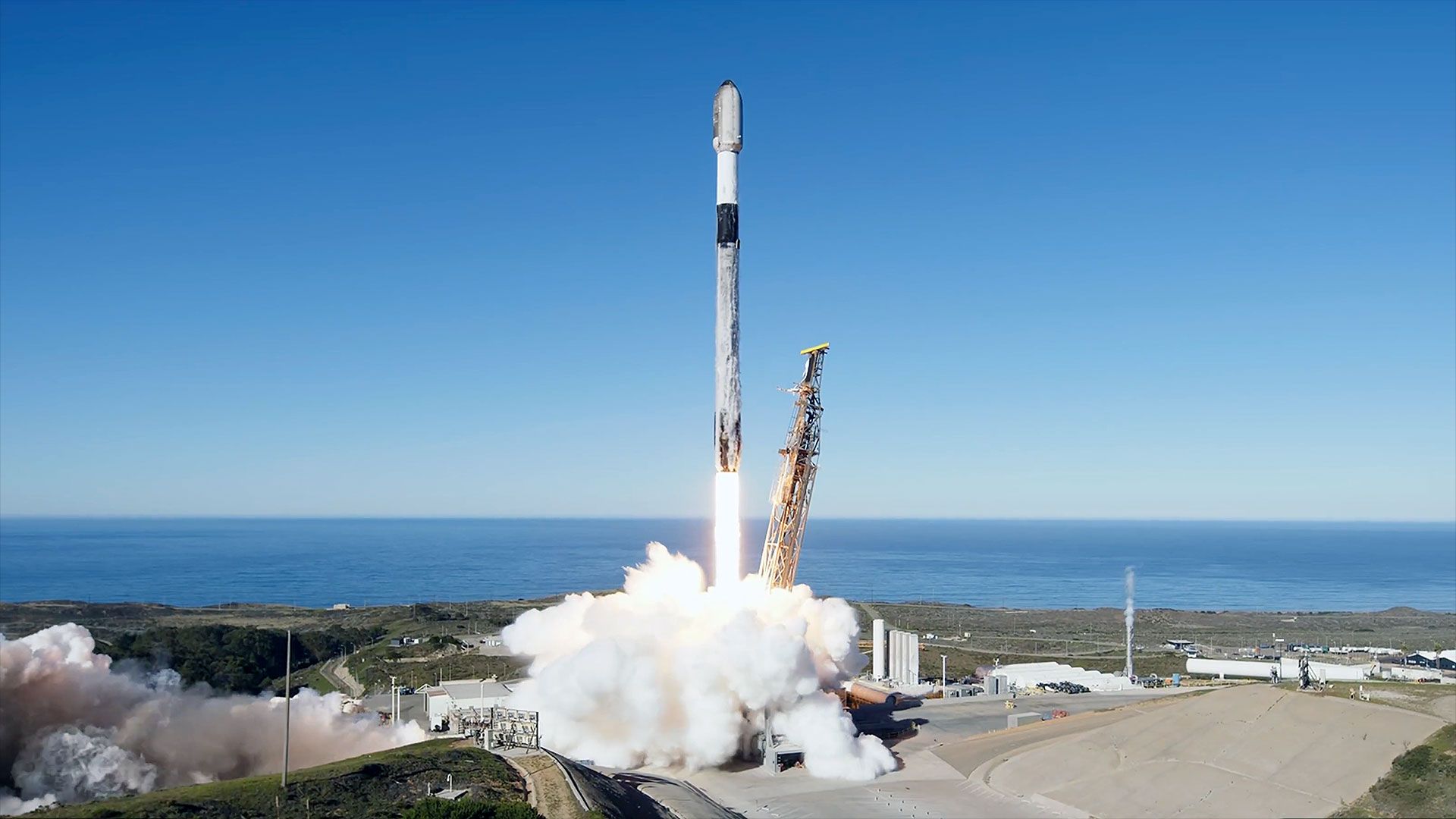
A SpaceX Falcon 9 lifted off from Vandenberg SLC-4E on Dec. 7 at 9:58 a.m. PST carrying 29 Starlink satellites (Group 11-15); the second stage reached low Earth orbit about nine minutes after launch and satellites were slated for deployment roughly an hour after liftoff. Booster B1088 completed its 12th flight and landed on the droneship "Of Course I Still Love You," marking SpaceX's 115th Starlink launch and the company's 157th Falcon 9 flight of the year, bringing the Starlink constellation to over 9,100 operational satellites and expanding capacity for global broadband, in‑flight Wi‑Fi and cell‑to‑satellite services.
Market structure: SpaceX’s continued high cadence (115 Starlink launches; >9,100 sats) shifts pricing power toward LEO constellations and companies that integrate terrestrial-mobile + satellite (e.g., TMUS). Direct losers are GEO-focused incumbents (Viasat/VSAT, Intelsat-like exposures) and satellite insurers; launch suppliers that don’t serve reusable-rocket models face margin compression. Cross-asset: expect compressing equity multiples for GEO satellite stocks, falling implied vol on successful launch sequences, and tactical bond spread tightening for top-tier defense primes as demand for secure ground/mesh systems grows.
Risk assessment: Tail risks include an on-orbit collision or regulatory moratorium (could cut LEO growth 30–60% in 12–24 months), major launch failure that halts reuse economics, or aggressive entry by Amazon Kuiper (deep-pocketed competitor) within 2–4 years. Short-term (days–weeks) market reaction likely muted; medium-term (3–12 months) contractual wins/losses and FCC rulings matter; long-term (2–5 years) expect ARPU erosion for satellite broadband by ~10–30% if capacity continues ramping. Hidden dependency: SpaceX’s private capex and vertical integration — public suppliers’ revenue upside is contingent on non-SpaceX constellations scaling.
Trade implications: Tactical trades favor wireless and semiconductor exposure that enable user devices (TMUS, QCOM) and defense primes (NOC, LHX) over GEO satellite operators (VSAT). Use pair trades to express relative weakness in legacy satellite names vs. terrestrial/defense beneficiaries; use defined-risk options to cap downside given event risk windows (FCC decisions, Amazon Kuiper milestones). Entry: act within 2–6 weeks to position ahead of expected winter regulatory filings; horizon 6–24 months.
Contrarian angles: Consensus underestimates insurance/space-debris costs — a single major collision could increase launch/insurance costs 20–40%, favoring incumbents with government contracts and lowering SpaceX economics temporarily. Conversely, Amazon Kuiper is an underpriced tail risk that, if accelerated, can halve LEO pricing power over 3 years. Historical parallel: fiber overbuilds (2000s) where capacity growth crushed ARPUs; similar commoditization could create multi-year distress in GEO satellite names and opportunity in hardware/defense contractors.
AI-powered research, real-time alerts, and portfolio analytics for institutional investors.
Request DemoOverall Sentiment
neutral
Sentiment Score
0.15
