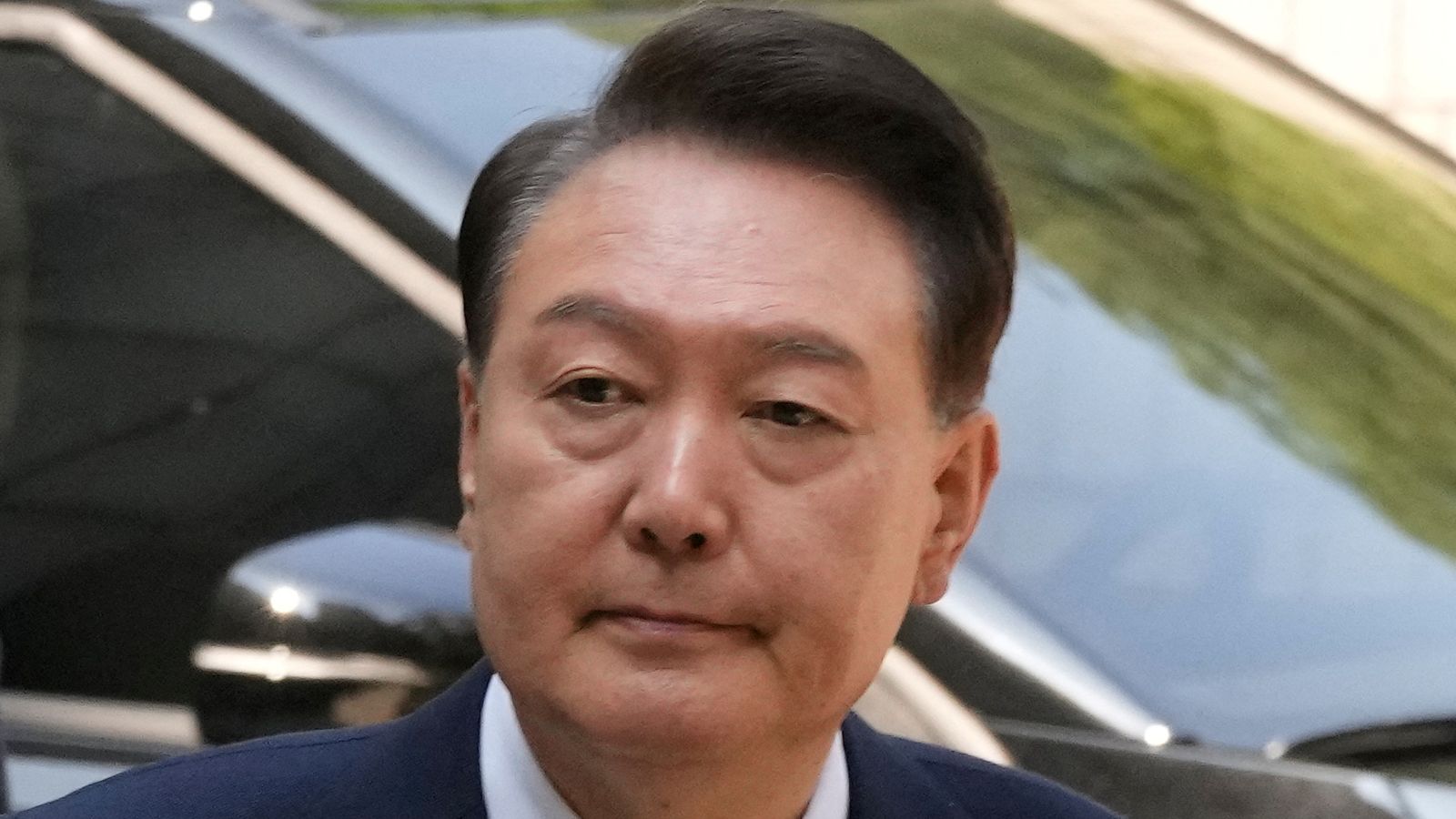
Former South Korean president Yoon Suk Yeol was sentenced to five years in prison after a Seoul court found him guilty of mobilising the presidential security service to block an arrest warrant, fabricating official documents and bypassing legal procedures for his short-lived martial law decree of 3 December 2024 (overturned after six hours). The ruling, the first conviction linked to the incident that led to his impeachment and removal, comes as prosecutors seek the death penalty in a separate insurrection trial; the episode has already triggered widespread protests, a mass arrest operation and heightened political uncertainty that could pressure investor sentiment toward Korean assets and policy stability.
Market structure: Political convulsions in Seoul favour sovereign/hard-currency safe-havens and exporters with global cash flows over domestically-focused cyclicals. Expect an initial 3–7% knee‑jerk hit to the KOSPI/EWY and a 1–4% KRW weakening as foreign investors (roughly 30–35% of market cap) reassess political risk; domestic banks, insurers and consumer names take the brunt. Defence, security‑services contractors and risk‑premium plays (global gold, USD) are relative winners in the near term.
Competitive dynamics & cross‑asset: Short‑term pricing power moves to exporters with dollar revenue (semiconductors, shipbuilders) as KRW falls, partially offsetting equity-market losses; domestic lenders face funding cost pressure if KTB yields jump +10–40bps. Volatility will lift index and FX options vol — candidate trades: buy USDKRW calls, buy EWY puts, sell short-dated KTB futures. Oil and base metals should be neutral absent supply shocks; gold will benefit modestly.
Risk assessment: Tail risks include mass unrest, snap elections or sanctions on political actors that could widen CDS by >30bps and prompt >10% equity drawdowns; low probability but high impact over 1–3 months. Immediate (days): flow-driven liquidity moves and vol spikes; short (weeks–months): capital outflows and policy uncertainty; long (quarters): fundamentals (chips demand) reassert if stability returns. Hidden dependency: US-ROK alliance and chip supply chains mean US policy responses could amplify market moves.
Trade & contrarian view: History (Park impeachment 2016–17) shows sharp initial discounting then recovery in 6–12 months for export champions — market may overprice structural damage. Tactical overweight on high‑quality dollar earners while hedging political risk is superior to broad market sell‑offs. Size risk positions modestly (1–4% portfolio) and use option structures to control downside.
AI-powered research, real-time alerts, and portfolio analytics for institutional investors.
Request DemoOverall Sentiment
moderately negative
Sentiment Score
-0.45
