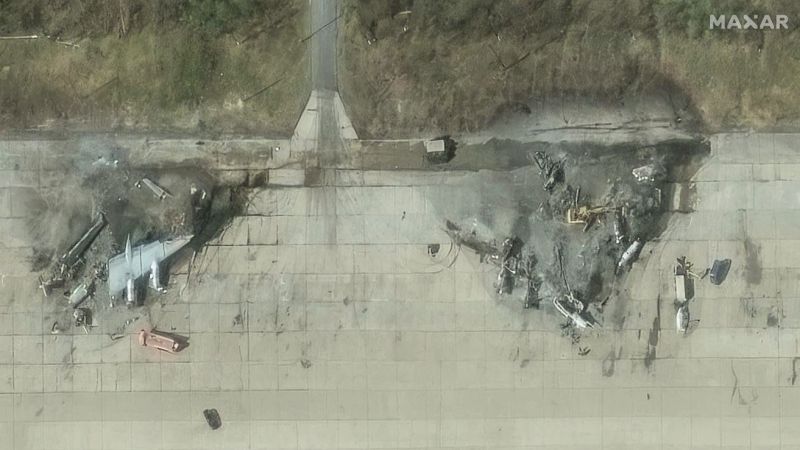
A recent Ukrainian drone strike on Russian strategic bombers has raised concerns among US military officials and analysts regarding the vulnerability of high-value US aircraft at both domestic and foreign bases. Experts highlight the lack of hardened shelters for US warplanes, making them susceptible to attacks, similar to the uncovered Russian planes targeted in the Ukrainian operation. While hardening bases is costly, the US faces a budget dilemma of prioritizing defensive measures versus offensive capabilities, with some analysts suggesting that improving US strike capabilities could force potential adversaries like China to invest more in defensive measures, thereby limiting their offensive capabilities.
A recent Ukrainian drone operation, reportedly impacting numerous Russian aircraft including strategic bombers and causing an estimated $7 billion in damages, has starkly illuminated significant vulnerabilities for United States high-value air assets. U.S. Air Force Chief of Staff, Gen. David Allvin, acknowledged that U.S. bases, both domestic and international, are 'essentially completely unhardened,' lacking sufficient fortified shelters to protect aircraft costing up to $2 billion each, such as the B-2 bomber, from drone or missile strikes. This vulnerability is further underscored by think tank reports, such as one from the Hudson Institute, highlighting potential threats from China to U.S. military installations globally, including within the continental U.S., where war game simulations indicate the majority of aircraft losses would occur on the ground. For instance, Anderson Air Force Base in Guam, a critical Pacific facility, reportedly has no hardened shelters despite hosting B-2, B-1, and B-52 bombers. The U.S. consequently faces a budgetary dilemma: investing in defensive measures like hardened shelters (costing approximately $30 million each) and counter-drone systems, versus prioritizing offensive capabilities. While new offensive platforms like the B-21 bomber (expected at $700 million each) and the F-47 fighter ($300 million each) are in development, Gen. Allvin cautioned they could 'die on the ground if we don’t protect it.' Conversely, some strategists propose that enhancing U.S. strike capabilities could compel adversaries like China, which has invested in over 650 hardened aircraft shelters near the Taiwan Strait, to allocate more resources to their own defenses, thereby limiting their offensive investments.
AI-powered research, real-time alerts, and portfolio analytics for institutional investors.
Request DemoOverall Sentiment
strongly negative
Sentiment Score
-0.60
