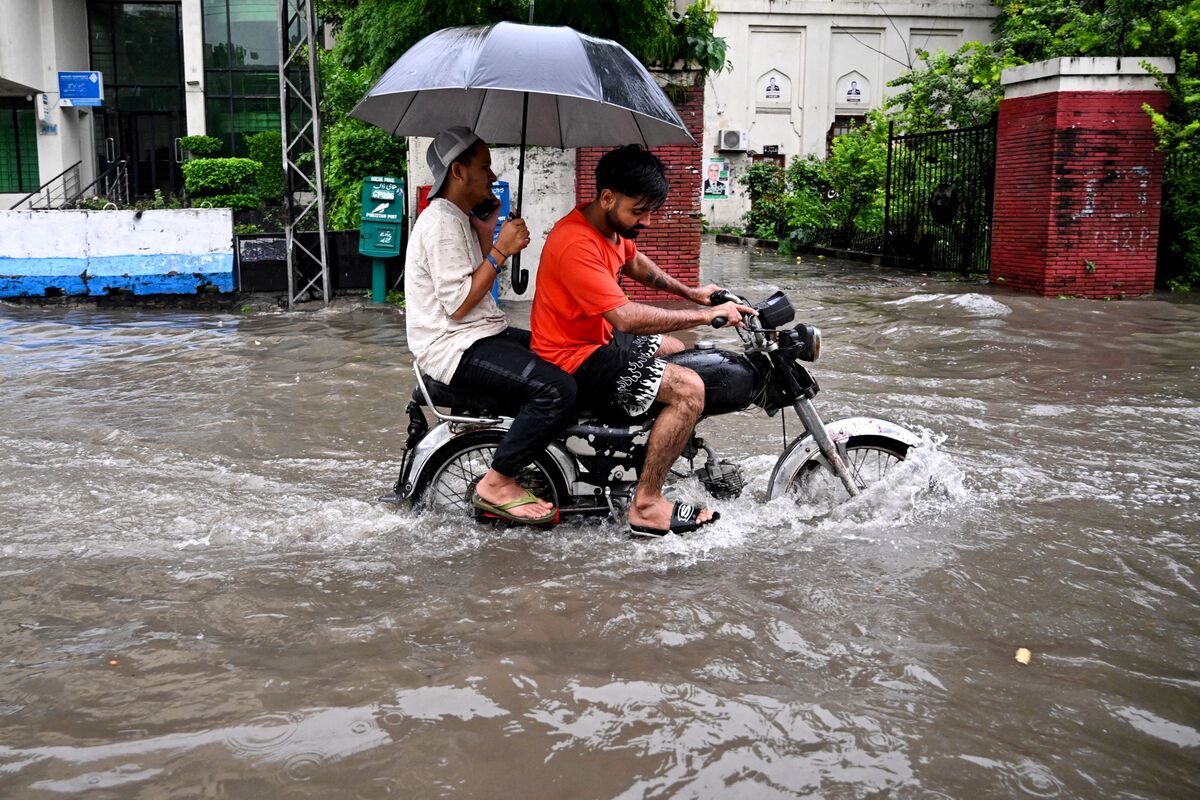
Pakistan's consumer price index inflation eased to 3% year-over-year in August, falling below the median estimate of 4% and down from 4.1% in July. Despite this cooling, torrential monsoon rains pose a significant risk, threatening to disrupt supply chains and potentially reignite price pressures.
Pakistan's headline inflation showed a notable deceleration in August, with the Consumer Price Index rising 3% year-over-year. This figure is significantly below the 4% median estimate from a Bloomberg survey and represents a slowdown from the 4.1% rate recorded in July, indicating a potential cooling of price pressures in the economy. However, this positive data point is overshadowed by a considerable forward-looking risk. The ongoing torrential monsoon rains threaten to cause severe supply chain disruptions, which could rapidly reverse the disinflationary trend by creating shortages and driving prices higher. The situation presents a mixed signal: while current inflation data is favorable, the economic impact of the floods introduces significant uncertainty into the future price outlook.
AI-powered research, real-time alerts, and portfolio analytics for institutional investors.
Request DemoOverall Sentiment
mixed
Sentiment Score
0.00
