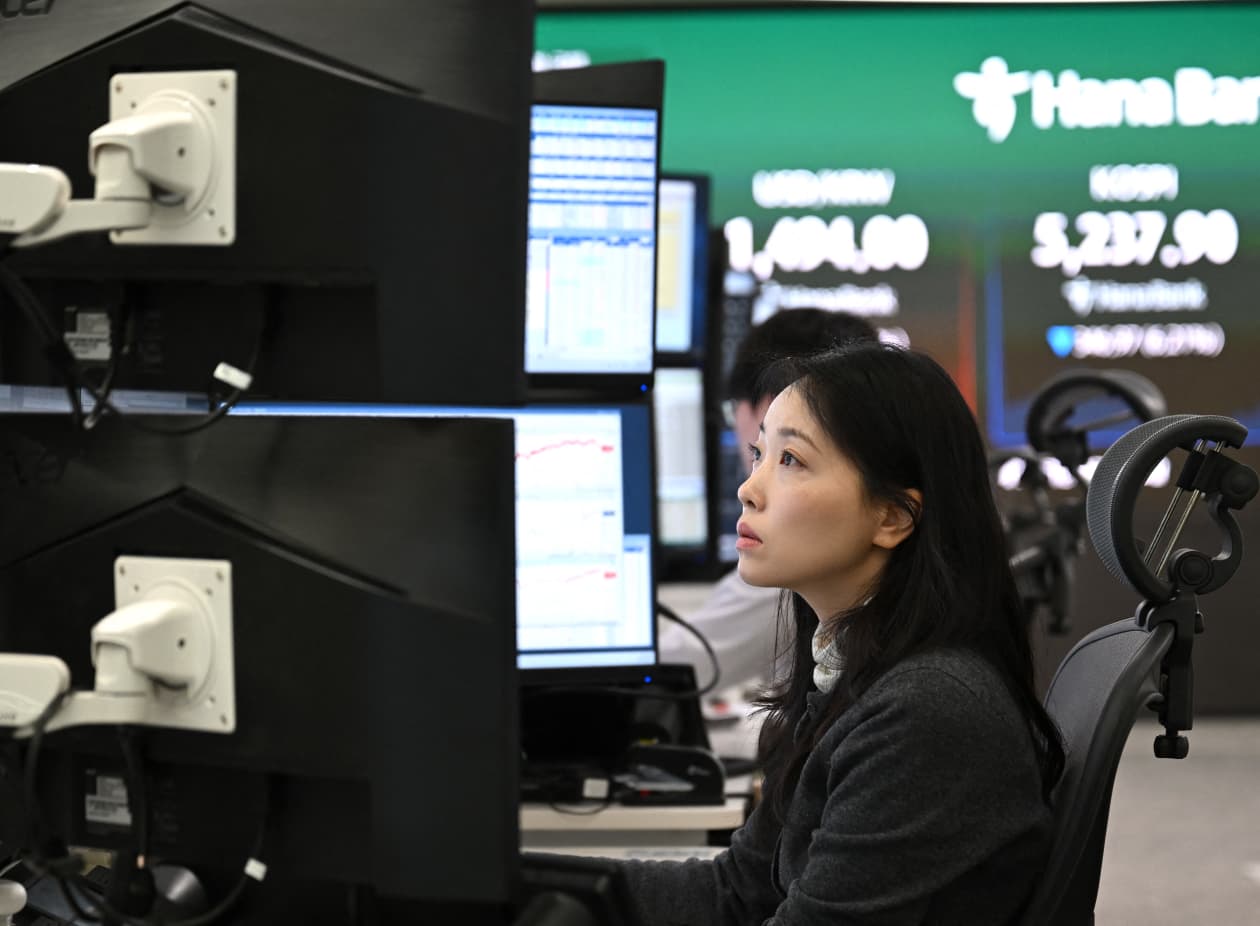
KOSPI plunged 19% in March and is on the brink of a bear market after being up nearly 50% YTD at the end of February. The iShares MSCI South Korea ETF (EWY) fell from $147 at the start of the month to about $114 pre-market (≈22% decline), driven by a hit from higher energy prices and a reappraisal of heavyweight semiconductor stocks, prompting a clear risk-off shift in South Korean equities.
The market move is less a standalone Korean story and more a cross-asset feedback loop: higher energy prices increase Korean import bills and squeeze corporate margins, which forces short-term liquidity sales out of the most liquid vehicles (ETFs, futures) and amplifies index declines through passive and quant flows. At the same time, a concentrated semiconductor exposure makes the index highly sensitive to instantaneous earnings revisions and inventory signal noise; those revisions have outsized index-level effects because a few names dominate free-float weighting.
Technicals and positioning are the accelerant: sustained ETF outflows plus collateral-driven selling in local index futures can trigger mechanical deleveraging (30–90 days), turning what might be an earnings-cycle repricing into a multi-quarter valuation reset. FX hedges and Korea-specific equity-linked notes magnify outward capital movement when KRW weakens, creating a second-order liability readjustment for domestic banks and brokers.
Reversal catalysts are identifiable and time-tagged: a 10–20% retreat in global energy benchmarks within 4–8 weeks would materially improve corporate margins and stop the liquidity cascade; alternatively, a clear Korean policy pivot (rate cut or coordinated FX intervention) within 1–3 months would attract carry and reversal flows. Longer-run recovery (>6–12 months) requires confirmation of semiconductor capex normalization (order book recovery at OEMs) rather than transient inventory destocking.
The consensus panic overstates persistency risk. Crowd selling is heavy in passives and momentum strategies, which makes short-term mean reversion probable once a liquidity vacuum is filled. That said, structural demand/earnings risks remain — this is a volatility event with selective fundamental winners, not a homogeneous market crash, so trade selection matters more than blanket long exposure.
AI-powered research, real-time alerts, and portfolio analytics for institutional investors.
Request DemoOverall Sentiment
strongly negative
Sentiment Score
-0.70
