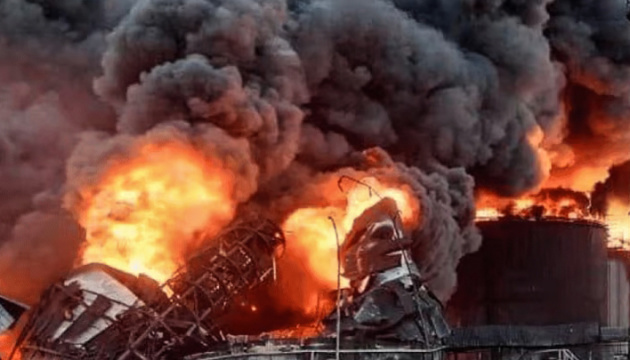
Ukrainian forces said they struck the Ryazan Oil Refinery, triggering a large-scale fire at one of Russia’s largest refining assets, which processes about 17 million tons of oil annually. The operation also targeted Russian naval, logistics, fuel, and electronic warfare assets in occupied territories and at the Kaspiysk naval base. The attack adds near-term disruption risk for Russian fuel supply and military logistics, but the article does not quantify any confirmed output loss.
This is less about one refinery outage and more about a creeping degradation of Russia’s downstream reliability. When processing nodes, fuel depots, and military logistics storage are hit in the same theater, the second-order effect is not an immediate collapse in national output but a rising probability of regional product tightness, intermittent rail/road rerouting, and higher security/insurance costs that compound over weeks. The market should care most about diesel and jet fuel availability rather than crude, because those are the products most tightly linked to military mobility and non-linear disruption risk. For energy markets, the near-term impulse is mildly supportive to refined-product cracks, especially diesel, if strikes force precautionary inventory hoarding or transport bottlenecks. The key asymmetry is that Russia can often preserve headline crude flows while losing the ability to efficiently upgrade and distribute barrels; that widens the spread between upstream and downstream economics and can show up in European product imports even if Brent itself barely moves. If this pattern persists for 1-3 months, it becomes a logistics tax on the entire Black Sea / southern Russia supply chain rather than a one-off headline event. The defense angle is more interesting than the energy angle: repeated successful strikes on air-defense-adjacent and naval assets suggest the offensive/defensive cost curve is worsening for Russia. That raises the probability of retaliatory escalation, which is the main tail risk for broader risk assets over days to weeks, but it also increases the chance of forcing more dispersed and less efficient Russian logistics over quarters. The contrarian view is that markets may overstate the immediate oil impact because spare global crude capacity is still ample; the more durable trade is in refined products and logistics-linked names, not in outright crude longs.
AI-powered research, real-time alerts, and portfolio analytics for institutional investors.
Request DemoOverall Sentiment
moderately negative
Sentiment Score
-0.35
