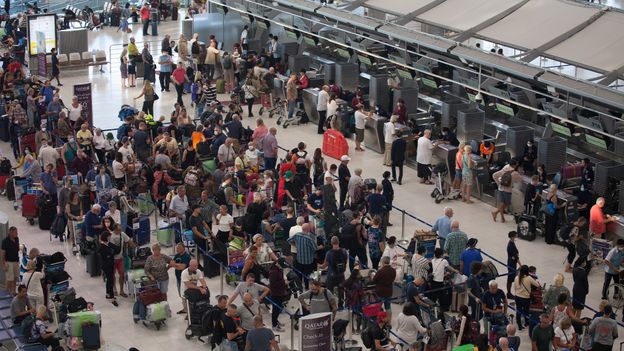
A coordinated US-Israeli strike on Iran on 28 February and ensuing Iranian retaliation have rapidly disrupted commercial travel across the Middle East, knocking out Iranian airspace, closing major hubs (Dubai International was closed three days after debris damage) and prompting highest-level travel advisories and evacuation orders from the US, UK, Canada and Australia. Airlines like Etihad and Emirates have only just begun limited resumptions while governments are covering stranded passengers (the UAE reported 20,200 people affected); multiple Gulf states’ airspace closures and attacks on airports, ports and military bases materially raise operational and revenue risks for carriers, hospitality operators and regional markets, and create a near-term risk-off environment for investors with exposure to travel, logistics and Middle Eastern assets.
Market structure: Immediate winners are defense primes (LMT, RTX, NOC) and energy producers (XOM, CVX) as risk-premia and expected military spending rise; safe-haven assets (TLT, GLD) should benefit in a risk-off move. Direct losers are travel & leisure (AAL, UAL, MAR, HLT) and airport operators exposed to GCC traffic (select European airport concessionaires) — demand shock >20% for regional tourist routes with routing costs raising unit costs ~5–10% short-term.
Risk assessment: Tail risks include closure/interdiction of Strait of Hormuz (Brent +20–40% vs current), wider shipping interruptions, or escalation drawing in NATO (90-day shock to global growth). Time horizons: days — flight cancellations, FX safe-haven flows; weeks–months — Q2 revenue/earnings hits for airlines/hotels; quarters–years — re-rating of defense contractors and insurance/reinsurance pricing up 10–30%. Hidden dependencies: marine insurance/reinsurance repricing, air route rerouting costs, and sovereign balance-sheet strain in tourism-dependent GCC partners.
Trade implications: Tactical trades: long 6–12 month LEAPS on LMT/RTX (size 1–3% AUM), long XOM/CVX 2–4% if Brent > $90, and hedge with 1–2% short positions in UAL/AAL or 1–3 month puts on IAG/BA when regional capacity remains closed. Volatility trade: buy a 1-month VXX 25/35 call spread to capture near-term VIX spikes; add 2–3% TLT exposure if 10y yield falls >20bp in 48–72 hours.
Contrarian angles: Consensus may over-discount quick rebounds in non-targeted tourism markets (Egypt, Oman) — consider tactical long on TUI.DE or European airport concessions (ADP.PA) only if sell-off >10% and forward bookings show <15% decline. Beware overpaying for defense: headline-driven rallies can fade if orders/contracts lag (average procurement cycles 6–18 months); use stagged builds and clear Brent/booking thresholds to avoid buying a peak.
AI-powered research, real-time alerts, and portfolio analytics for institutional investors.
Request TrialOverall Sentiment
moderately negative
Sentiment Score
-0.60
