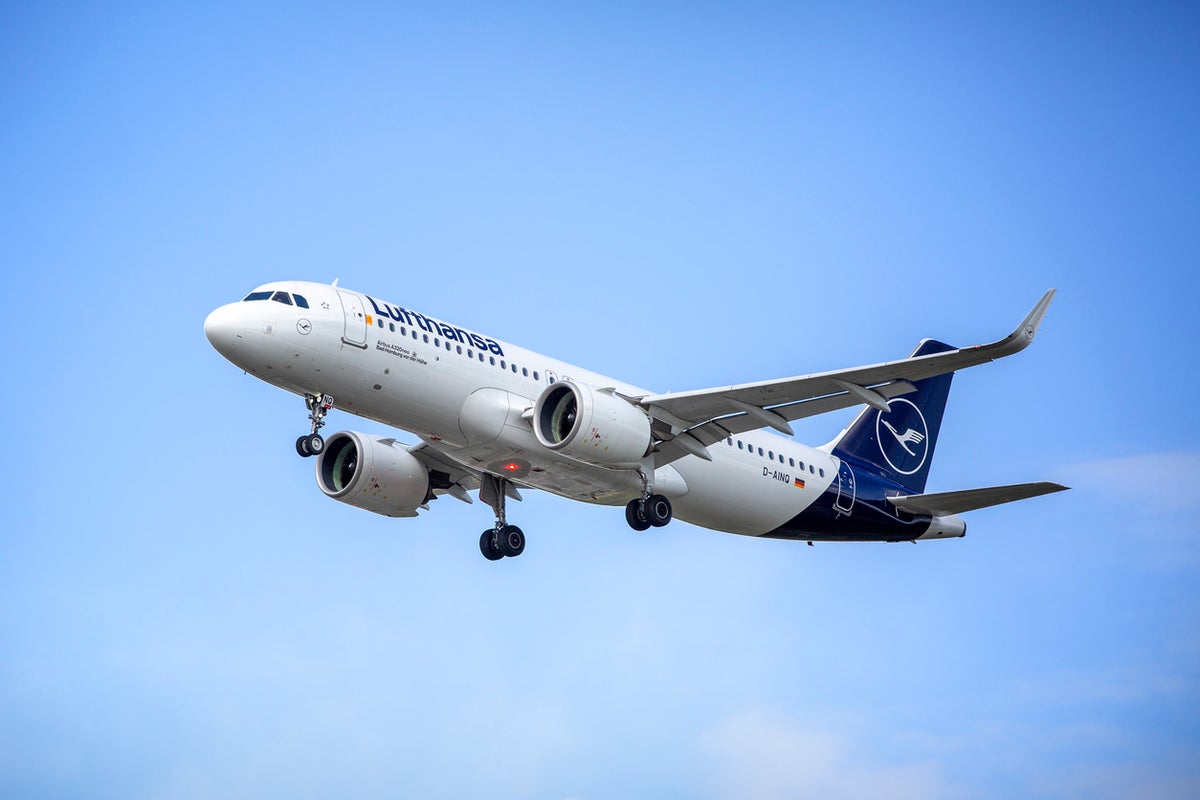
Jet fuel prices have surged from about $85-$90 per barrel to $150-$200 per barrel, prompting airlines globally to raise fares, add fuel surcharges, cut capacity, and cancel flights. United said ticket prices may need to rise 15%-20%, Lufthansa is cancelling 20,000 flights to save 40,000 metric tonnes of fuel, and multiple carriers including Delta, Qantas, SAS, and Virgin are revising forecasts or suspending guidance. The article frames this as a broad sector shock driven by the Middle East conflict and Strait of Hormuz supply risk, with material implications for airline margins and travel prices.
This is less a one-off margin event than a forced repricing of network economics. Carriers with weak hedges and high leverage will be pushed to choose between capacity discipline and preserving load factors, which usually means the weakest routes get cut first and ancillary fees get leaned on harder. That creates a second-order winner set: airport operators and lessors with tight supply may see better pricing power as airlines protect utilization on their best hubs and aircraft.
The near-term earnings shock is likely to be asymmetric across the U.S. group. Legacy carriers with stronger loyalty monetization and revenue management should absorb more of the cost pass-through, while ULCCs face a worse mix because their customers are more price-sensitive and bag/seat fees have diminishing returns once total trip price breaches a threshold. The key watchpoint is not headline fuel inflation alone, but the lag between cash fuel spend and fare realization; over the next 1-2 quarters, that gap can compress margins even if management teams sound confident on calls.
The market may still be underestimating demand destruction in discretionary short-haul and leisure-heavy transatlantic traffic. If fare hikes stick into late summer, booking curves should soften first in VFR and vacation segments, forcing more cancellations and possibly a broader capacity reset into fall. Conversely, any de-escalation in the geopolitical backdrop would likely cause a fast unwind in the trade because airlines are already pricing in a prolonged shock; that makes this a tactically attractive but time-sensitive event-driven short rather than a structural secular call.
Contrarian angle: the strongest near-term relative performer may be the carrier with the most credible fuel pass-through and the least dependence on low-yield traffic, not the cheapest stock. The market often punishes airlines as a homogeneous basket, but the real dispersion will come from balance sheet flexibility and pricing power, so a selective long/short is preferable to a directional beta bet.
AI-powered research, real-time alerts, and portfolio analytics for institutional investors.
Request TrialOverall Sentiment
strongly negative
Sentiment Score
-0.72
Ticker Sentiment
