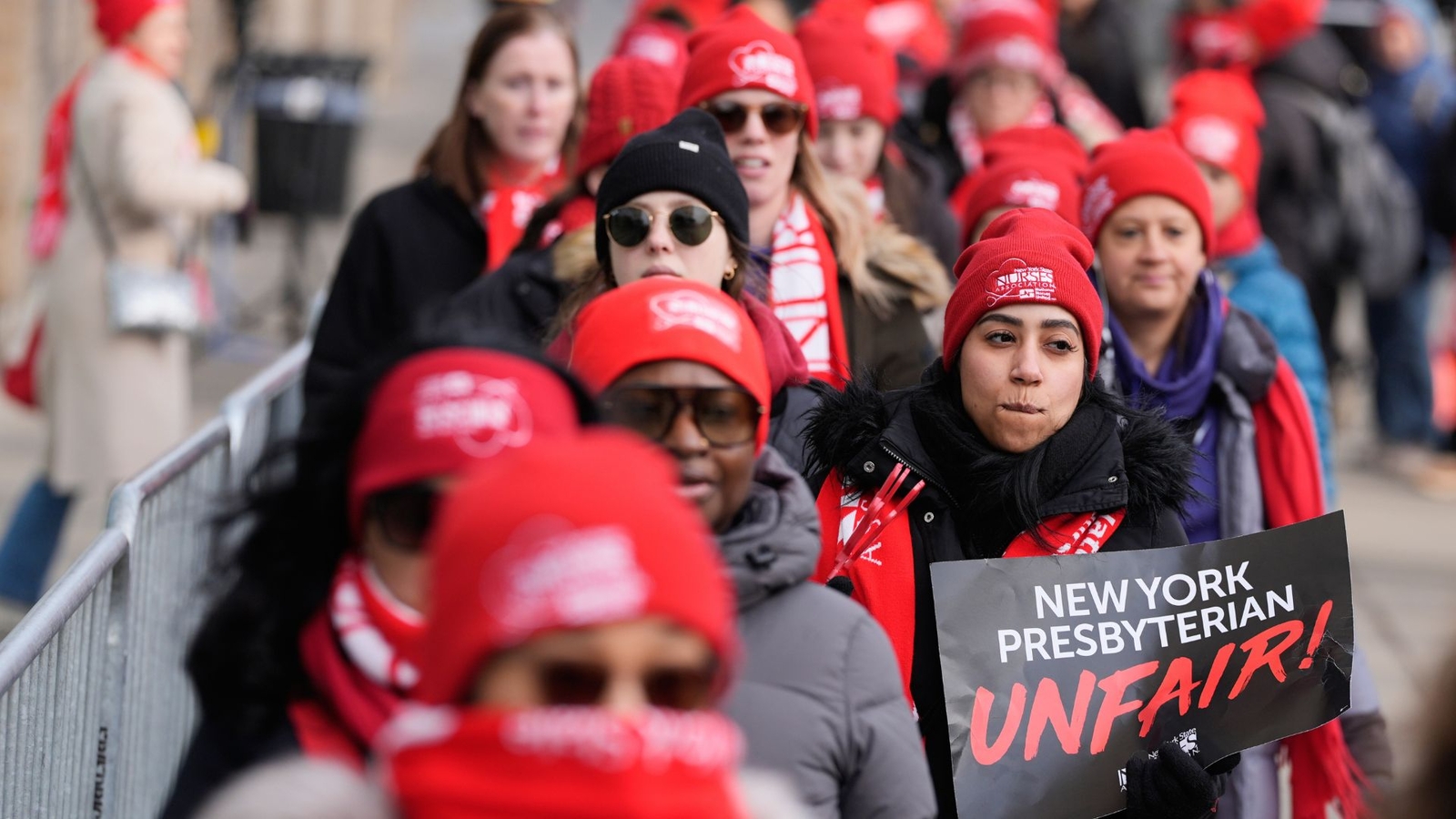
Approximately 10,500 NYSNA nurses at Montefiore and Mount Sinai reached tentative agreements that would preserve safe-staffing rules and health benefits, add workplace-violence protections, impose limits on use of artificial intelligence, and deliver a pay raise of more than 12% over three years; members will vote this week on ratification. The agreements cover two of three hospital systems involved in the multiweek strike; roughly 4,200 nurses at NewYork-Presbyterian have not agreed and remain on strike, with safe staffing the main outstanding issue. Operational disruption risk should decline if ratified at the two systems, but continued labor uncertainty at NewYork-Presbyterian keeps downside operational risk limited for the regional hospital sector.
Market structure: The tentative deals at Montefiore and Mount Sinai shift near‑term economics away from hospitals and toward labor/service providers: hospitals face >12% wage inflation over 3 years while staffing agencies (travel nurse firms) see immediate demand spikes. Expect +5–15% revenue lift for public staffing peers (AMN) over 3–6 months and potential 100–300 bps EBITDA margin pressure for exposed hospital operators in NY if similar contracts cascade regionally.
Risk assessment: Tail risks include strike contagion (other NY systems or other states) or a legislative safe‑staffing mandate — either could impose structural cost increases of 200–400 bps on acute care margins over 12–24 months. Immediate catalysts are ratification votes this week and NewYork‑Presbyterian outcomes; watch 30–90 day travel‑nurse rate prints and Q1 earnings for margin guidance revisions.
Trade implications: Favor staffing providers and insurers with pricing power (AMN long, measured exposure to UNH/ANTM), hedge hospital operators (HCA, CYH) via short or put‑spread instruments; expect a 3–6 month trade horizon to capture staffing demand and hospital margin re‑pricing. Fixed income: increase credit spreads sensitivity on high‑leverage hospital paper and reduce non‑IG hospital bond exposure by ~20–30% until labor cost clarity arrives.
Contrarian angle: Consensus assumes strikes only raise transient costs; miss is the structural impact of AI limits and safe‑staffing clauses which can permanently raise labor intensity and capital requirements for hospitals, advantaging outsourced staffing/tech vendors. If ratification occurs and strikes abate, short squeezes in staffing stocks could unwind — position sizes and option structures should reflect binary near‑term vote outcomes.
AI-powered research, real-time alerts, and portfolio analytics for institutional investors.
Request DemoOverall Sentiment
mildly positive
Sentiment Score
0.15
