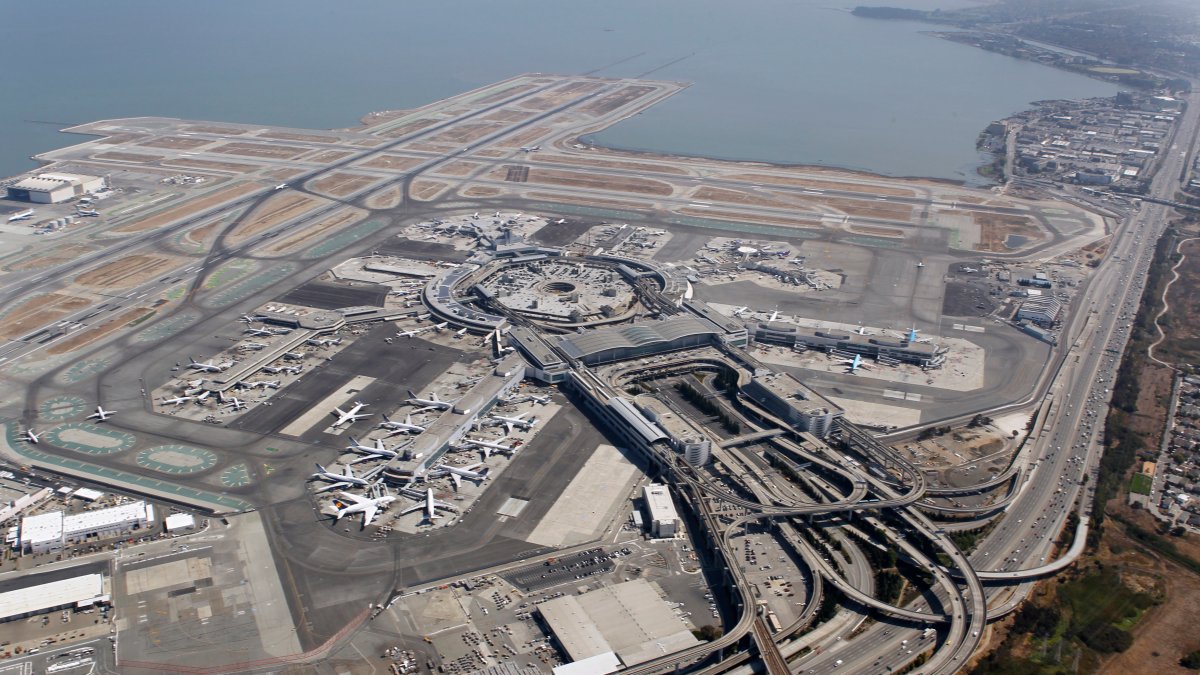
FAA reduced arrivals at San Francisco International Airport from 54 to 36 per hour (a 33% cut) due to a six-month runway repaving project (accounting for 9 of 18 flights per hour cut) and a permanent rule ending simultaneous landings on closely spaced parallel runways (the other 9 flights). Airport spokesman says ~25% of arriving flights could be delayed by 30+ minutes; runway is scheduled to reopen Oct. 2. United is reviewing schedule changes and Alaska reported variable delays; disruptions are likely to affect carriers concentrated at SFO but have limited broader market impact.
This is a localized capacity shock to an already schedule‑tight hub that will force carriers to reprice connection reliability and put a premium on schedule flexibility over the next several weeks. Expect network carriers that concentrate feed at that hub to incur outsized operational disruption (reaccommodation costs, downward pressure on near‑term yields from forced reissues) while regional airports and alternative hubs capture displaced demand.
Second‑order effects include a temporary increase in short‑haul point‑to‑point demand into nearby airports, upward pressure on intermodal ground transfers and business travel substitution costs, and a hit to slot/terminal asset value where airline market share is concentrated. Airlines will reallocate flying and revise block times quickly; those changes compress transitory margins but also create arbitrage windows in secondary market capacity and in options volatility.
Key risks and catalysts: near‑term outcomes hinge on two binary items — whether the FAA extends, narrows or reverses the operational constraint, and whether the construction timeline slips; either could extend disruption from weeks into months. A rapid schedule reoptimization by carriers and passenger migration to alternate airports would blunt the impact; a summer demand peak or adverse weather would amplify it and could be a catalyst for visible equity moves within days to a few weeks.
Contrarian view: markets will likely front‑run operational pain into near‑dated volatility, but most airline schedules and frequencies can be retuned within one to three scheduling cycles — so a lot of downside could be mean‑reverting. That argues for short‑dated directional and volatility trades rather than long‑duration capital bets on franchise impairment unless regulatory change becomes systemic across other hubs.
AI-powered research, real-time alerts, and portfolio analytics for institutional investors.
Request DemoOverall Sentiment
mildly negative
Sentiment Score
-0.25
Ticker Sentiment
