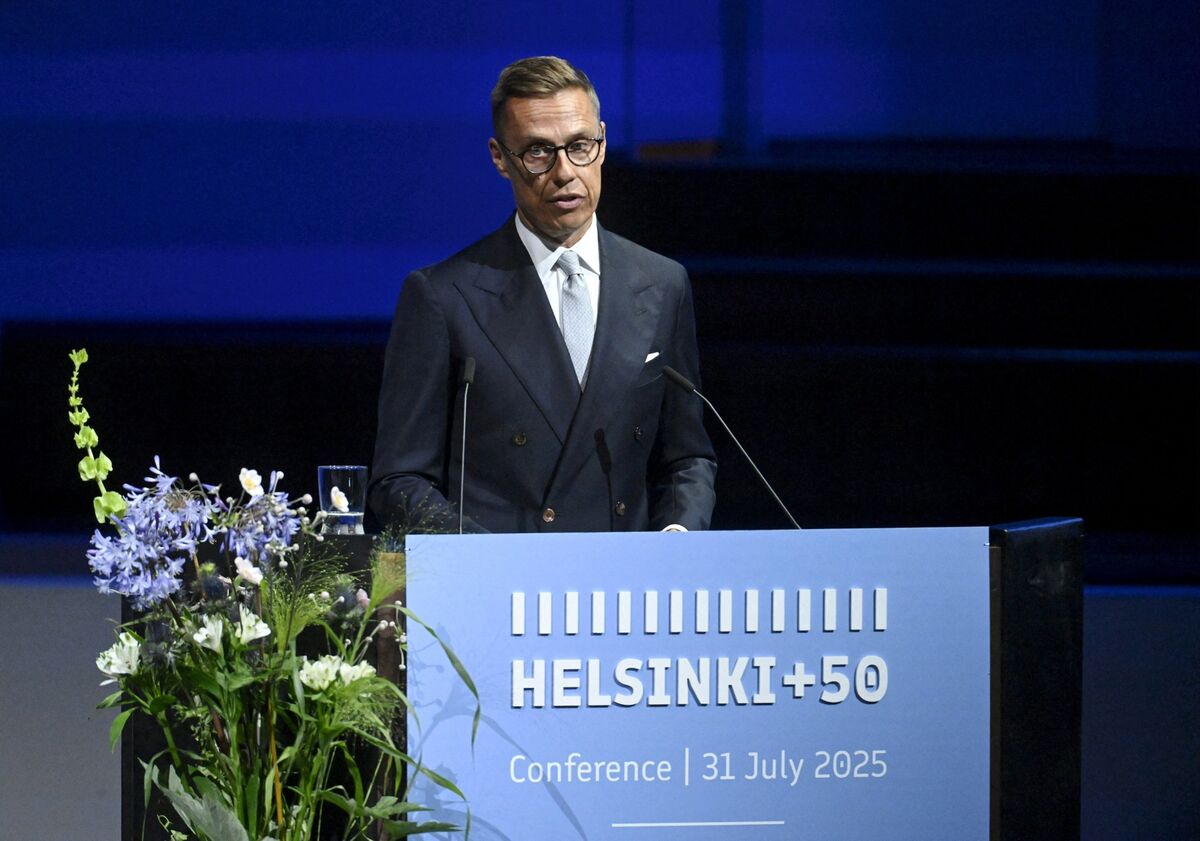
Finnish President Alexander Stubb urged European nations to decisively choose between democratic values and Russia's aggressive world order, specifically targeting countries like Hungary and Slovakia whose leaders are seen as undermining Europe's unified front against the Ukraine conflict. This highlights growing internal European divisions, posing a risk to the continent's geopolitical cohesion and potentially influencing investor outlook on regional stability.
Finnish President Alexander Stubb's statement has brought a critical geopolitical fault line within Europe into sharp focus, highlighting the growing tension between member states committed to a unified pro-democracy stance and those leaning towards nationalist interests sympathetic to Russia. The direct reference to leaders in Hungary and Slovakia, Viktor Orban and Robert Fico, underscores that this is not a theoretical divide but a present challenge to Europe's united front against Russia's actions in Ukraine. This internal political fragmentation represents a significant risk to the continent's policy cohesion and long-term stability. While the sentiment is moderately negative, reflecting the gravity of the division, the low market impact score of 0.25 indicates that markets are currently pricing this as a developing political risk rather than an immediate economic threat. The core issue for investors is the potential for this discord to create an unpredictable policy environment, impacting everything from sanctions enforcement to broader economic and security cooperation.
AI-powered research, real-time alerts, and portfolio analytics for institutional investors.
Request DemoOverall Sentiment
moderately negative
Sentiment Score
-0.50
