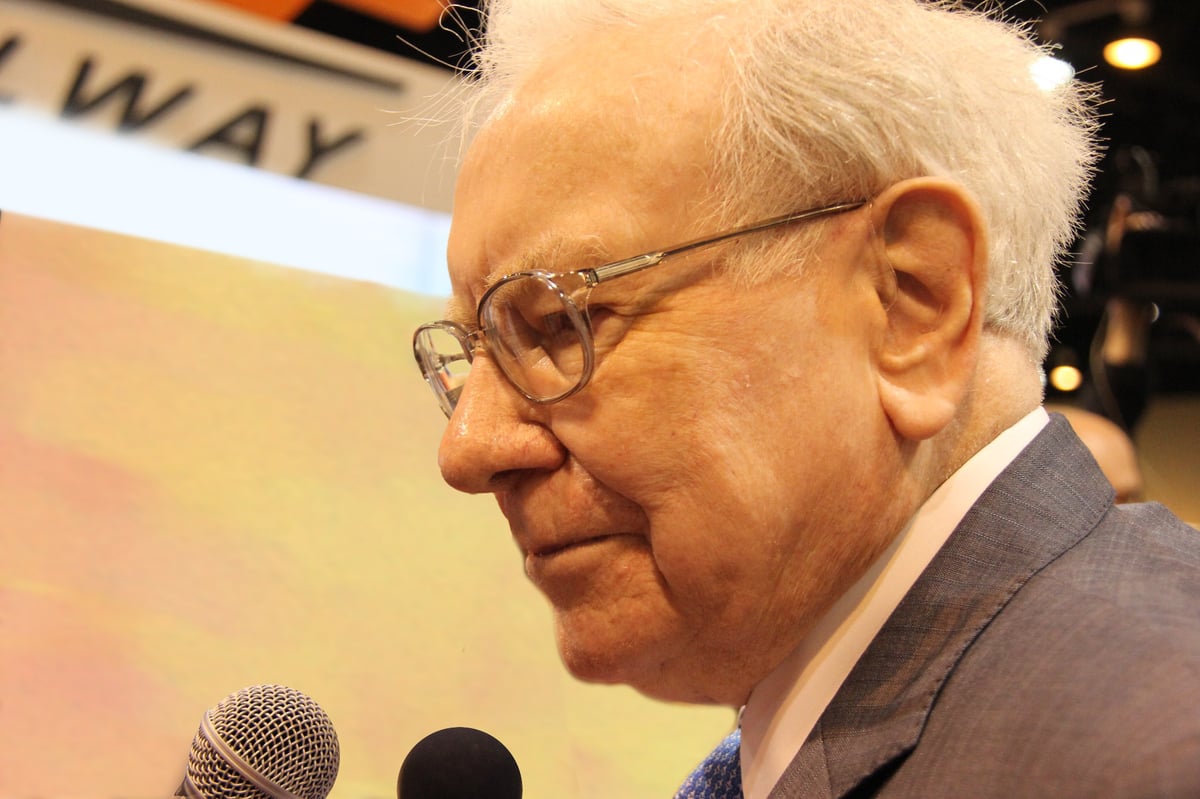
Warren Buffett has been a net seller of stocks for 12 consecutive quarters—the longest such streak under his tenure—as he prepares to step down as Berkshire Hathaway CEO at year-end. Berkshire still holds more than 40 stocks valued at over $300 billion and maintains an unprecedented cash reserve of roughly $382 billion while selectively buying only names with attractive valuations; this posture signals caution amid S&P 500 record highs and short-term U.S. Treasuries yielding north of 3.5%. Hedge funds should consider de-risking low-conviction positions, building liquidity to exploit potential dislocations, and adhering to valuation-driven buying discipline.
Market structure: Buffett's extended net-selling increases marginal supply of mega-cap, blue‑chip shares and props up demand for cash-like instruments; beneficiaries are short-duration Treasuries (BIL/SHV) and high-quality defensives (KO, AXP), losers are high-P/E growth names that require continued liquidity to sustain multiples. Competitive dynamics: selective buying by Berkshire preserves pricing power for stalwarts while reducing bid for speculative names, compressing growth/value dispersion; expect 5–15% relative underperformance for growth vs value if selling continues. Cross-asset: flows into short-term Treasuries will keep front-end yields supported (>3.0–3.8%), pressuring long-duration bonds only if a big risk-off spike occurs; risk-off would lift USD and pressure commodities and cyclical commodities demand.
Risk assessment: tail risks include a governance shock at Berkshire on succession (weeks–months) causing a 10–25% sell-off in BRK shares, a macro shock (dirty surprise CPI/credit event) that triggers 15–30% equity drawdowns, or a liquidity crunch from forced deleveraging in ETFs. Time horizons: immediate (days) means higher liquidity premium and tighter bid for blue chips; short-term (1–3 months) likely rotation to cash/short-duration income; long-term (6–24 months) fundamentals prevail and selective value names recover. Hidden dependencies: passive inflows, margin calls, and ETF rebalancing can amplify moves; catalysts that could reverse trend include a clear succession plan, continued earnings beats, or a Fed pivot.
Trade implications: establish 10–15% cash (park in BIL/SHV) immediately to capture >3.5% yield while waiting for entry points; initiate 2–3% long positions in KO and AXP each on up to 8–12% pullbacks with 12–24 month horizon. Implement downside protection via 3‑month S&P500 put spreads (buy 5% OTM / sell 10% OTM) sized 1–2% of portfolio to hedge a 8–12% SPX drawdown; consider short 1.5–2% position in QQQ as a volatility pair vs long KO or consumer staples. Rotate overweight to Financials (XLF) and Staples (XLP) and underweight Tech/Consumer Discretionary until breadth and earnings revision trend improves.
Contrarian angles: consensus treats Buffett's selling as a pure macro threat but it may be capital allocation for large M&A or tax management—if a credible CEO succession is announced, BRK could switch from net seller to buyer and spark a squeeze; this indicts conditional buy triggers rather than reflexive shorts. Reaction may be overdone in stalwarts (KO, AXP) where fundamentals are stable; historical parallels (late‑cycle reallocations by long-only titans) show durable businesses often reprice higher post‑selloff. Unintended consequences: broad fear could create a 10–20% buying opportunity in quality names and force corporate buybacks if managements see cheap stock.
AI-powered research, real-time alerts, and portfolio analytics for institutional investors.
Request DemoOverall Sentiment
mildly negative
Sentiment Score
-0.30
Ticker Sentiment
