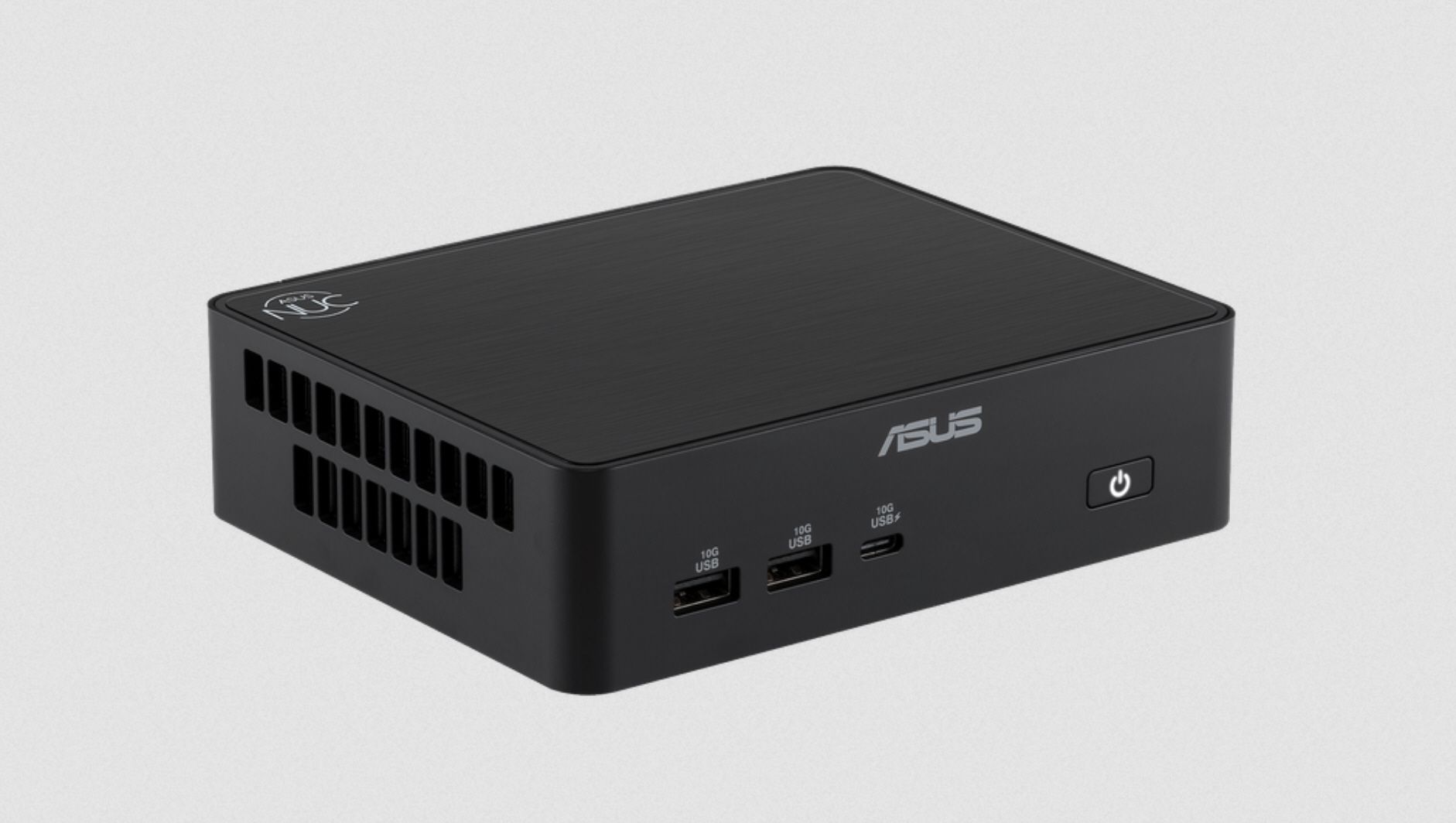
At CES 2026 Asus launched the NUC 16 Pro 0.7L mini PC built on Intel's Panther Lake with the Core Ultra X9 388H (18A process) delivering up to 180 TOPS of combined CPU/GPU/NPU compute and integrated Arc B390 graphics with 12 Xe cores. The compact system supports up to 96GB LPDDR5x (9600MT/s), dual M.2 (PCIe Gen5/Gen4), dual 2.5G Ethernet, WiFi 7, Bluetooth 6.0 and firmware TPM 2.0, targeting creators, developers and enterprise edge/IoT use cases; while the B390 raises integrated-GPU capability, AMD’s Radeon 8060S still retains a lead in peak graphics performance. The announcement signals incremental competitive pressure in AI-capable mini PCs and edge devices but is unlikely to be directly market-moving for semiconductor equities absent broader adoption or supplier guidance changes.
Market structure: Intel (INTC) is the primary beneficiary — Panther Lake’s 180 TOPS platform AI claim and integrated Arc B390 make Intel more competitive for edge/mini-PC OEM wins (targeting creators, POS, IoT). AMD (AMD) remains advantaged on peak iGPU throughput (Radeon 8060S) so its consumer-gaming franchise is intact; discrete GPU vendors see modest near-term pressure in sub-$900 mini-PC segments. Expect modest channel re-pricing: OEMs could shift share by 5–10% within 2–4 quarters if Intel converts benchmarks into design wins.
Risk assessment: Key tail risks are execution (18A yield shortfalls), software/ISV adoption of Intel NPU stacks, and an AMD counter-cycle (new silicon or price cuts). Immediate (days) effects are headline-driven share moves; short-term (weeks–months) depends on CES reviews and early benchmarks; long-term (3–12 months) depends on OEM order flow and enterprise procurement cycles. Hidden dependency: real-world AI advantage requires optimized frameworks—raw TOPS won’t translate to share without ISV uptake.
Trade implications: Tactical long bias to INTC with hedged option structures is justified on a 3–9 month basis (target +20–30% if design wins materialize). A relative-value pair (long INTC, short AMD) exploits Intel’s edge-AI narrative versus AMD’s iGPU strength; rebalance on product/earnings catalysts. Size positions small (1–3% NAV) initially; increase if independent benchmarks confirm >15% performance lead in targeted workloads.
Contrarian angles: Consensus may underprice Intel upside from in-house 18A fab recovery — if yields improve to sustainable levels this is asymmetric upside. Conversely the market could be underestimating AMD’s ability to defend via driver optimizations and price cuts; a fast AMD product response would quickly compress Intel’s short-term gains. Watch for ISV certification, OEM share-data, and independent NPU benchmarks as leading indicators.
AI-powered research, real-time alerts, and portfolio analytics for institutional investors.
Request DemoOverall Sentiment
mildly positive
Sentiment Score
0.28
Ticker Sentiment
