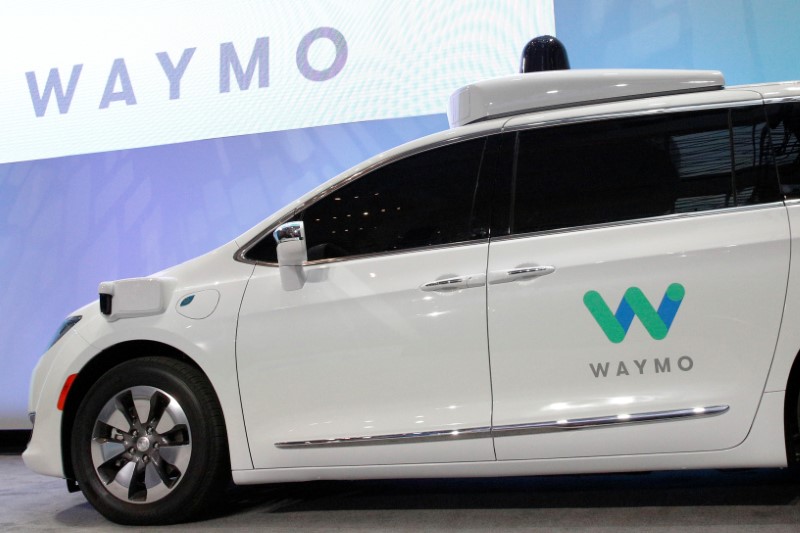
Waymo began offering fully autonomous ride-hailing to the public in Nashville, covering a 60-square-mile area including downtown and testing at Nashville International Airport. Riders access the service via the Waymo app on a rolling-invite basis and Waymo plans to offer rides through the Lyft app later in 2026, with Lyft as fleet management partner via Flexdrive. Waymo cites safety data from over 170 million miles showing a 13-fold reduction in crashes involving serious injury or worse (including pedestrian injuries) versus human drivers. The launch expands Waymo’s commercial footprint and partnership model, which could modestly affect GOOGL’s autonomous mobility prospects but is unlikely to move the broader market immediately.
This rollout materially widens Waymo's real-world edge in three places investors often underprice: proprietary driving telematics, route-level unit economics, and multi-modal partnerships. Each incremental thousand miles of autonomous driving yields asymmetric learning (edge cases shrink, operational exceptions fall) that compounds into lower per-ride opex and higher throughput; that non-linear improvement favors a capital-rich owner-operator (Alphabet) over asset-light platforms. Expect the breakeven horizon for autonomous ride-hail to compress from years to quarters in dense, repeatable routes — the inflection is more about density and fleet utilization than headline driverless counts.
Second-order winners include compute and fleet-ops suppliers, plus local commercial real estate (reduced parking demand) and municipal transit augmentation; losers are ride-hail drivers and legacy urban parking/garage owners. Supply-chain effects: sustained fleet scaling will shift spend from OEM capex to retrofit compute, sensors, and cloud/inference capacity, so short-cycle server and GPU demand could spike before long-cycle vehicle procurement responds. Regulatory and PR shocks remain dominant near-term catalysts — a single severe safety incident or unfavorable jurisdictional ruling can pause deployments across multiple cities within days.
The consensus risk is timing — the market underestimates speed of margin capture but overestimates immediate monetization. That creates a payoff skew where owning the tech owner (GOOGL) with measured downside protection captures optionality, while owning pure fleet managers or legacy mobility franchisors is likely lower-return, higher-volatility. Watch three triggers over the next 6–18 months: (1) municipal permitting changes, (2) major insurer/legal outcomes that set liability precedent, and (3) quarterly metrics on average revenue per ride and utilization — each will re-rate corridors from loss-leading to cash-generative.
AI-powered research, real-time alerts, and portfolio analytics for institutional investors.
Request DemoOverall Sentiment
mildly positive
Sentiment Score
0.35
Ticker Sentiment
