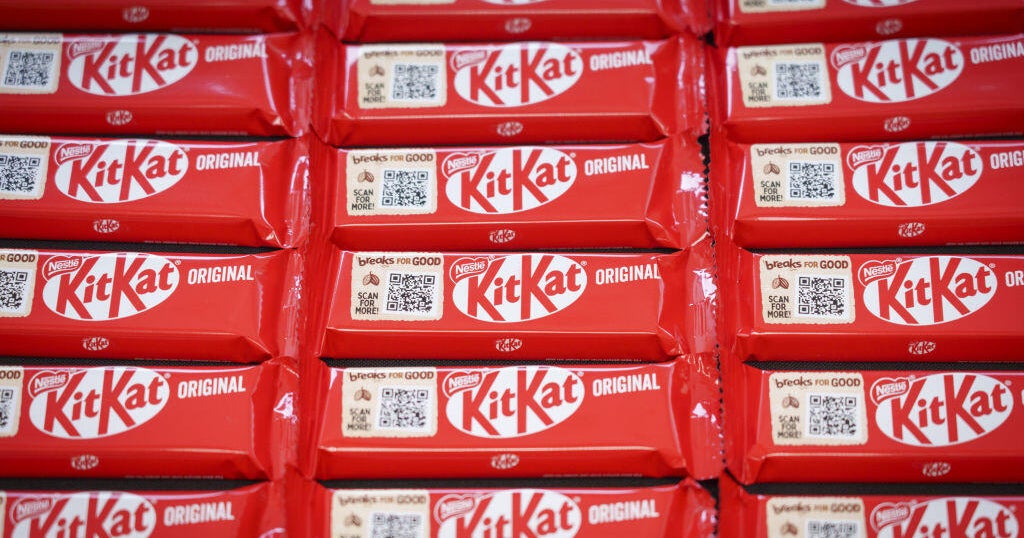
12 tons (413,793 units) of Nestle's new KitKat range was stolen in transit from central Italy to Poland, with the truck and contents unaccounted for. Nestle warned the loss could produce local shortages ahead of Easter and that the bars could appear in unofficial sales channels; investigations are ongoing and items can be traced via unique batch codes. Impact is likely limited to short-term retail disruption and reputational/headline risk rather than a material hit to Nestle's financials.
A concentrated loss of pre-season inventory creates localized SKU scarcity that is qualitatively different from broad supply-chain shocks — retailers and consumers react to on-shelf availability, not corporate headline size. Because confectionery demand is highly elastic around seasonal holidays, a small absolute shortfall concentrated by geography or batch can produce outsized retail share shifts (days–weeks), even if it is immaterial to a global confectioner's quarterly production volumes.
Traceability via batch codes is a double-edged sword: it raises the probability that diverted product will be identified and removed from formal channels, which reduces long-tail reputational risk but lengthens the period of market friction while law enforcement and insurers process claims (weeks). That mechanism also makes grey-market sales less attractive and increases expected recovery, implying the ultimate financial hit to the manufacturer will be insurance-covered and short-duration, not a multi-quarter revenue loss.
Second-order winners are firms able to flex supply into gaps quickly — rival branded confectioners and retailers with scalable private-label production — while third-party logistics/security providers may see near-term demand for enhanced safeguards. The consumer behavior vector matters: scarcity can push trial to substitutes, creating a sticky incremental gain for incumbents that can execute promotional programs over the Easter window (0–8 weeks).
Contrarian: the market will likely treat this as a transient operational hiccup, not a fundamental shift; any knee-jerk weakness in the culpable manufacturer's equity should be faded once replenishment and insurance settlement timelines become clear (4–12 weeks). Positioning should therefore target short, event-driven windows rather than multi-quarter structural bets.
AI-powered research, real-time alerts, and portfolio analytics for institutional investors.
Request DemoOverall Sentiment
mildly negative
Sentiment Score
-0.15
