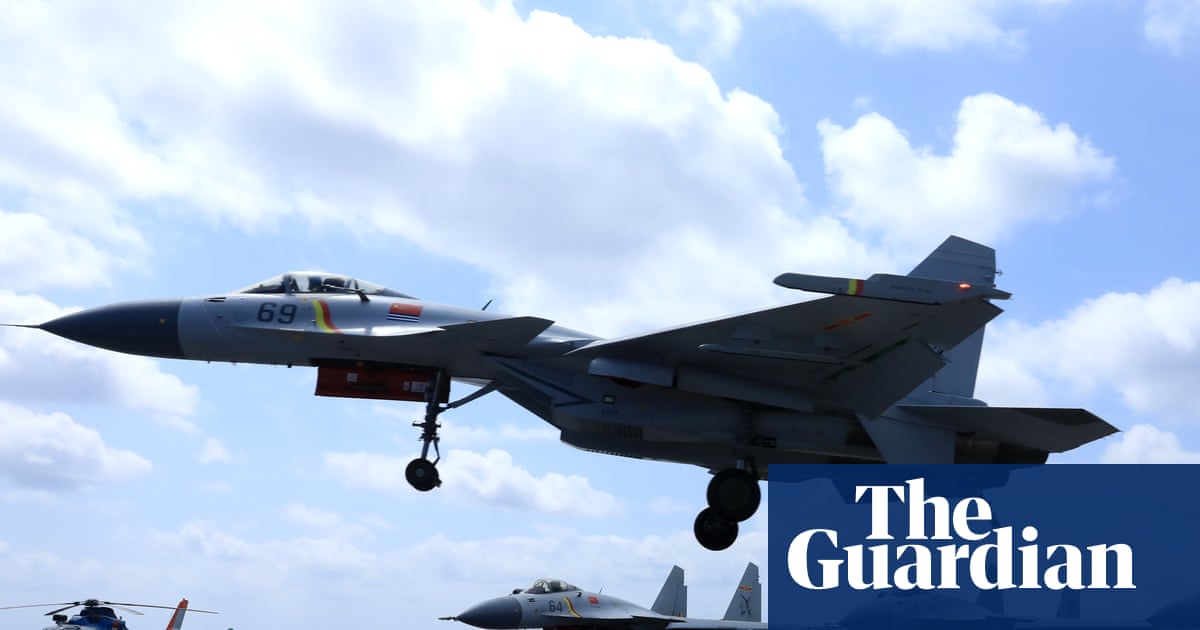
Japanese prime minister Sanae Takaichi pledged a calm but resolute response after Japan's defence ministry said Chinese J-15 fighters from the carrier Liaoning locked radar onto Japanese F-15s twice on Saturday (at about 4:32pm and roughly two hours later) southeast of Okinawa, with no visual confirmation, damage or injuries reported. Tokyo summoned Chinese ambassador Wu Jianghao and protested; Beijing denied the radar lock claims and accused Japanese aircraft of endangering safety, while tensions have risen after Takaichi's recent comments on potential Japanese self-defence action over a Taiwan contingency. The incident raises regional security risks, could accelerate Japan–US defense cooperation and warrants monitoring for potential impacts on risk assets and defense-sector exposure in Asia.
Market structure: Near-term winners are defense primes and aerospace OEMs with rapid procurement pipelines (US: LMT, NOC, RTX; ETFs: ITA/XAR; Japan: 7011.T, 7012.T) as geopolitical risk re-rates defense multiples; losers include Japanese tourism, airlines and exporters if JPY rallies and shipping/air-traffic is disrupted. Pricing power for large defense contractors can rise materially (order book growth +5–15% over 12–24 months if governments accelerate procurement), while semiconductor/consumer supply chains face transient premium for logistics/shoring costs.
Cross-asset & supply/demand: Expect safe‑haven flows: JPY appreciation and JGB demand (yields down), gold +2–5% and oil +1–3% on increased insurance/premia for Asia shipping routes in a contained incident; equity volatility (VIX) and FX vols should spike in days (intraday moves 1–4%). Supply constraints are second-order — defense subcontract capacity (precision machining, avionics) could face 6–18 month lead-time bottlenecks if procurement accelerates.
Risks & horizons: Immediate (days): FX and vols volatility; short-term (weeks–months): defense re-rating and tactical flows into US primes/ETFs; long-term (quarters–years): structural supply‑chain reshoring and sustained capex in shipbuilding/aircraft. Tail risk: escalation to Taiwan conflict could cause >20% drawdown in regional equities, >20% oil spike and severe semiconductor supply shocks; key catalysts are formal US-Japan security statements, Japan budget revisions (watch within 3–6 months) and Chinese military posture changes.
Trade mechanics & hidden dependencies: Benefit to US primes is conditional on US-Japan procurement alignment and budget approvals — domestic Japanese contractors may win politics-driven contracts but face longer fulfillment timelines. Market consensus will bid defense immediately; watch for mean-reversion if procurement news disappoints — prefer liquid US defense exposure and FX hedges to avoid idiosyncratic Japan execution risk.
AI-powered research, real-time alerts, and portfolio analytics for institutional investors.
Request DemoOverall Sentiment
moderately negative
Sentiment Score
-0.35
