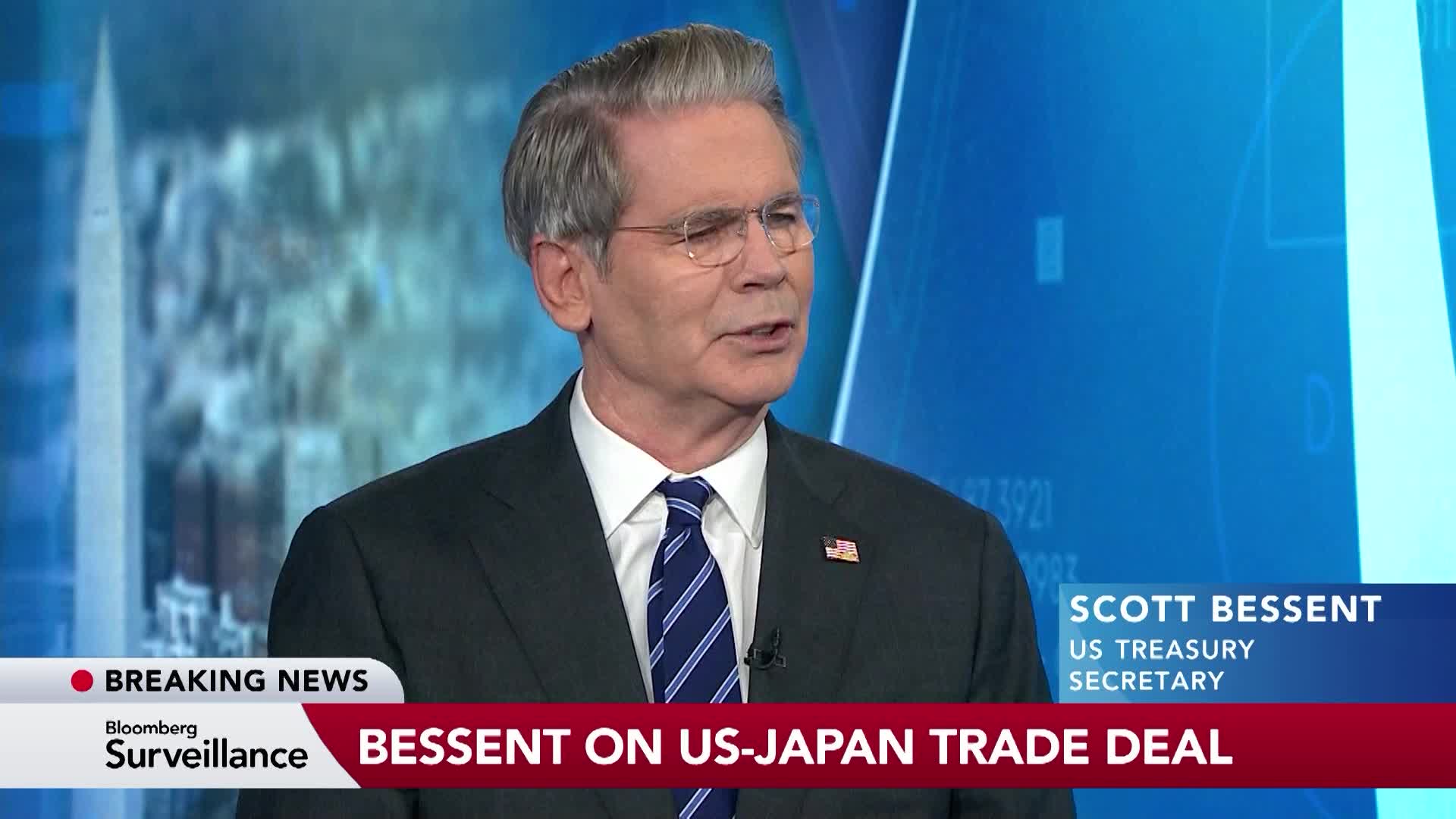
A US trade deal with Japan, discussed by Treasury Secretary Scott Bessent, will impose a 15% tariff on Japanese imports, notably automobiles. Concurrently, the agreement establishes a $550 billion fund designated for investments within the United States. This bilateral arrangement signifies a notable shift in US-Japan economic relations, impacting trade flows and US investment prospects.
The United States and Japan have structured a new trade agreement that combines protectionist measures with significant foreign direct investment, a framework described by Treasury Secretary Scott Bessent as an 'innovative solution'. The deal imposes a 15% tariff on Japanese imports, explicitly targeting key sectors like automobiles, which will likely create margin pressure for Japanese exporters and potentially raise costs for US consumers. Simultaneously, the agreement establishes a substantial $550 billion fund for Japanese investment into the US. This large-scale capital inflow is a material positive for the US economy, likely aimed at boosting domestic industries and infrastructure. The market's moderately high impact score of 0.6 underscores the significance of this development, while the mildly positive sentiment suggests that investors may be weighing the benefits of the massive investment fund more heavily than the negative consequences of the tariffs, viewing it as a managed de-escalation of trade friction.
AI-powered research, real-time alerts, and portfolio analytics for institutional investors.
Request DemoOverall Sentiment
mildly positive
Sentiment Score
0.20
