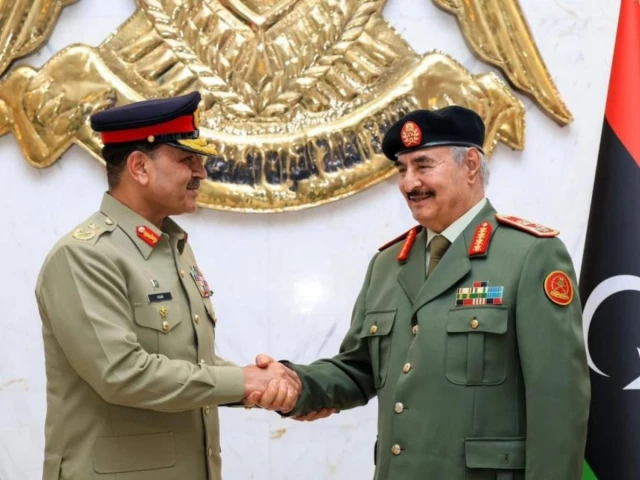
Pakistan has reportedly finalised a multi-billion dollar conventional arms export agreement with Libya’s eastern LNA faction that would supply, among other kit, 16 JF-17 Thunder fighters and 12 Super Mushak trainers, with implementation planned over roughly 2.5 years. The deal, hailed by Pakistani sources as a potential milestone for its defence-export industry and a gateway to African and Middle Eastern markets, carries material enforcement and reputational risk given Libya’s UN arms embargo (UNSCR 1970/1973) and the likelihood of international scrutiny, creating regulatory and geopolitical uncertainty for counterparties and investors.
Market structure: The immediate winners are Pakistan’s defence ecosystem (aircraft OEMs, avionics, and China-linked component suppliers) which can book multi‑billion revenue over ~2.5 years; marginal beneficiaries include regional maintenance/logistics contractors. Losers are compliance-heavy Western banks and insurers that may de‑risk Libyan/Pakistani flows, and incumbent Western/Israeli suppliers that lose high‑margin niche sales — expect downward pressure on prices for sub‑$50m fighter packages in Africa/MENA over 3–5 years.
Risk assessment: Tail risks include targeted secondary sanctions or asset freezes (10–25% probability in 12 months), interdiction of shipments, or a UN enforcement action that could strand inventory and trigger large bank fines. Near term (days–weeks) expect headline volatility and FX repricing in PKR and Libyan exposures; medium term (3–12 months) watch reputational debt costs and insurance premium spikes; long term (2–5 years) the risk/reward hinges on Pakistan proving delivery without triggering sanctions.
Trade implications: Tactical plays favour U.S./EU defence primes/ETFs (e.g., LMT, RTX, ITA) versus airlines/airframers exposed to civilian demand (e.g., BA, JETS). Use 6–12 month directional and volatility trades: modest long in defence equities/ETFs, financed by short airlines or EM MENA sovereign debt exposure; size positions small (1–2% NAV each) given sanction tail risk.
Contrarian view: Consensus treats the UN embargo as toothless; that underestimates political shifts — a single punitive EU/US action or leaked Panel report could force rapid de‑risking and large markdowns in receivables. Historical parallels (Iran arms pipelines) show rapid reversals when enforcement returns; hedge with short EM sovereign/MENA banks and time‑limited oil upside protection (Brent calls) to guard against unintended oil shocks.
AI-powered research, real-time alerts, and portfolio analytics for institutional investors.
Request DemoOverall Sentiment
mixed
Sentiment Score
0.10
