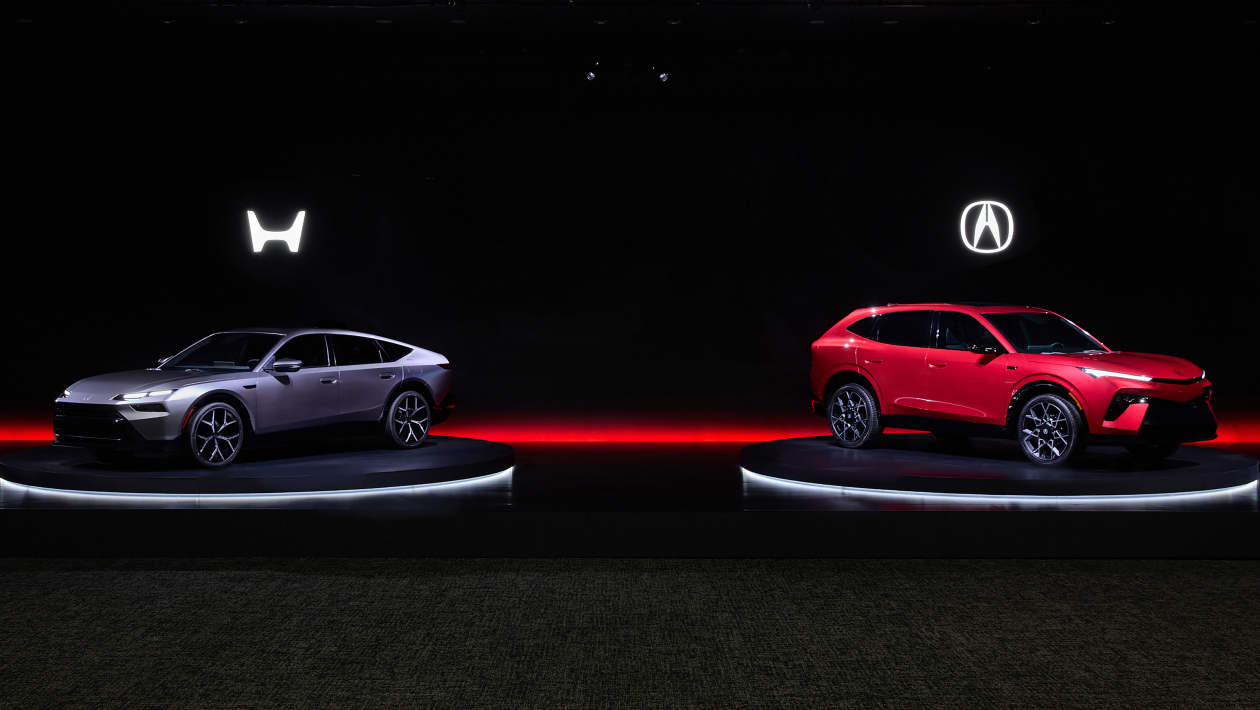
Honda outlined plans for 15 new hybrid-powered models by 31 March 2030, including a new hybrid saloon prototype and a large Acura-branded D-segment SUV built on a new hybrid platform. The company is shifting away from a broader EV push after cancelling its 0 Series saloon and SUV, while keeping Super-N as its sole BEV for now. The plan is supportive for Honda’s product pipeline and US manufacturing footprint, though it reflects a more pragmatic and less ambitious electrification strategy.
Honda’s pivot is less about abandoning electrification than about admitting that in the near term, consumer willingness to pay for pure BEVs is weaker than the industry had underwritten. The second-order winner is not Honda alone but the broader hybrid supply chain: power semiconductors, e-motors, inverters, and transmission content should see a longer runway than battery-only ecosystems, especially in North America where larger vehicles and AWD drive higher hybrid content per unit. The competitive read-through is most important for Toyota, Hyundai/Kia, and suppliers with strong e-AWD or multi-mode hybrid portfolios. If Honda can refresh core nameplates with credible hybrid tech while preserving pricing, it pressures legacy OEMs that were counting on Honda to be more aggressive in BEVs and cede share in the mid-size and compact crossover segments. The hidden risk for battery suppliers is not a one-quarter miss; it is a multi-year reset in mix assumptions for U.S.-built vehicles, which can cap order growth and delay utilization inflections. Catalyst-wise, the key horizon is 12-24 months as new hybridized Civic/HR-V/CR-V programs roll through and as the Ohio capacity is retooled. Near term, the market may overreact positively to Honda’s pragmatism, but the bigger question is whether this is a temporary demand hedge or a structural concession that leaves Honda underexposed if oil normalizes lower. If fuel prices ease and BEV incentives stabilize, Honda’s reduced BEV optionality could look like strategic underinvestment rather than discipline. The contrarian view is that the market may be underestimating how much of this is already priced into OEM strategy: hybrids are now the default bridge technology, not a surprise. The more interesting mispricing is in suppliers tied to high-content hybrid platforms versus battery-centric names, because the former benefit from a longer, less volatile order book while the latter face more narrative risk than immediate earnings risk.
AI-powered research, real-time alerts, and portfolio analytics for institutional investors.
Request DemoOverall Sentiment
mildly positive
Sentiment Score
0.15
