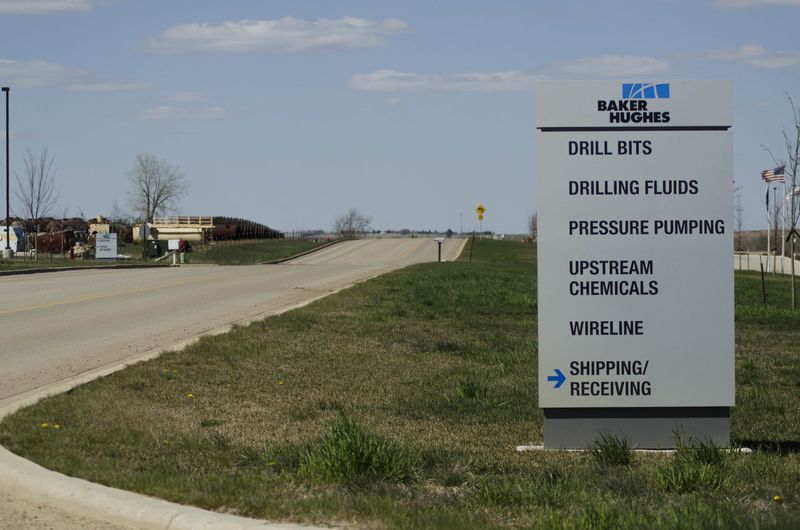
Baker Hughes reported Q1 2026 adjusted EBITDA 11.9% above Stifel’s forecast and 9.2% above the midpoint of guidance, while maintaining full-year EBITDA and order-flow targets. The company also lifted upstream spending assumptions outside the Middle East, declared a $0.23 quarterly dividend, and agreed to sell Waygate Technologies for about $1.45 billion in cash. Stifel reiterated a Buy rating and $63 price target, though it trimmed 2026 estimates due to Middle East disruptions.
BKR’s setup is less about a single quarter and more about the market re-rating a cash-generative industrial energy franchise that is finally seeing end-market discipline hold up despite regional noise. The key second-order effect is that stronger upstream spending outside the Middle East suggests the service cycle is not rolling over globally; that matters because service names tend to lead the tape on capex inflections by 1-2 quarters. If that trend persists, the market may have to take 2026 consensus higher again, especially on margin mix and order conversion, not just EBITDA.
The Waygate sale is strategically important because it sharpens the story toward higher-quality recurring equipment/service cash flows and reduces exposure to a slower-growth inspection niche. That should also improve capital allocation optics: a cleaner balance sheet plus a covered dividend increases the odds of incremental repurchases or M&A optionality later this year. Competitively, this is a mild negative for smaller industrial inspection vendors and a positive read-through for peers with services-heavy mixes that can sustain pricing through mid-cycle demand rather than relying on one-off project wins.
The contrarian concern is that the current optimism may be front-running a durable upstream recovery while underestimating Middle East volatility and a still-soft U.S. rig backdrop. If oil prices weaken or operators keep prioritizing short-cycle efficiency over volume growth, BKR’s order momentum could flatten even if near-term EBITDA holds. The next catalyst window is 1-2 quarters: the stock likely trades well in the near term, but the sustainability of the move depends on whether order flow converts into higher 2027 visibility rather than just a solid print.
AI-powered research, real-time alerts, and portfolio analytics for institutional investors.
Overall Sentiment
mildly positive
Sentiment Score
0.45
Ticker Sentiment
