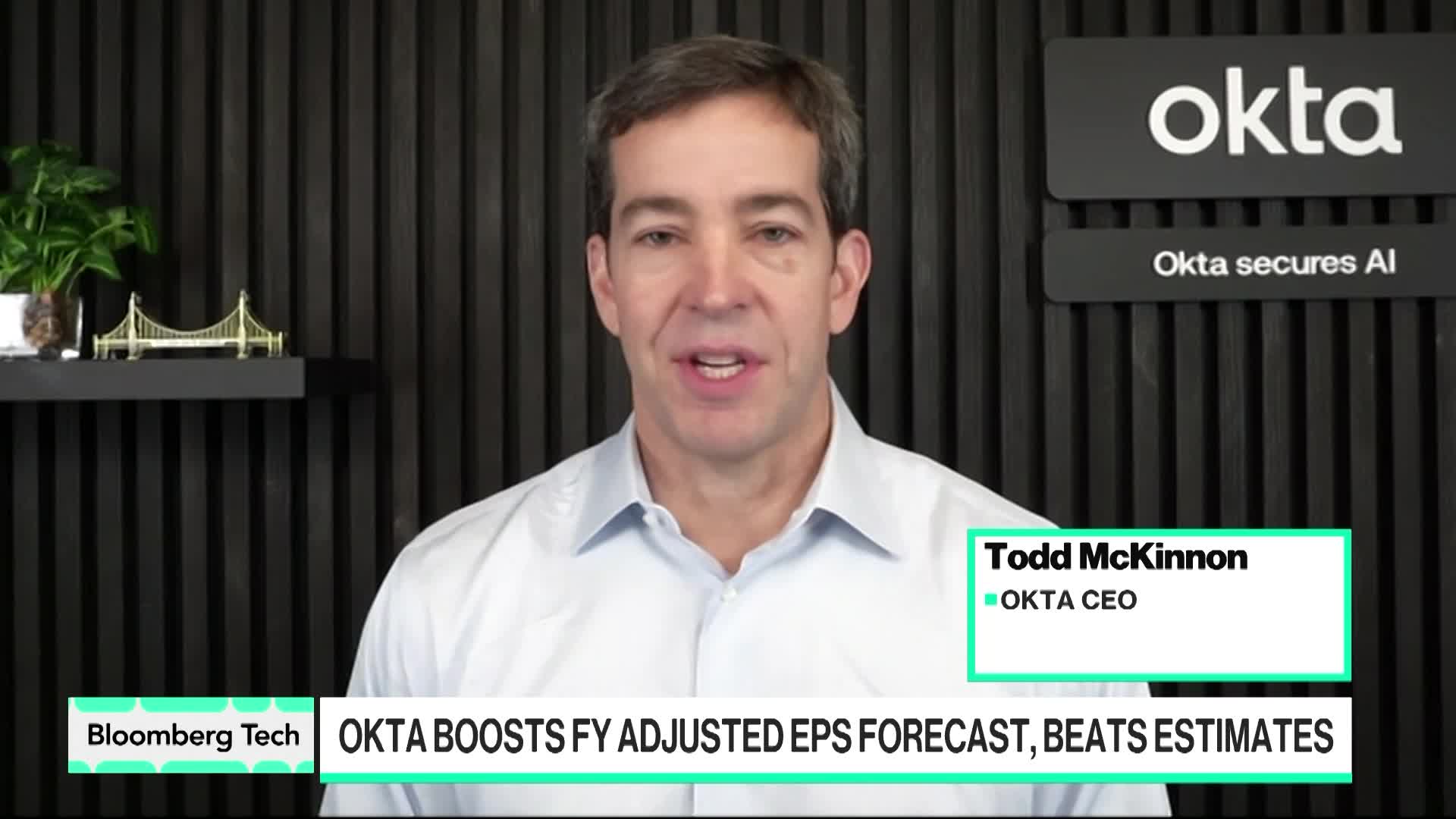
The company reported a solid third quarter and says inbound interest in agent-related products is unprecedented, positioning its offering as a platform-agnostic solution to securely connect AI agents to enterprise data and manage identity and governance. Management argues this identity/security layer could be a larger opportunity than its core business, but acknowledges market skepticism about the timing and pace of revenue realization (market expects revenue growth to potentially fall below 10%). Competitive threats from large platform players (Microsoft, Palo Alto Networks) are noted, but the firm emphasizes choice across models and infrastructure as a differentiator. Execution with customers on data connectivity and governance remains the key determinant of how quickly the upside materializes.
Market structure: Winners will be specialist identity/security and middleware vendors that enable secure data connectivity (likely Palo Alto Networks PANW and enterprise SaaS integrators like CRM) because enterprises will pay a premium for governed agent access; losers are platform lock‑in plays that block best‑of‑breed stacks (Microsoft/MSFT is at risk of share pressure). Demand is acute — inbound interest described as “unprecedented” — implying a tightening supply of proven connectors; I estimate an addressable revenue pool of $20–50B over 3–5 years for identity+agent plumbing, supporting 5–10% incremental pricing power for incumbents who prove governance.
Risk assessment: Tail risks include a major data breach or regulatory action (antitrust/privacy) that could halt deployments — a 1–5% probability event that would erase short‑term valuations. Immediate (days) impacts will be sentiment-driven around earnings; short term (weeks–months) will hinge on pilot-to-production conversion rates; long term (quarters–years) depends on interoperability standards and cloud infra costs (AMZN/GOOGL exposure). Hidden dependency: customers must centralize or federate data — if adoption favors federated patterns, specialized integrators win but revenue recognition slows.
Trade implications: Direct plays: overweight PANW and CRM, underweight MSFT; consider 3–12 month horizons for contract rollouts. Pair trade: long GOOGL vs short MSFT to capture model/infra preference shifts and perceived Microsoft lock‑in risk. Options: buy 3–6 month 25‑delta calls on PANW or CRM sized to 1–2% portfolio to capture positive catalyst risk while limiting downside. Rotate sector weights from consumer media (NFLX neutral) into cybersecurity and enterprise SaaS over the next 1–3 months.
Contrarian angles: Consensus underestimates implementation friction — wins will cluster with a few integrators, not broadly across all big cloud vendors; market may be over‑discounting MSFT’s ability to convert agent demand into seamless enterprise identity lock‑in. Historical parallel: early cloud security (2014–2017) rewarded specialists that later sold at 20–40% premiums; unintended consequence: large cloud vendors may accelerate M&A, producing short‑term valuation spikes for targets.
AI-powered research, real-time alerts, and portfolio analytics for institutional investors.
Request DemoOverall Sentiment
moderately positive
Sentiment Score
0.45
Ticker Sentiment
