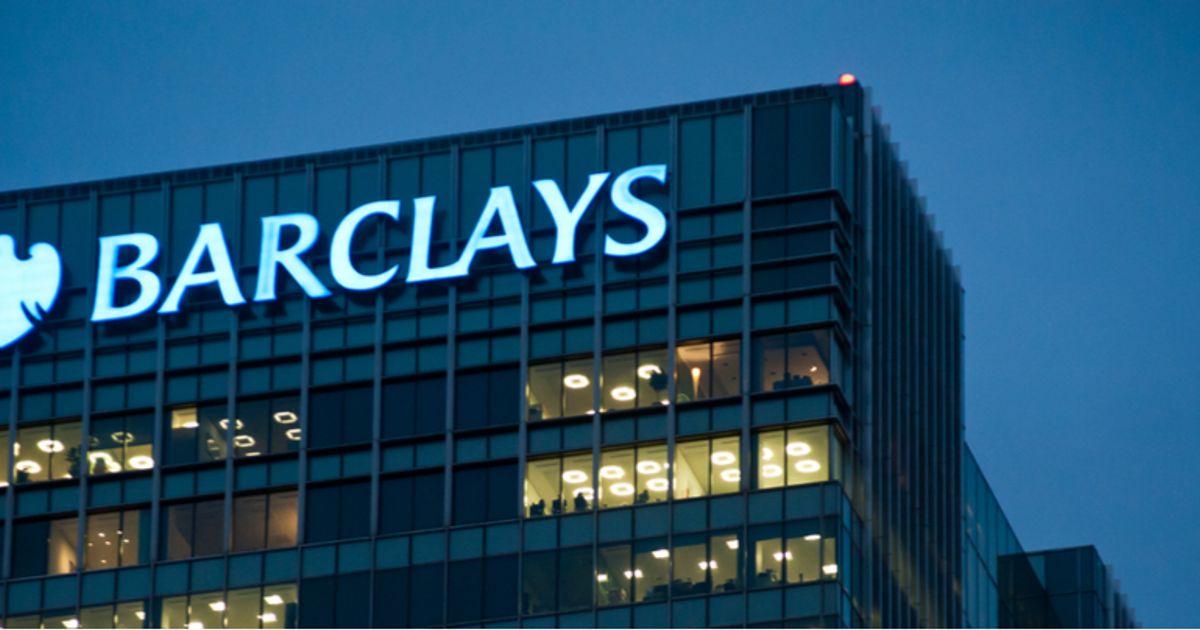
UBS reiterated a buy on Barclays and raised its 12-month target to 580p (from 570p), implying ~23% upside from the 477p share price after Q4 results that beat consensus (pre-provision profit +4% and profit before tax +8%). CET1 stood at 14.3% (14.0% post announced £1bn buyback) and management guided statutory RoTE >12% in 2026 and >14% in 2028, with 2026 income guidance raised to ~£31bn and group NII ex-IB >£13.5bn (Barclays UK NII £8.1-8.3bn). UBS forecasts 17% EPS CAGR to 2028 (cutting 2026 EPS -4% on higher LLPs, lifting 2027/28), expects >£15bn payouts 2026–28 (UBS: £18–19bn over plan, implying a 10–12% distributed yield in 2027–28), and values Barclays at 7.3x 2027 EPS and 1.1x tangible NAV with an implied adjusted RoTE of 14–15%.
Market structure: Barclays (BCS) is a direct winner — UBS’s note crystallises a path to 580p (+23%) based on ROTCE >12% in 2026 and >14% by 2028, income ~£31bn in 2026 and sizeable buybacks; competitors without large low-cost deposit franchises (eg. LLOY) face relative margin pressure. The structural hedge shifts pricing power toward banks that can lock margins on non‑interest deposits, suggesting a reallocation of investor capital into balance-sheet advantaged lenders and tighter CDS/equity vols for BCS. Cross-asset: expect UK bank bond spreads to compress, sterling to firm modestly on improved sector profitability, and reduced tail hedging demand in equity options.
Risk assessment: Key tail risks are a UK recession raising loan-loss provisions (UBS already raised 2026 LLPs), a regulatory intervention that curbs buybacks (PRA/BoE), or a sharp fall in short-term rates that undermines the structural hedge. Near term (days/weeks) price action will be driven by flow and positioning; medium term (3–12 months) depends on delivery of guidance and buybacks; long term (2026–28) hinges on credit cycle and execution of >5% CAGR income. Hidden dependency: income upside is ~50% structural hedge — if deposit mix or rate curve dynamics change, NII and distributed yield targets are vulnerable.
Trade implications: Direct long BCS exposure is justified but conditional — target 580p in 12 months, set position size 2–4% of equity portfolio, stop-loss 10% at ~430p. Pair trade: long BCS vs short LLOY (Lloyds) 1:1 to capture franchise/hedge differential; expect relative outperformance of 10–20% into 2027 if Barclays delivers. Options: buy 12–18 month BCS call spreads (eg. buy 450p/650p Jan 2027) to limit capital and capture upside; sell covered calls if owning stock to monetise distributions.
Contrarian angles: Consensus underprices execution/regulatory risks — market is treating buyback guidance as certain; historical parallels (post-2014 UK bank buyback cycles) show reratings can reverse if credit stress reappears. Mispricing: valuation at 7.3x 2027 EPS and 1.1x TNAV implies downside limited if ROTCE misses by <200bps, but if CET1 falls below ~13.5% or UK 2yr yields fall >100bp, downside could be 20%+. Watch for unintended consequence that aggressive buybacks reduce capital buffer and constrain lending growth, undermining the very income targets investors are buying into.
AI-powered research, real-time alerts, and portfolio analytics for institutional investors.
Request DemoOverall Sentiment
moderately positive
Sentiment Score
0.45
Ticker Sentiment
