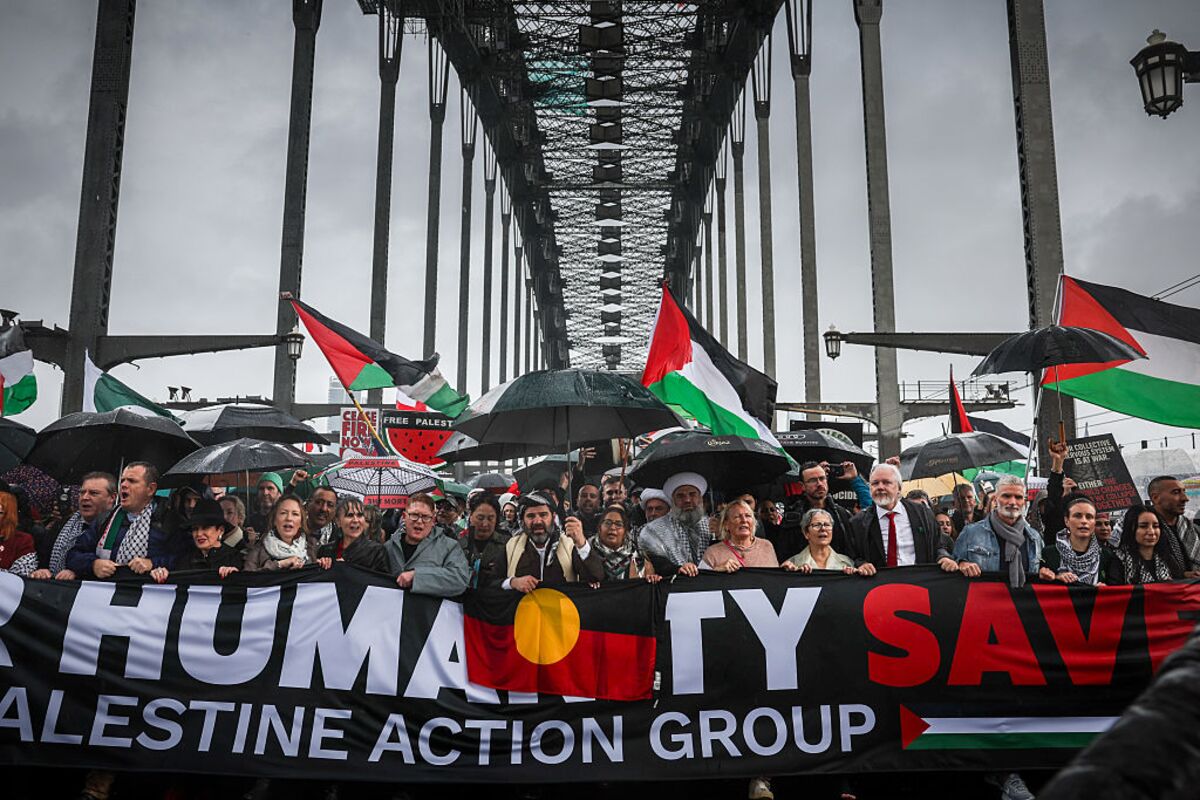
Tens of thousands of individuals marched across Sydney's Harbour Bridge on Sunday, a rare closure for a rally, to advocate for Gaza and pressure the Australian government on the humanitarian crisis. Police estimated 90,000 participants, while organizers claimed a significantly higher turnout, underscoring the scale of public sentiment on the issue.
A significant geopolitical event occurred in Sydney, where a protest march in support of Gaza drew an estimated 90,000 participants according to police, a figure organizers suggest was substantially larger. The demonstration's scale was sufficient to warrant the rare closure of the Sydney Harbour Bridge, underscoring the intensity of public sentiment and the protesters' aim to influence Australian government policy regarding the humanitarian crisis. While the event is a notable indicator of domestic political pressure related to a major international conflict, the provided information contains no direct links to specific corporate entities or financial markets. The associated data signals confirm a neutral market impact score of 0.0, indicating that the immediate, direct financial implications of this rally are assessed as negligible.
AI-powered research, real-time alerts, and portfolio analytics for institutional investors.
Request DemoOverall Sentiment
neutral
Sentiment Score
0.00
