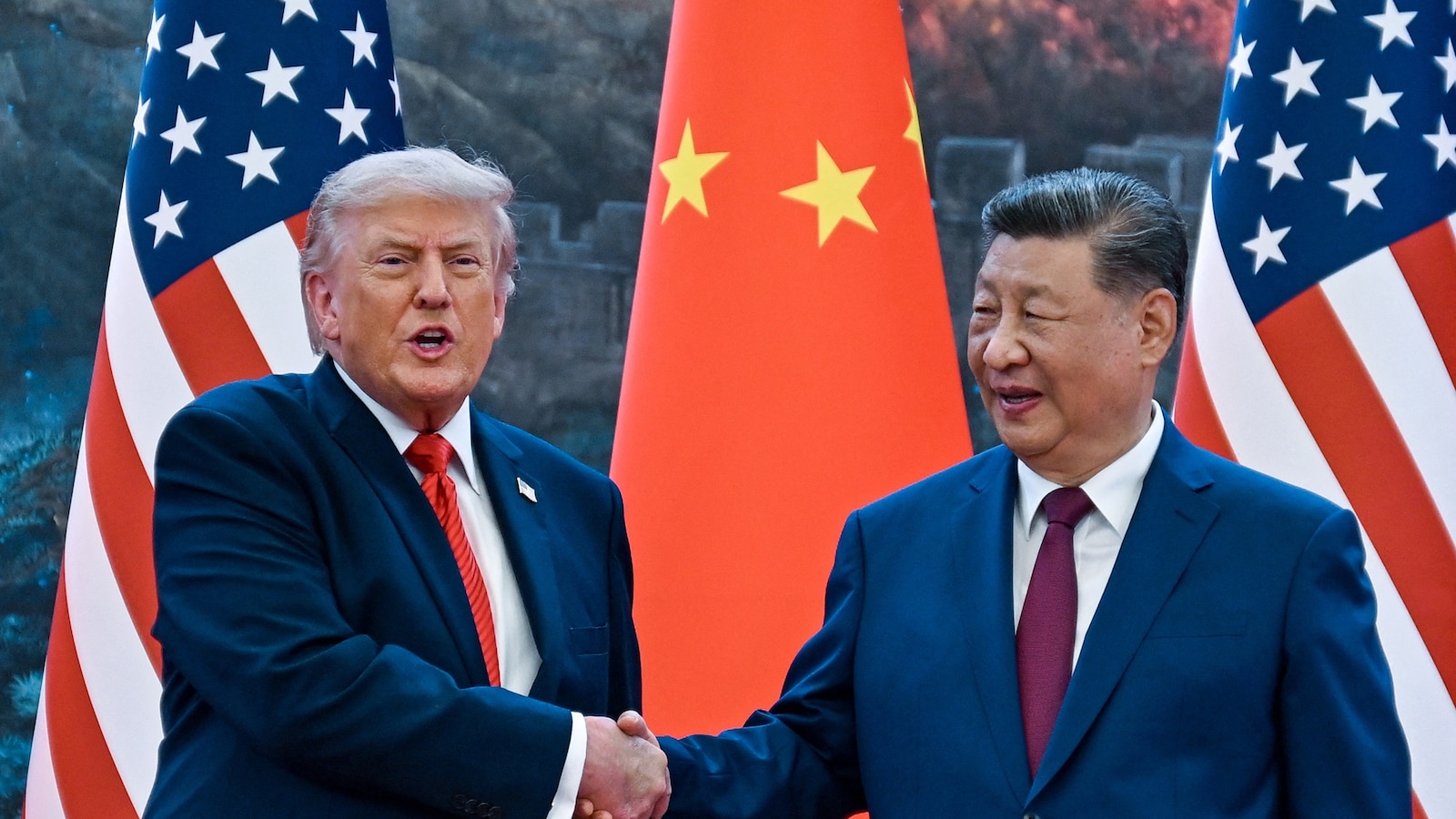
Trump said Xi Jinping’s 'Thucydides Trap' remark was aimed at the Biden years, not current U.S. conditions, and added that U.S.-China relations could become 'stronger and better than ever.' The article is largely interpretive political rhetoric with no direct policy action, so the near-term market impact is limited. It nevertheless keeps focus on U.S.-China strategic tension, which can influence trade and risk sentiment.
This is mostly signaling, but the market impact comes from what it implies about the next phase of U.S.-China bargaining: both sides are trying to pre-frame weakness as temporary and therefore negotiable. That lowers the near-term probability of an immediate trade shock, but it also raises the odds of headline-driven volatility because neither leader wants to be seen as conceding, especially heading into domestic political cycles. The practical read-through is a softer diplomatic tone with a still-hard industrial policy backdrop. The second-order winner is companies with China revenue exposure that are more sentiment-sensitive than fundamentally tariff-sensitive. Semiconductor equipment, luxury, and global industrials could see a modest de-risking bid if rhetoric stays constructive, but any rally is likely to be shallow because supply-chain decoupling is now embedded in budget plans and capex decisions. The bigger beneficiary is shipping and logistics through reduced tail-risk premiums, not through immediate volume growth. The key risk is that conciliatory language invites complacency while policy friction continues underneath: export controls, outbound investment restrictions, and tariff enforcement are the real variables over the next 3-12 months. If markets interpret this as a durable thaw, they may overprice earnings recovery in China-exposed cyclicals; that setup would reverse quickly on any Taiwan, AI-chip, or maritime incident. Conversely, if the rhetoric is just election-season theater, the best trades are fade-the-rally expressions in names that need a true normalization cycle to work. Contrarian view: the most important effect may be domestic, not bilateral. Framing the U.S. as back on top supports U.S. exceptionalism and keeps capital rotating toward U.S. assets even if China headlines improve. That argues for buying U.S.-centric quality over direct China beta, because the former benefits from both de-escalation and the narrative of relative American strength.
AI-powered research, real-time alerts, and portfolio analytics for institutional investors.
Request DemoOverall Sentiment
neutral
Sentiment Score
0.05
