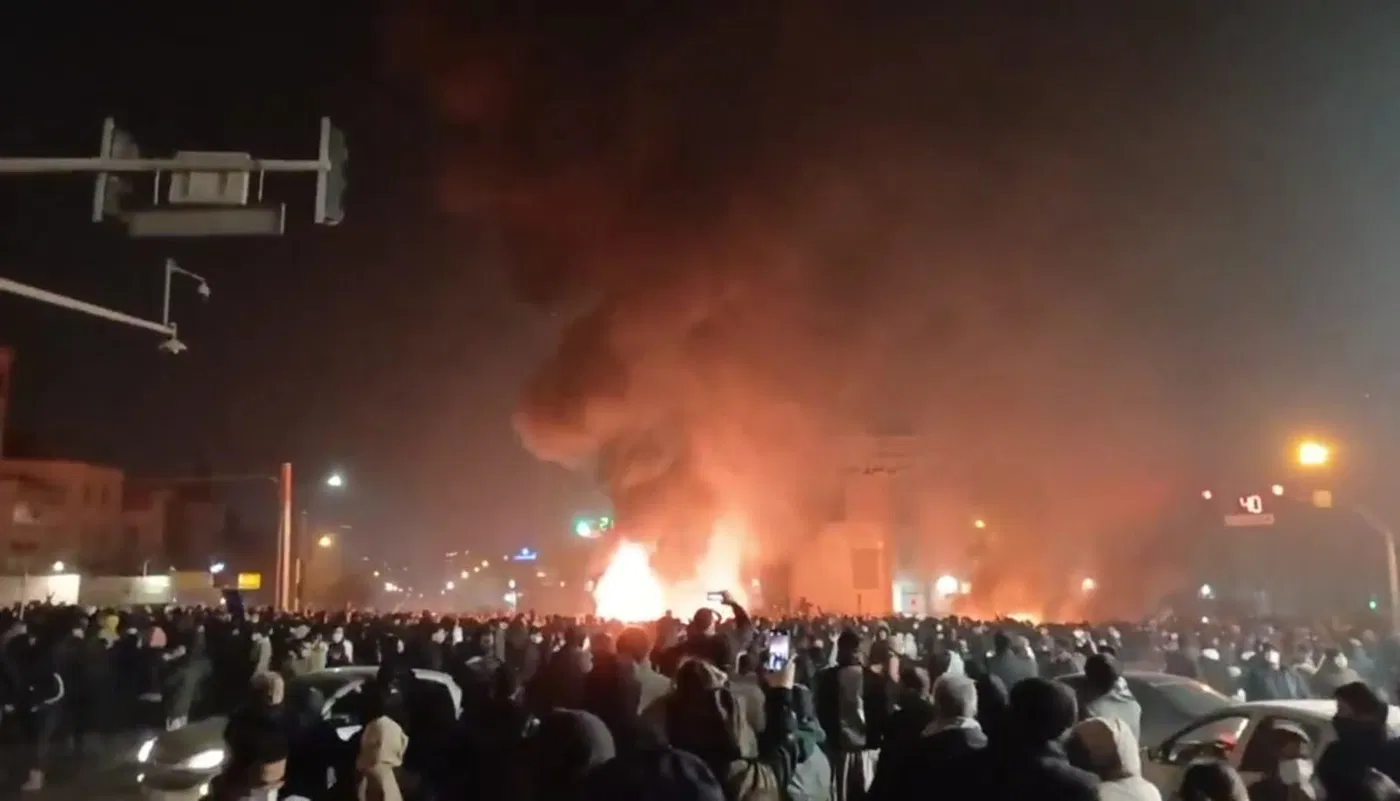
UN expert Mai Sato documents systematic raids on hospitals by Iranian security forces who abduct wounded protesters and extort grieving families, reportedly charging $5,000–$7,000 for return of bodies amid a collapsed currency. The report signals a sharp increase in domestic political risk and reputational/legal exposure for the regime, raising the likelihood of wider social unrest and potential sanctions pressure that would increase risk premia on Iran-exposed assets and complicate any economic recovery.
Market structure: The immediate winners are safe-haven and defense exposures: gold (GLD), U.S. Treasuries, and U.S. aerospace & defense (ITA, LMT, RTX) if unrest escalates; losers are EM risk assets (EEM, local-currency EM bond ETFs) and regional travel/transport (JETS, IATA-exposed carriers) as risk premia and insurance costs rise. A credible threat to the Strait of Hormuz (carries ~15–20% of seaborne oil) would push Brent materially higher, transiently boosting integrated oil majors (XOM, CVX) but also increasing input costs and margin pressure for global airlines.
Risk assessment: Tail scenarios include a sharp regional escalation or prolonged internal collapse that triggers sanctions shifts and a 1–3 month shock: oil +$10–30/bbl and EM sovereign spreads +150–300bps are plausible in a high-impact case. Near term (days) expect volatility spikes in oil, gold and FX; short-term (weeks–months) see persistent USD strength and EM outflows; long-term (quarters–years) could raise defense budgets by mid-single digits and reshape regional trade corridors. Hidden dependencies: tanker rerouting costs, insurance premiums (GIIPS) and informal oil trading channels; catalysts include a naval incident, targeted strikes, or widened Western sanctions.
Trade implications: Use short-dated, directional hedges and relative-value positions rather than large outright directional EM shorts. Favor 1–3 month call spreads on Brent/USO to hedge oil shock, a 1–2% tactical overweight to GLD for portfolio insurance, and selective longs in ITA vs short JETS if conflict persists beyond two weeks. Size trades to 0.5–2% of total portfolio and set objective exits: +10% profit or time stops at 3 months for tactical hedges.
Contrarian angles: Markets often overshoot geopolitical premium — 2019–2020 Iran tensions produced short-lived oil spikes that faded as inventories and spare capacity absorbed shocks. If no external military escalation within 30 days, oil and defense longs can mean-revert; consider selling very short-dated oil call premium or layering exits into rallies. Unintended consequence: crowded defense longs can underperform if investors rotate back into cyclicals when headlines cool, creating a buying opportunity in beaten-down EM assets at >20% drawdowns.
AI-powered research, real-time alerts, and portfolio analytics for institutional investors.
Request DemoOverall Sentiment
strongly negative
Sentiment Score
-0.70
