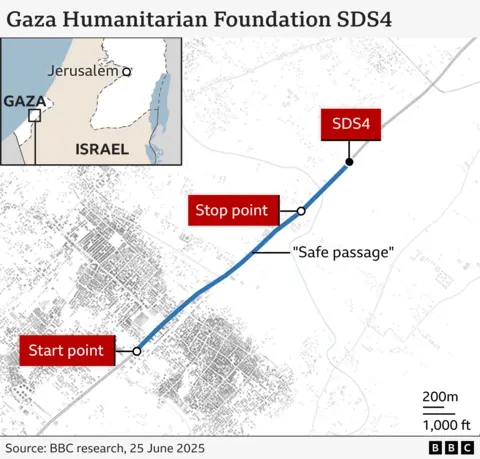
The US- and Israeli-backed aid system in Gaza, operational for a month, is plagued by routine chaos, gunfire, and significant Palestinian casualties, with over 500 reported killed and 4,000 injured while seeking aid. Despite the IDF acknowledging 'warning shots' and the US-funded Gaza Humanitarian Foundation (GHF) denying incidents at its sites and claiming successful distribution, UN agencies and eyewitnesses detail persistent violence, including widespread gunshot wounds, raising serious concerns about the system's safety and operational efficacy. This persistent instability and humanitarian crisis highlight severe geopolitical and security challenges in the region, impacting aid delivery and regional stability.
The US- and Israeli-backed aid distribution system implemented in Gaza a month ago is characterized by operational failure and severe humanitarian fallout. According to the Hamas-run Gaza health ministry, the system has been accompanied by over 500 deaths and 4,000 injuries among Palestinians seeking aid. Verified video footage corroborates a near-daily environment of chaos and gunfire. There are starkly conflicting narratives regarding accountability: while eyewitnesses and the Red Cross report widespread gunshot wounds and attribute fire to Israeli forces, the Israel Defense Forces (IDF) states it has fired only 'warning shots' and blames Hamas for disruptions. The Gaza Humanitarian Foundation (GHF), which operates the distribution sites with $30 million in recent US funding, denies any fatalities at its locations and reports distributing 46 million meals. However, this claim is contradicted by the UN, which condemned the plan as a 'militarisation' of aid, and the Red Cross, which has activated mass casualty procedures 20 times. The potential for severe violations of international law is significant, with the UN's human rights office describing the killing of aid seekers as a 'likely war crime', a sentiment echoed by independent legal experts. The situation represents a critical failure in safe aid delivery, escalating geopolitical tensions and creating profound legal and reputational risks for the parties involved.
AI-powered research, real-time alerts, and portfolio analytics for institutional investors.
Request DemoOverall Sentiment
extremely negative
Sentiment Score
-0.90
