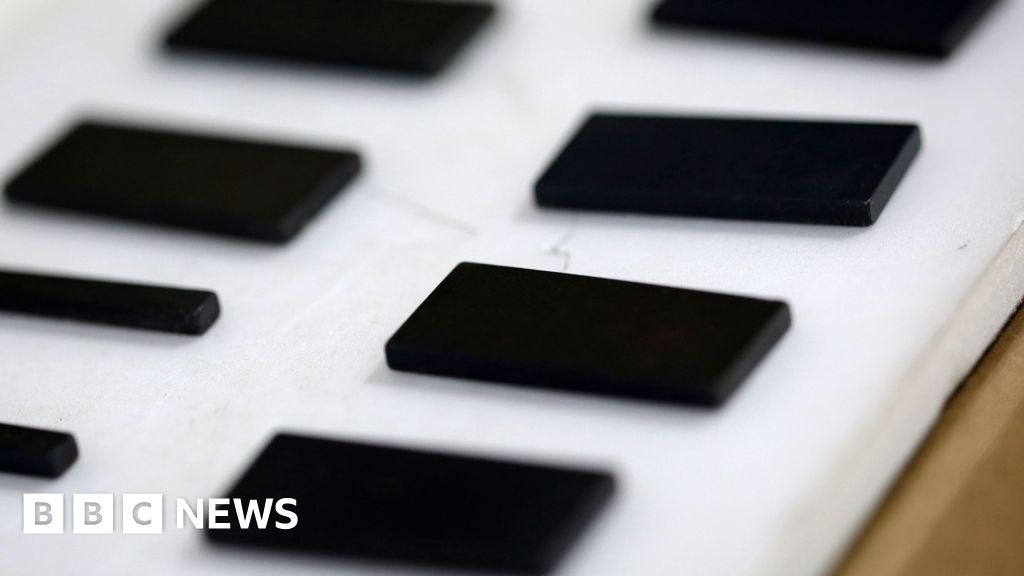
India approved a 73bn-rupee (≈$800m) incentive scheme to spur domestic production of 6,000 tonnes/year of permanent rare-earth magnets within seven years, aiming to cut reliance on China, which supplies 80–90% of India's magnets and controls >90% of global rare-earth processing. The plan addresses growing domestic demand (currently ≈7,000 tonnes/year) and follows China’s export curbs, but faces material shortfalls (India lacks extractable heavy rare earths like dysprosium/terbium), limited commercial magnet-making expertise, only one operational mine, and pricing/scale challenges that could keep the industry dependent on imports unless technology and supply chains are rapidly developed.
Market structure: The policy benefits non-Chinese upstream and non-China processors (e.g., MP Materials, Lynas) and Western/Japanese licensors that can supply tech and IP; domestic Indian CAPEX recipients will win subsidies but face steep learning curves. China retains pricing power for heavy rare earths (dysprosium/terbium) — expect continued import dependence for those elements and persistent premium spreads of 10–30% versus Chinese-integrated supply unless new heavy-REE sources or recycling scale rapidly.
Risk assessment: Tail risks include a Chinese export shock (high-impact, <12 months) that could spike prices 30–100%, or Indian execution failure (multi-year) leaving demand with existing Chinese suppliers. Near-term market moves likely muted; meaningful demand reallocation will play out over 3–7 years as India targets 6,000 t/year by ~2032; watch milestones (first commercial plant output by 2028, India halting exports from IREL).
Trade implications: Favor material producers outside China and diversified ETFs; use concentrated equity (2–3% portfolio) in MP (MP) and Lynas (LYC.AX) and a 1–2% allocation to REMX for dispersion. Use 12–18 month call spreads on MP/LYC to cap cost and buy 6–9 month puts on INDA (hedge India execution risk) sized to 20–30% of size; rotate into Defense/EV supply-chain names on confirmed offtake contracts.
Contrarian angles: Consensus underestimates the role of recycling, magnet-substitute alloys and Japanese/Korean tech partnerships — these are multi-year, high-ROI niches if heavy-REE scarcity persists. The political push may create domestic price premia that make Indian magnets noncompetitive unless buyer subsidies appear; that mismatch creates arbitrage for third-party recyclers and alloy innovators rather than pure miners alone.
AI-powered research, real-time alerts, and portfolio analytics for institutional investors.
Request DemoOverall Sentiment
mildly negative
Sentiment Score
-0.30
