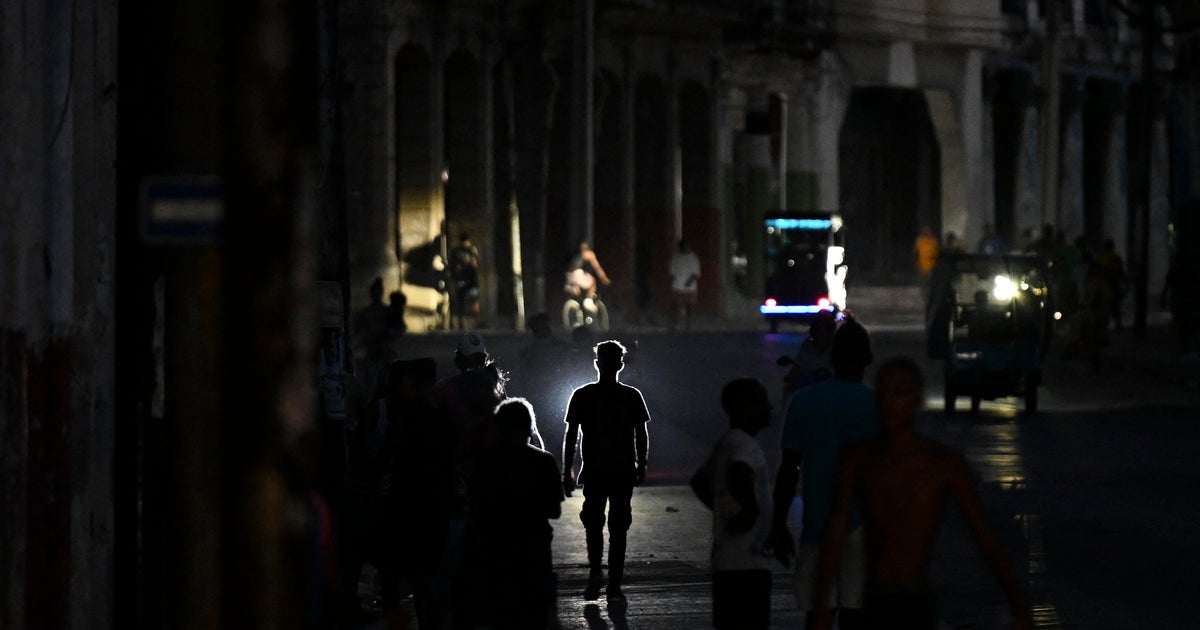
Cuba's national power grid suffered a major failure, cutting electricity to all eastern provinces while Havana endured 24 consecutive hours of blackouts. The crisis is being worsened by fuel shortages, with officials saying Cuba has "absolutely no fuel" and produces only about 40% of the fuel it needs, amid U.S. sanctions and tensions over oil shipments from Russia and humanitarian aid from Mexico and the U.S. The outage has already disrupted work, spoiled food, and forced hospitals to cancel surgeries, making this a broad macro and geopolitical shock for the island.
This is less an isolated utility failure than a stress test of the entire Cuban import-and-credit complex. When the grid becomes unreliable, the marginal cost of doing business rises sharply: diesel generators, backup batteries, food cold-chain losses, and medical disruptions all compound into lower productivity and faster social instability. That tends to accelerate a negative feedback loop where the state needs more hard currency for emergency fuel precisely when tourism, industrial output, and tax receipts are weakening. The second-order trade implication is not energy bullishness in the usual sense, but higher geopolitical optionality around sanctioned fuel flows and humanitarian carve-outs. Any incremental Russian, Mexican, or third-country shipment becomes more valuable, which means a handful of tanker owners, traders, and insurers exposed to gray-zone freight can see episodic opportunity, though headline risk is high. More importantly, sustained outage severity increases the probability of policy concessions on sanctions or aid conditionality over the next 30-90 days, because the humanitarian optics are deteriorating faster than the regime can absorb. The market is likely underpricing the speed at which local infrastructure failure can morph into political negotiation. The near-term tail risk is unrest, which can force both a harder U.S. posture and a scramble for emergency supplies; the medium-term upside is selective easing or sanctioned humanitarian channels if conditions worsen further. The contrarian point: this is not just an energy shortage story, it is a solvency story for a fragile state, so the right exposure is to institutions that gain from emergency relief and policy normalization rather than to Cuba itself. From a broader EM lens, repeated grid failure raises the premium on distributed power, microgrids, and backup generation across politically fragile markets. If this becomes a template for other sanctioned or capital-starved systems, then the beneficiaries are not traditional integrated utilities but firms selling modular power, storage, and off-grid resilience.
AI-powered research, real-time alerts, and portfolio analytics for institutional investors.
Request DemoOverall Sentiment
strongly negative
Sentiment Score
-0.82
