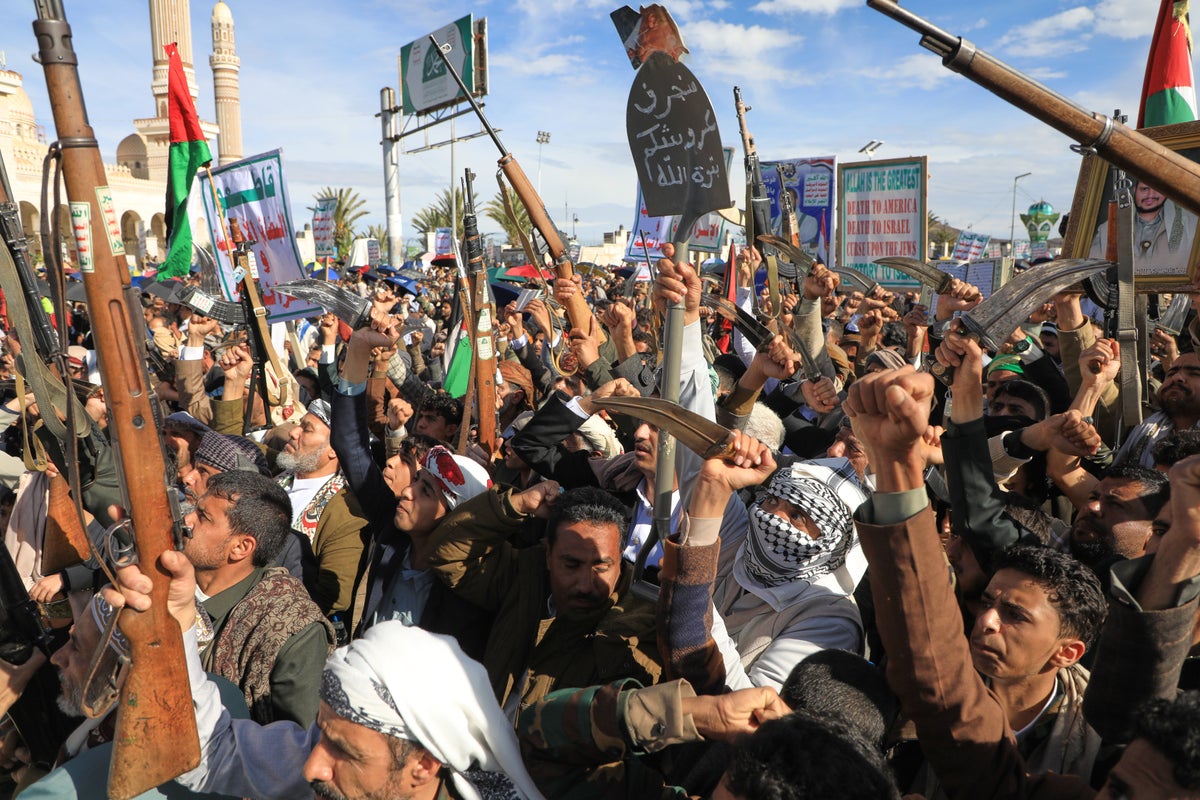
3,500 US Sailors and Marines have arrived aboard the USS Tripoli and US reports suggest consideration of deploying ~10,000 troops with planning for weeks-long ground operations. Yemen's Iran-aligned Houthis launched a second missile-and-drone attack on Israel within 24 hours, while regional incidents include reported damage to Kuwait airport radar and halted Maersk operations at Salalah. The situation materially elevates regional conflict risk, threatens shipping lanes and energy security, and implies heightened oil price and market volatility—monitor energy, shipping insurers, EM sovereign risk and defense contractors closely.
The immediate second-order market impact is concentrated in global shipping and insurance economics: even episodic Red Sea/Arabian Peninsula disruptions will force Asia-Europe and Asia-USG trade onto the Cape of Good Hope or longer transits, adding mid-single-digit to low-double-digit percent transit time and cost for container trades over weeks. That reroute amplifies spot container and tanker rates, benefits owners with flexible capacity and drives near-term freight rate spike (beneficial to public owners of modern box tonnage) while simultaneously roiling just-in-time supply chains for electronics and auto parts with 2–8 week lead-time shocks.
Defense and logistics OEMs see demand shockwaves on differing cadences — tactical ISR, precision munitions and amphibious/airlift requirements can accelerate order flow within 1–3 months, while large program-level budget reallocation and export approvals unfold over 6–24 months. Insurers and reinsurers face immediate repricing of war-risk and kidnap & ransom coverage, compressing available capacity and raising premiums — an earnings lever for specialty insurers and a cost headwind for shippers and energy traders.
Macro and market risk is classic risk-off: safe-haven bid to USD, Treasuries and gold in days, hitting EM FX and CDS spreads in 1–6 weeks; equities in commodity-exposed and travel sectors will underperform until either a credible de-escalation pathway or durable route normalization occurs. The single biggest asymmetric tail is a sustained ground operation: a decisive escalation would spike Brent and marine insurance rates higher for months, whereas focused diplomatic progress could unwind most of the market repricing within 2–6 weeks.
Consensus is overstating permanence of higher oil and defense equities — many market moves are front-loaded. Short-dated options and selective covered-call or call-spread structures outperform outright equity exposure because procurement and capital deployment timelines differ; shipping beneficiaries are tactical (weeks–months) not structural (years) unless chokepoints remain closed for an extended period.
AI-powered research, real-time alerts, and portfolio analytics for institutional investors.
Request DemoOverall Sentiment
strongly negative
Sentiment Score
-0.80
