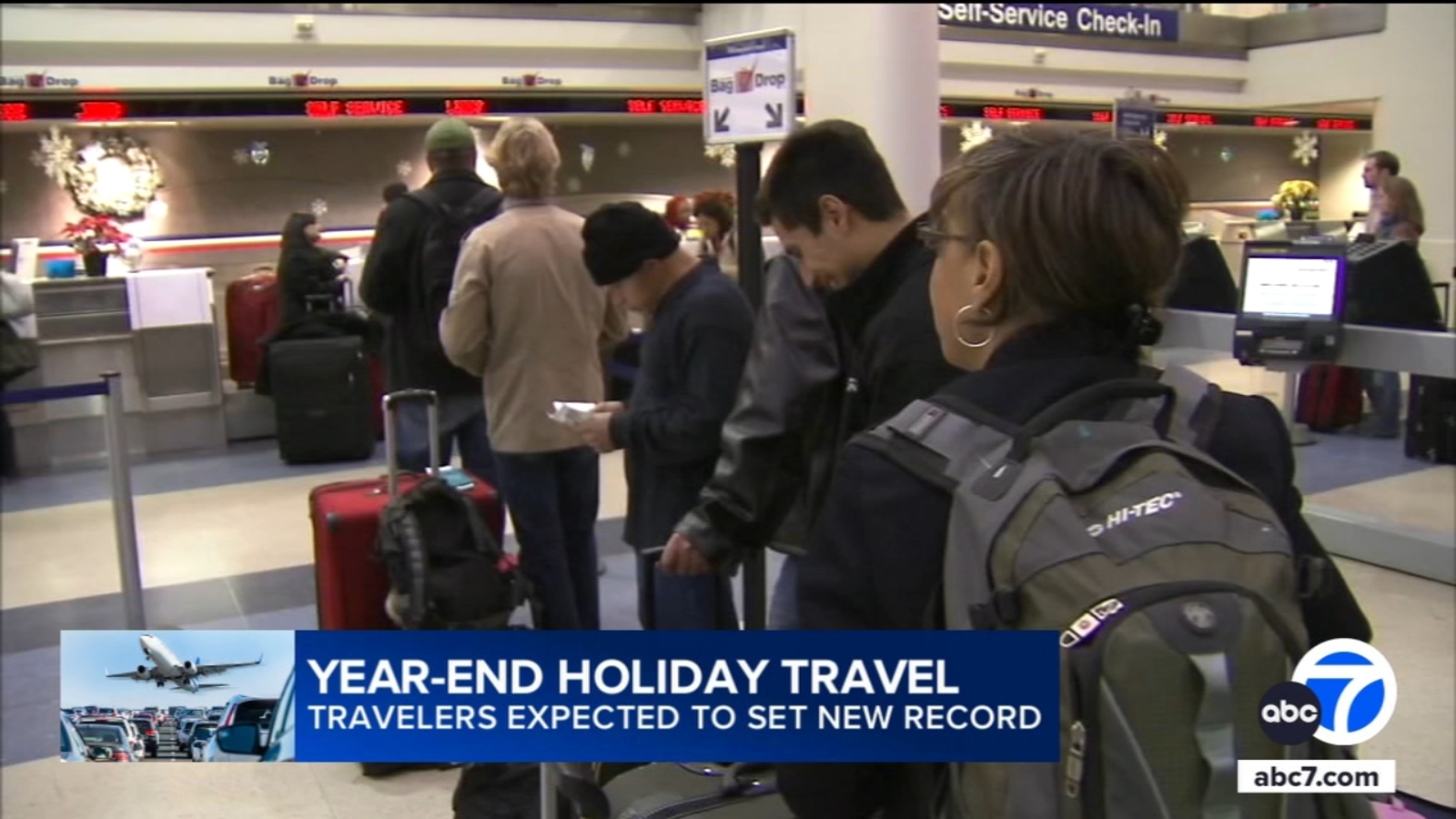
Holiday travel volume is at record levels with AAA projecting more than 122 million people to drive or fly and the FAA expecting nearly 52,000 departures on Friday; about 8 million will fly while roughly 109 million will drive. A strong atmospheric river is forecast to hit California from Tuesday through Christmas Day, bringing several inches of rain, flood and debris-flow risk and mountain snow that could disrupt airports, major freeways (notably I‑10 east between LA and Phoenix) and peak travel days around Dec. 27, which United identifies as its busiest post-Christmas day. Airlines, road operators and logistics managers should prepare for weather-driven delays and congestion that could compress capacity and increase short-term operational risk over the holiday period.
Market structure: Record holiday travel (≈122m people; ~52k daily flights peak) is a demand tailwind for network carriers (UAL) and travel ecosystem players (airports, JETS ETF) while an atmospheric river increases short-term operational risk for carriers, rental cars (CAR, HTZ) and regional airports. Pricing power for major airlines can rise in the 1–3 week window post-Christmas as capacity tightness meets peak demand, but immediate (0–7 day) disruption raises unit costs (reaccommodation, crew overtime) and idiosyncratic volatility (IV spike) for airline equities and options.
Risk assessment: Tail risk is a concentrated-10%+ revenue hit for specific days if cancellations exceed ~1.5% of flights for multiple days, and a secondary risk is increased claims for CA municipal insurers and stress on cat bonds tied to flood/debris flows. Time horizons: immediate (days) = operational/cancellation risk; short-term (weeks) = realized revenue lift from rebookings and fare hikes; long-term (Q1 2026+) = demand normalization with modest upside to RASM if load factors hold. Hidden dependencies include crew/aircraft positioning and slot congestion that can amplify small weather shocks into multi-day disruptions.
Trade implications: Favor tactically long major network carriers and travel exposure into late Jan 2026 while using option structures to limit downside; expect IV to remain elevated around Dec 24–Jan 3 and mean-revert afterwards. Consider relative-value plays: long large-cap, diversified carriers (UAL) vs short small-regionals/ground-transport operators that suffer greater weather sensitivity; use calendar or vertical call spreads to express bullish skew with defined cost.
Contrarian angles: Consensus focuses on demand but underprices operational-cost shock and insurance losses; past holiday storms (2018–2019) show sharp 5–15% drawdowns in airline equities with full recovery in 4–8 weeks—tradeable volatility. If implied vol is high, selling premium with protective wings (short-term iron condors) can harvest elevated IV, but avoid naked shorts around Dec 24–28 when gamma risk peaks.
AI-powered research, real-time alerts, and portfolio analytics for institutional investors.
Request DemoOverall Sentiment
neutral
Sentiment Score
-0.05
Ticker Sentiment
