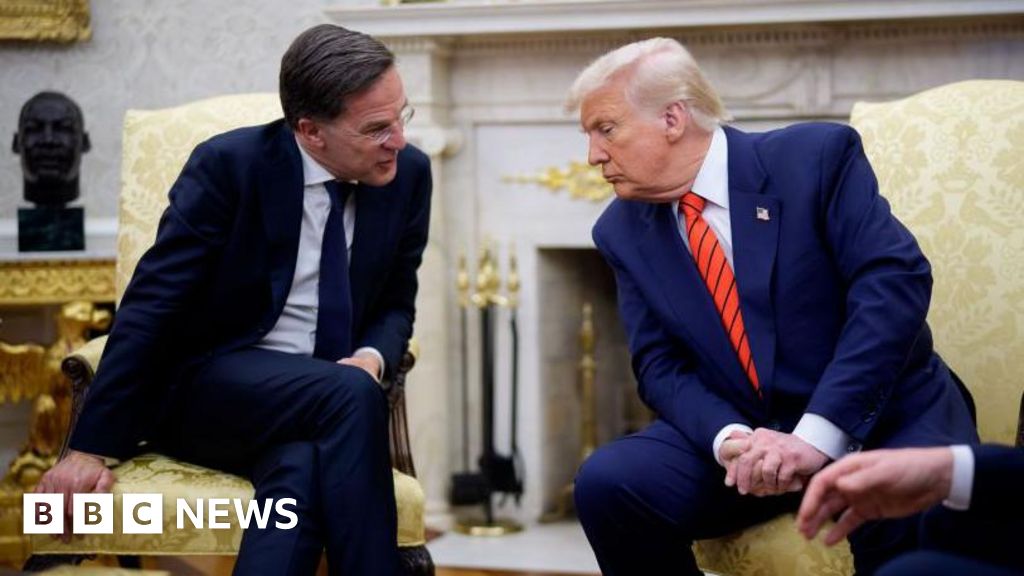
The upcoming NATO summit in The Hague, under the leadership of Secretary General Mark Rutte, is strategically designed to accommodate President Trump's demands for increased European defense spending, aiming for a commitment to 3.5% of GDP with an additional 1.5% towards defense-related expenditure, though the definition of this expenditure is vague. While the summit will likely paper over divisions on trade, Russia, and the Middle East, the core focus remains on securing Trump's approval and avoiding confrontation, even if it means muting discussions on critical issues like the conflict in Ukraine and a comprehensive Russia strategy, despite Rutte's warning of a potential Russian attack on a NATO country within five years.
The upcoming NATO summit is being strategically engineered to secure a political victory for US President Donald Trump, prioritizing the appearance of unity over substantive strategic agreement. The central deliverable is a new defense spending target for European allies, aiming for 3.5% of GDP on core defense plus an additional 1.5% on vaguely defined "defense-related expenditure," a compromise from Trump's initial 5% demand. However, the ambiguity of this secondary spending category, which could include infrastructure, has already raised concerns of "creative accounting" and questions the commitment's credibility, particularly as several members have yet to meet the previous 2% target. The summit's structure itself—shortened to three hours with a minimal five-paragraph statement—is designed to mask deep transatlantic divisions on trade, Russia, and the Middle East. Critically, discussions on a unified strategy toward Russia and the war in Ukraine are being deliberately muted to avoid a confrontation with Trump, despite Secretary General Mark Rutte's own warning of a potential Russian attack on a NATO country within five years. This highlights a fundamental schism, where Trump's administration, unlike European allies, does not view Ukrainian security as essential to European security, thereby elevating geopolitical risk by sidelining the alliance's most pressing threat.
AI-powered research, real-time alerts, and portfolio analytics for institutional investors.
Overall Sentiment
moderately negative
Sentiment Score
-0.55
