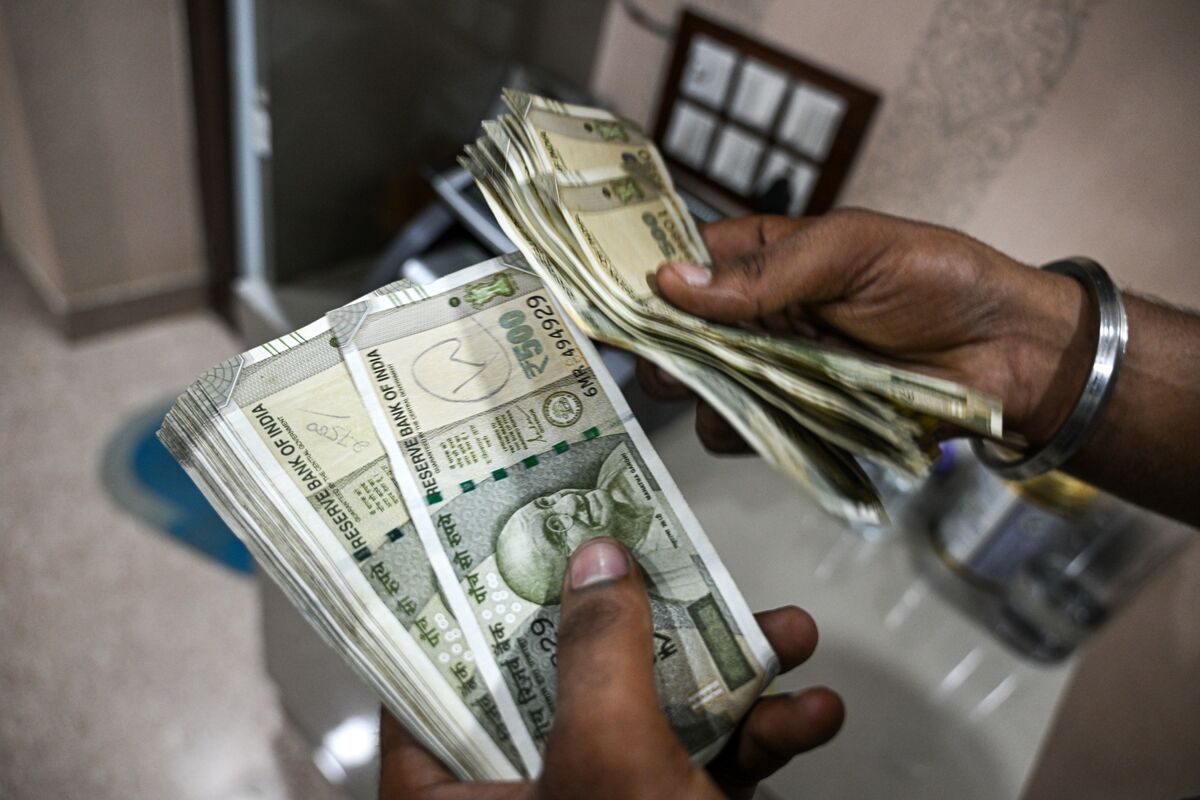
The Indian rupee is the worst-performing Asian currency in 2025 and is headed for its largest annual drop since 2022, when oil surged above $100/ barrel — a particular blow given India imports roughly 90% of its crude. This year’s depreciation has been driven primarily by higher US tariffs on Indian exports and a large exodus of foreign investors from the local equity market, heightening FX risk for India-exposed portfolios and increasing macro volatility for import-dependent sectors.
Market structure: Rupee weakness is a net negative for India’s import-heavy sectors (crude importers, consumer durables) and for equity markets reliant on foreign portfolio inflows; exporters to the US are doubly hit by tariffs that reduce pricing power even as a weaker INR would normally help competitiveness. Capital-flow dynamics now tilt strongly toward USD demand: expect higher INR FX vol, wider sovereign and corporate bond spreads, and upward pressure on local yields as FPIs sell equities and bonds to repatriate cash.
Risk assessment: Tail risks include a further escalation of US tariffs, a rapid spike in Brent (>$95/bbl) that blows out the import bill, or RBI imposing capital controls if reserves fall sharply—each could trigger >10% INR moves and sovereign stress. Near term (days–weeks) expect elevated volatility and equity outflows; over months RBI rate action/FX intervention and oil price moves will determine whether this is a temporary correction or a sustained competitiveness impairment.
Trade implications: Tactical hedges (long USD/INR via forwards or options) and short exposure to India equity ETFs are high-probability plays; Indian rates and CDS cheapen as yields rise—consider protection there. Cross-asset: rotate EM equity weight from India into Korea/Taiwan and buy INR vol; size trades to 1–3% of portfolio with explicit stop-loss and re-weight triggers tied to FX and reserve metrics.
Contrarian angles: Consensus assumes persistent capital flight — that may be overdone: a decisive RBI intervention or a rollback/softening of US tariffs could snap flows back quickly (historical parallel: 2013 reversal). Also a weaker INR can structurally boost non-US export competitiveness and incentivize import substitution, creating asymmetric upside if downside panic fades.
AI-powered research, real-time alerts, and portfolio analytics for institutional investors.
Request DemoOverall Sentiment
moderately negative
Sentiment Score
-0.60
