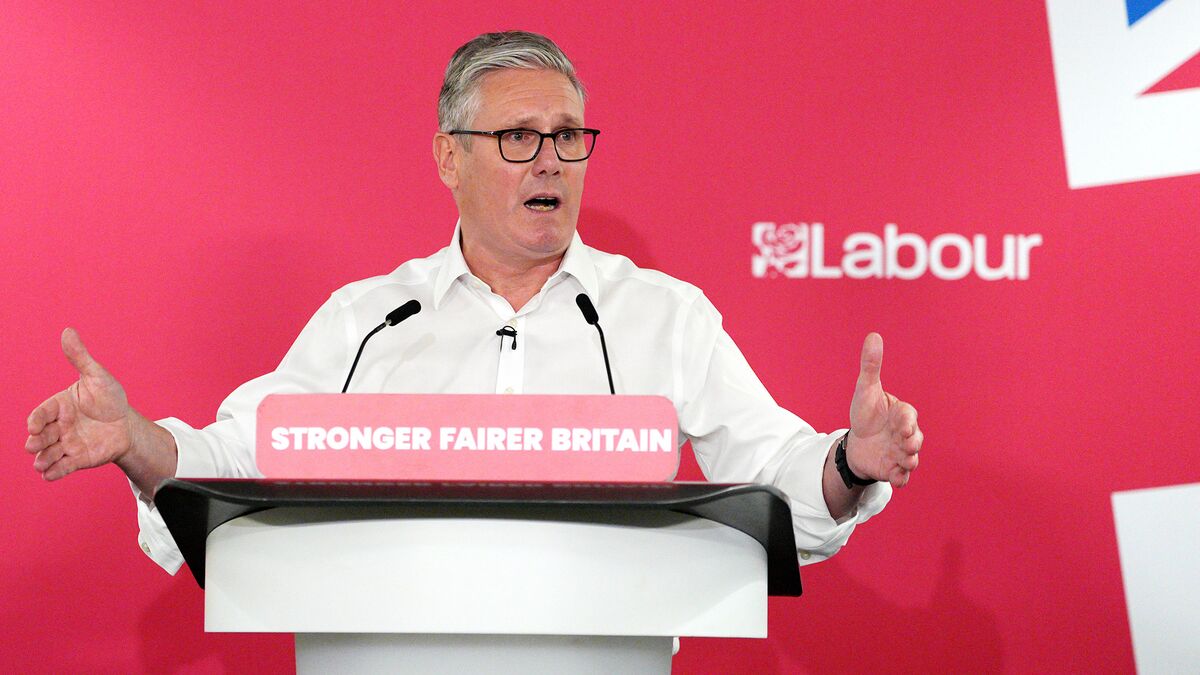
Keir Starmer faces a crucial Cabinet meeting as pressure builds for him to set out a timetable to quit, with more than 70 of Labour's 403 MPs now calling for his departure after bruising local election results. The article highlights rising internal party instability and leadership uncertainty. Market impact is limited, but the political backdrop could add near-term uncertainty for UK policy direction.
The near-term market implication is not a broad UK beta shock so much as a governance discount widening across domestically exposed assets. When leadership credibility deteriorates, the first-order hit shows up in policy execution risk, but the second-order effect is a freeze in corporate capital allocation: UK midcaps, regulated utilities, and defense-adjacent procurement names tend to trade with a higher uncertainty premium because management teams delay hiring, M&A, and capex until the political path is clearer.
The bigger opportunity is in relative value, not outright direction. If the administration looks weaker for longer, sterling-sensitive international earners should outperform domestic demand names as investors rotate toward balance-sheet strength and non-UK revenue streams. This kind of political stress usually has a short half-life in public equities unless it translates into a concrete policy reset; absent that, the initial risk-off move often reverses within 1-3 weeks, but the governance discount can persist for several months in smaller-cap stocks where liquidity is thinner.
For EQT, the incremental read-through is modest but positive: any broad re-rating toward governance quality and operational discipline should favor situations where management can point to execution rather than macro. The contrarian takeaway is that the market may be overestimating regime-change risk and underestimating how quickly Westminster can re-price leadership drama as background noise. If no formal timetable or spillover into fiscal policy emerges, the selloff in UK domestics should become a tradeable dislocation rather than a structural repricing.
AI-powered research, real-time alerts, and portfolio analytics for institutional investors.
Request DemoOverall Sentiment
moderately negative
Sentiment Score
-0.40
Ticker Sentiment
