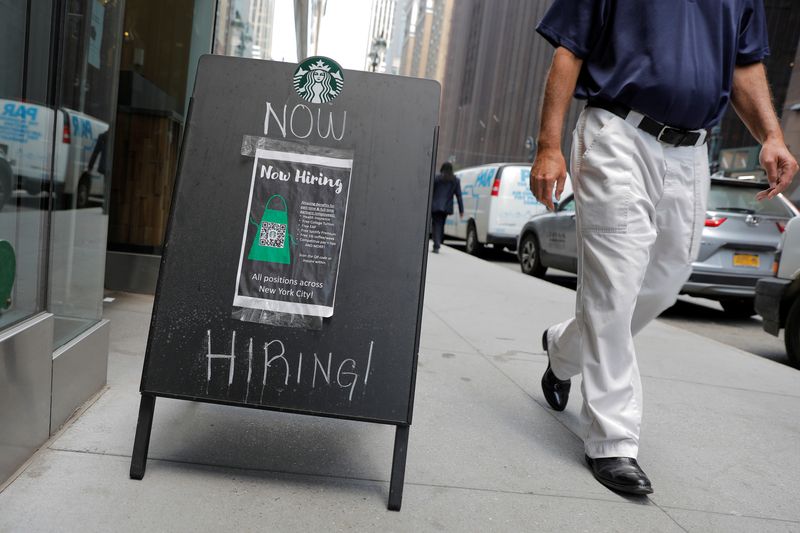
The July U.S. employment report significantly underperformed expectations with 73,000 nonfarm payrolls and substantial downward revisions for May and June, signaling a weakening labor market. Capital Economics attributes this slowdown, including a slight rise in the jobless rate to 4.2%, to Trump administration policies like immigration crackdowns, forecasting average payroll gains of just 50,000 per month in the second half of the year. While markets reacted negatively, Capital Economics argues the revisions' implications for recession may be 'overdone,' yet acknowledges the BLS diffusion index indicates more sectors are cutting jobs, suggesting that a continued loosening of labor conditions could prompt the Federal Reserve to resume interest rate cuts, provided tariffs do not accelerate consumer price growth.
The U.S. labor market displayed significant signs of weakening in July, with nonfarm payrolls adding only 73,000 jobs and prior months' figures being revised down by a substantial 258,000. This deceleration is stark, with the three-month average gain falling to 35,000 from 123,000 in the corresponding period a year ago. According to analysis from Capital Economics, this trend is not a statistical anomaly but a direct consequence of administration policies, particularly an immigration crackdown leading to a "dramatic slowdown in labor supply." While the analysts suggest the market's recessionary fears based on the large revisions may be "overdone," citing historical precedents and the specific nature of the revisions, they also flag concerning underlying data. The BLS diffusion index has fallen below 50, indicating that more sectors are now cutting jobs than adding them, and the unemployment rate has ticked up to 4.2%. This weakening picture has direct implications for monetary policy, raising the probability of the Federal Reserve resuming interest rate cuts. However, this path is contingent on tariffs not triggering an acceleration in consumer price growth, a key risk factor that could complicate the Fed's decision.
AI-powered research, real-time alerts, and portfolio analytics for institutional investors.
Overall Sentiment
strongly negative
Sentiment Score
-0.65
