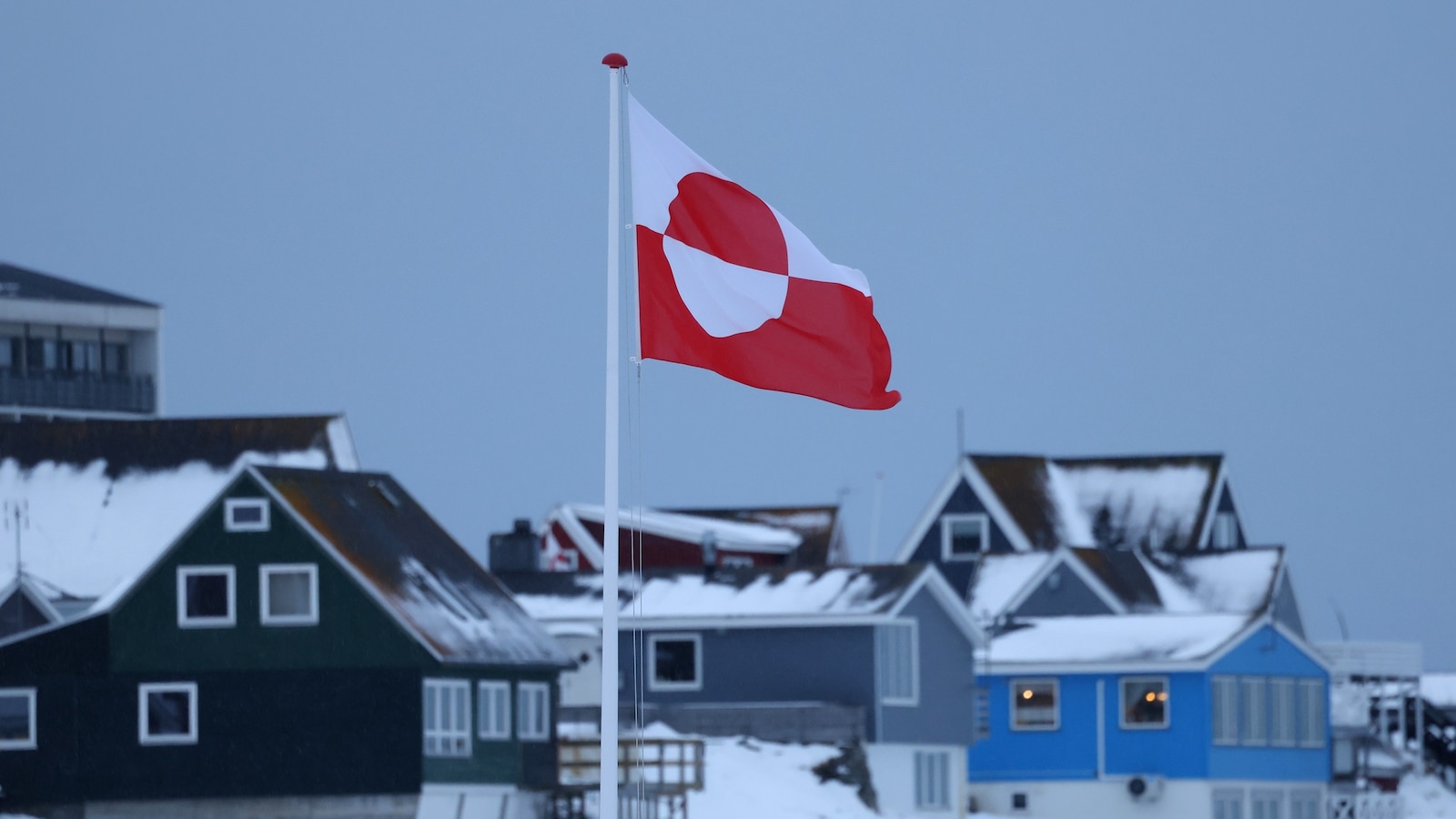
President Trump announced a 10% tariff on all goods from eight NATO countries (Denmark, Norway, Sweden, France, Germany, the UK, the Netherlands and Finland) effective Feb. 1, rising to 25% on June 1 unless the U.S. succeeds in acquiring Greenland. The announcement—framed as leverage over Greenland—has provoked strong condemnations from European leaders, risks disrupting transatlantic trade and supply chains, raises geopolitical and defense tensions within NATO, and faces existing legal challenges that have been appealed up to the Supreme Court.
Market structure: Short-term winners are US defense contractors (Lockheed Martin LMT, Northrop Grumman NOC, RTX) and domestic manufacturers that can substitute European supply; losers are European exporters and cross-Atlantic logistics providers (VGK/FEZ, EWG). Tariffs (10% Feb 1 → 25% June 1) function as a near-term non-tariff shock that widens price realization for US buyers of EU goods, granting pricing power to US domestic producers and raising input-cost passthrough for consumer-facing importers.
Risk assessment: Tail risks include EU coordinated retaliatory tariffs, escalation into broader trade war, or a legal injunction that freezes measures — each could move markets >5-10% in affected ETFs within weeks. Immediate (days) risk is volatility around Feb 1; short-term (weeks–months) centers on June 1 tariff step-up and potential EU countermeasures; long-term (quarters–years) is sustained supply-chain realignment and higher defense spending. Hidden dependencies: multinational firms with EUR sales and dollar revenue hedges, and commodity/rare-earth supply chains tied to Arctic access.
Trade implications: Tactical plays favor long defense equities and USD, short European exporters via VGK/EWG, and optionality into protection (VGK puts) ahead of Feb/June expiries. Consider commodity/minerals exposure (MP, LYCAY) to a strategic-minerals narrative if Greenland rhetoric persists; use bond duration (TLT) as a tactical risk-off hedge around headline spikes. Entry windows: initiate ahead of Feb 1 and reprice/trim into the June 1 event.
Contrarian angles: Consensus assumes prolonged 25% tariffs; legal/political pushback (Congress, courts, allied coordination) makes a full-duration tariff less likely — this can create 10–20% mean-reversion upside in beaten EU exporters within 3–6 months. Historical parallel: 2018 US tariff episodes produced sharp 8–15% draws in European equities followed by recoveries once negotiations resumed; unintended consequence could be faster EU onshoring and accelerated secular demand for defense and critical-minerals names.
AI-powered research, real-time alerts, and portfolio analytics for institutional investors.
Request DemoOverall Sentiment
moderately negative
Sentiment Score
-0.45
