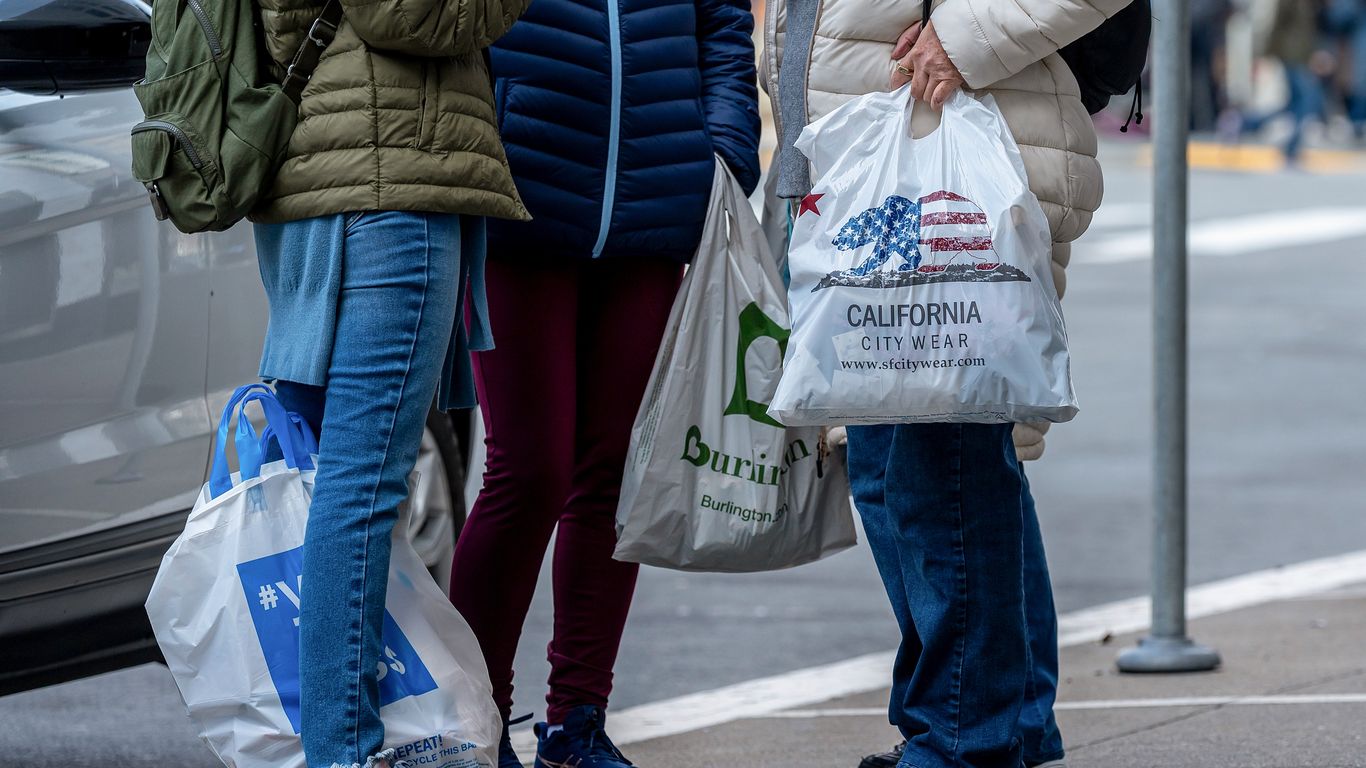
US retail sales unexpectedly declined 0.9% in May, according to the Commerce Department, driven by decreased spending on autos and parts (-3.5%) and home appliances (-2.7%); April's figures were also revised downward. Despite the overall decline, spending increased in categories such as e-commerce and clothing, with the control group figure rising 0.4%, leaving economists uncertain whether this signals a broader economic slowdown or merely a correction after earlier strong spending.
US retail sales experienced a notable contraction in May, declining 0.9% as reported by the Commerce Department, a figure that underperformed expectations and was exacerbated by a downward revision of April's data to a 0.1% fall from a previously estimated 0.1% gain. This downturn was primarily driven by significant decreases in spending on motor vehicles and parts, which fell 3.5%, and home appliances, down 2.7%, alongside a 2.0% drop in gasoline station sales, attributed to lower pump prices. The report introduces uncertainty regarding the health of consumer spending, as it follows a period of heightened purchasing activity likely motivated by anticipated tariff-related price hikes, making it difficult to ascertain if this is a sustained weakening or a temporary normalization. While these headline figures raise concerns, a more nuanced view emerges from the 0.4% rise in the retail sales control group—a key input for GDP calculations—and increased spending in categories such as miscellaneous retailers, hobby shops, e-commerce, and clothing, suggesting resilience in certain consumer segments despite the overall pullback.
AI-powered research, real-time alerts, and portfolio analytics for institutional investors.
Request DemoOverall Sentiment
mildly negative
Sentiment Score
-0.35
