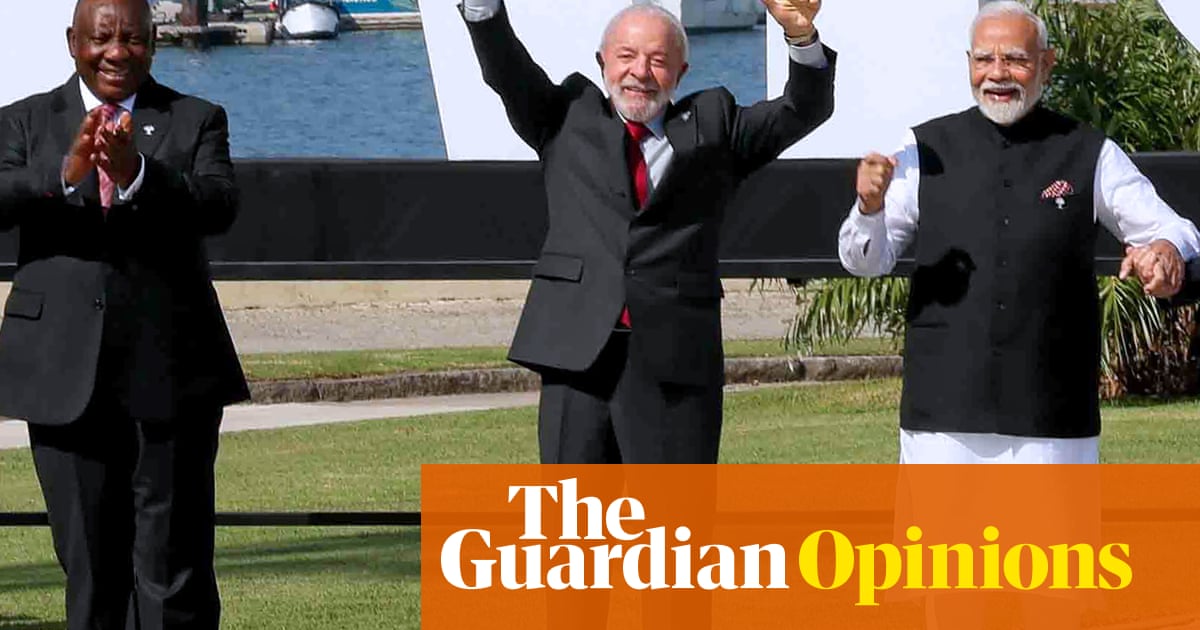
The recent BRICS summit in Rio de Janeiro sought to project the Global South's collective influence, advocating for multilateralism and a more equitable, multipolar world order amidst perceived Western retreat. Despite representing 40% of the global economy and population, the bloc's ambitions were tempered by significant internal divisions, notably the absence of China's Xi Jinping and Russia's virtual participation, alongside cautious declarations on dollar alternatives and tariffs. The summit, serving as a prelude to COP30, emphasized climate finance and a critique of 'discriminatory protectionist measures' while acknowledging the continued role of fossil fuels, underscoring the challenges in forging unified action despite shared grievances.
The recent BRICS summit in Rio de Janeiro highlighted a significant gap between the bloc's ambition to forge a new multipolar world order and its capacity to act cohesively. While the group represents 40% of the global economy and over half of its greenhouse gas emissions, internal fractures were evident, most notably the absence of China's President Xi Jinping and the virtual-only participation of Russia's Vladimir Putin. This disunity translated into a "relatively muted" final declaration that tempered previous rhetoric against the US dollar and was strategically designed by host Brazil to avoid antagonizing the US ahead of the critical COP30 climate summit. On climate policy, the bloc presented a unified critique of Western-led measures, such as the EU's carbon border adjustments, calling them "discriminatory protectionist measures." However, it failed to commit to a fossil fuel phase-out, instead acknowledging their continued importance, reflecting the influence of major new oil and gas producers within the alliance. Ultimately, the summit's outcome, underscored by a moderately negative sentiment score (-0.35), suggests that while the BRICS nations share frustrations with the existing global governance structure, their divergent national interests and internal power imbalances currently prevent them from acting as a decisive and unified geopolitical force.
AI-powered research, real-time alerts, and portfolio analytics for institutional investors.
Request DemoOverall Sentiment
moderately negative
Sentiment Score
-0.35
