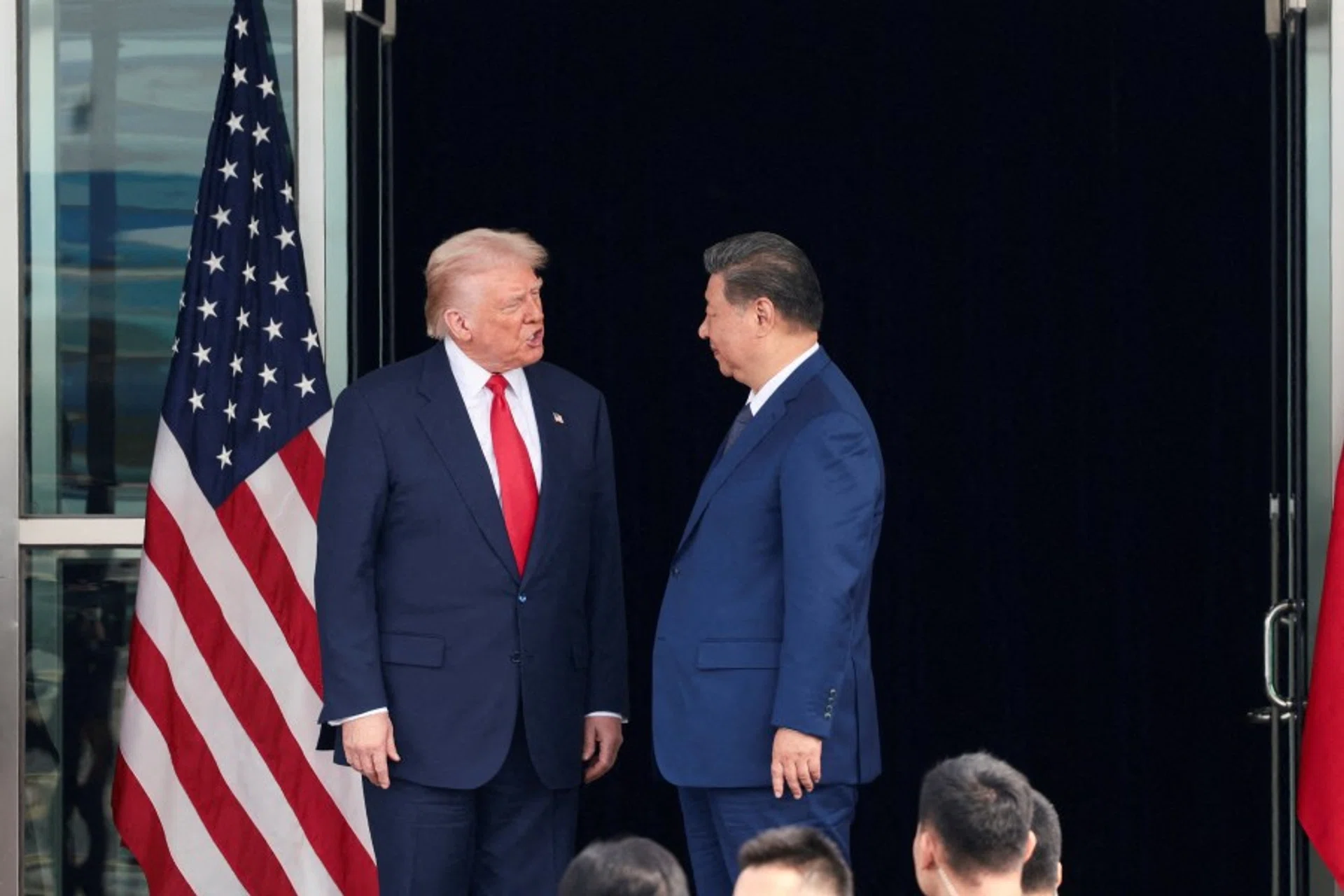
President Trump’s revival of the “G2” concept ahead of the Busan summit spotlights Washington’s search for external leverage amid domestic economic and political strain, but the article argues the world has fundamentally changed: China’s rapid gains in manufacturing, infrastructure and technology and a shift toward protectionism and de‑globalization mean a 21st‑century G2 would be defined more by rivalry than consensual leadership. Washington is portrayed as seeking to use market power and tariffs to extract economic concessions and shared burdens from China—using potential complementarities (e.g., U.S. finance/security with Chinese infrastructure in places like Africa)—but deep strategic distrust and domestic political constraints make true bilateral power‑sharing fragile. The author recommends reframing G2 into a G2+ model of inclusive coordination that brings the Global South, EU, India, BRICS and multilateral institutions into the process, arguing that only an open, multilateral approach can make China‑U.S. cooperation legitimate, sustainable and constructive for global governance.
President Trump resurrected the "G2" concept on 30 October 2025 ahead of the Busan leaders' meeting, reviving a framework first discussed in 2005–2008 but now occurring in a materially different strategic landscape. The article highlights that China has narrowed gaps in manufacturing, infrastructure and high technology while expanding influence in the Global South, whereas the U.S. no longer commands the unambiguous advantages it held circa 2004.
The global environment described is shifting toward protectionism and de-globalisation, with Washington adopting an "America First" posture and using tariffs as a primary lever; the author cites U.S. domestic strains—industrial hollowing-out, income inequality and populism—as drivers of this external leverage-seeking. Sentiment signals flag a mildly negative tone (sentiment_score -0.25) but a non-trivial market impact (0.32), implying policy shifts could prompt re-pricing in trade-sensitive assets.
The piece argues today's G2 would be defined more by rivalry than consensual leadership, making genuine bilateral power-sharing fragile even as selective cooperation (climate, public health, financial stability) remains possible. The Africa example—China building infrastructure and the U.S. supplying finance/security—illustrates a transactional, complementary dynamic rather than a stable rules-based partnership.
The author recommends reframing toward a G2+ inclusive model that embeds U.S.–China coordination within multilateral frameworks (EU, India, BRICS, UN/WTO) to gain legitimacy and reduce resistance; absent that, expect episodic cooperation punctuated by tariff-driven bargaining. For investors, the net is heightened policy risk for supply-chain and trade-exposed sectors but potential selective opportunities in infrastructure financing, defense/security services and emerging-market projects tied to multilateral coordination.
AI-powered research, real-time alerts, and portfolio analytics for institutional investors.
Request DemoOverall Sentiment
mildly negative
Sentiment Score
-0.25
