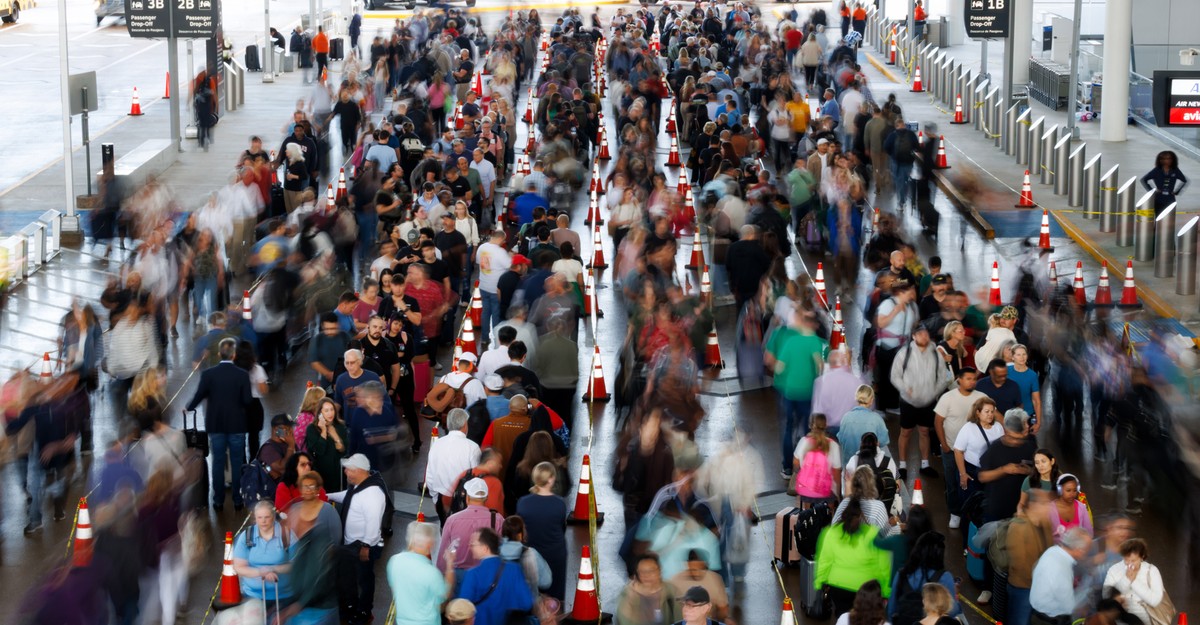
Jet fuel spiked >58% in the first week of the Iran war and transcontinental U.S. fares rose from $167 in February to $414 by mid-March; carriers face immediate cost pressure (American Airlines +$400m this quarter; United warns ~$11bn if oil stays elevated and may need a further ~20% ticket-price increase). More than 52,000 flights to/from the Middle East have been canceled and reroutes raise fuel burn, while related input shocks (urea +50%, helium constraints for semiconductors, fuel surcharges ~19% of package cost) point to broader, sustained inflationary pressures across goods and logistics even after hostilities end.
Airlines are facing a two‑front shock: sustained higher fuel input costs and an effective capacity squeeze from reroutes/cancellations that increases block hours and irregular operations. That combination widens unit-cost dispersion across carriers — those with stronger ancillary revenue, favorable route networks (fewer transits through the Gulf), and intact corporate demand will see pass‑through to yields, while others will suffer load‑factor erosion and outsized margin deterioration.
The shock cascades through logistics and retail with predictable lags. Air‑freight‑dependent SKUs (high-margin electronics, perishable food, fashion fast‑turn SKUs) will hitprice points earlier; bulk‑shipped and long‑inventory categories feel it after manufacturers reprice and farmers adjust fertilizer inputs over a 2–4 quarter horizon. Retailers with scale, integrated distribution, and bargaining power can smooth or arbitrage these spikes; smaller omni‑channel brands face margin compression or forced discounting that shortens inventory cycles.
Key catalysts and timeframes: a diplomatic reopening of the Strait or a coordinated SPR release could compress jet fuel and reverse pricing within weeks, but structural reopening of flows and refinery rebalancing take months. Conversely, OPEC policy or prolonged escalation would ratchet costs higher and extend the margin shock into the next 2–4 quarters. Seasonal demand (summer bookings) is the near‑term price discovery window for carriers.
Net: markets should be positioning for dispersion, not a binary airline collapse. Shorts on structurally weaker names and hedged longs in large, operationally flexible retailers offer asymmetric payoffs, while energy/transport volatility is the immediate hedge to hold against geopolitical reversals.
AI-powered research, real-time alerts, and portfolio analytics for institutional investors.
Request DemoOverall Sentiment
moderately negative
Sentiment Score
-0.45
Ticker Sentiment
