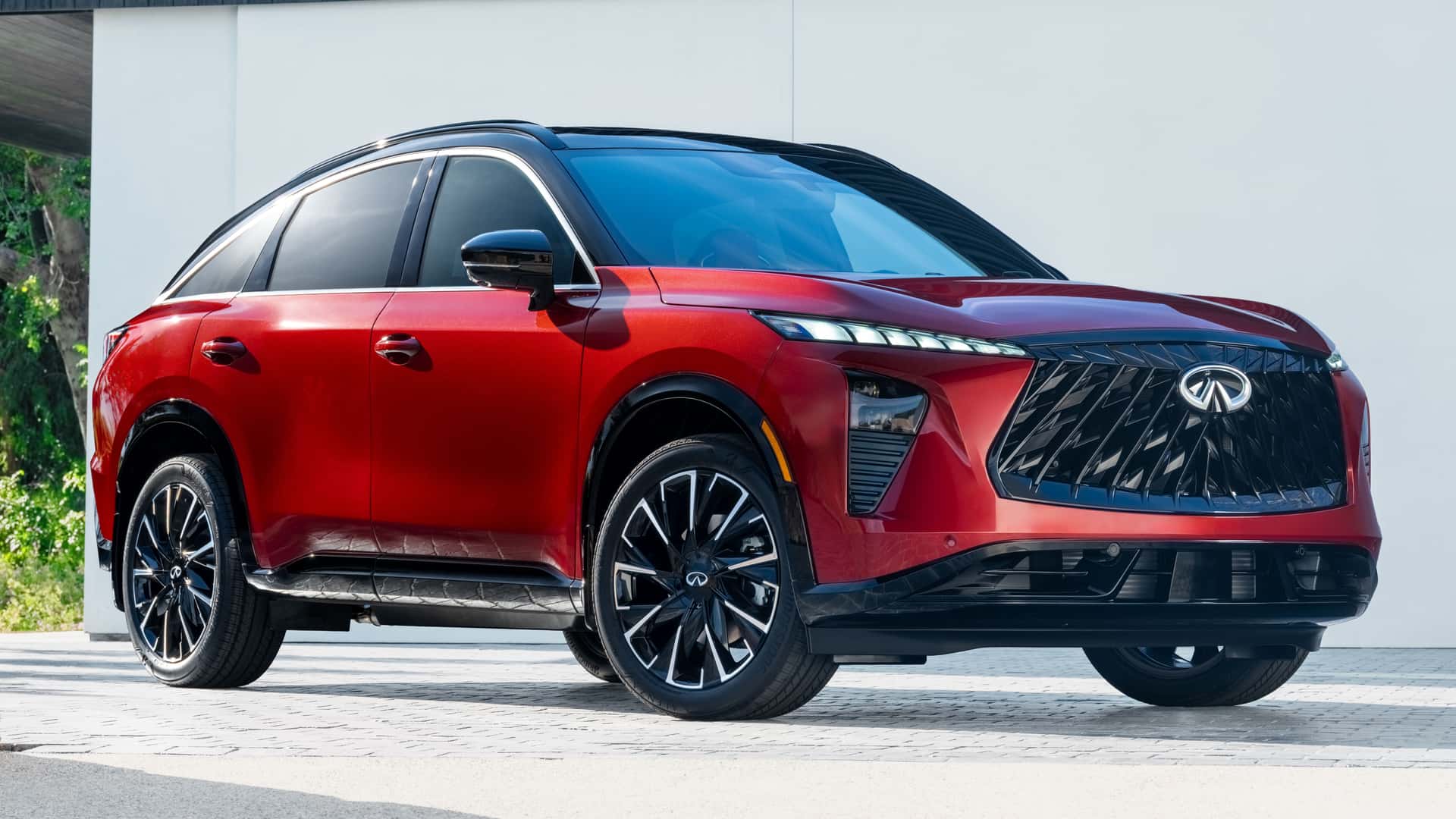
Infiniti revealed the all-new 2027 QX65 two-row crossover, powered by a 2.0L VC‑Turbo four-cylinder with 268 hp and 286 lb‑ft, mated to a nine-speed automatic with standard AWD. Pricing starts at $56,990 (Luxe, incl. $1,545 destination), Sport $57,235 and Autograph $64,135; it goes on sale this summer, with max tow up to 6,000 lbs and cargo of 35.8/67.7 cu ft. The launch strengthens Infiniti’s thin lineup with a more stylish, higher-spec offering, but the announcement is unlikely to meaningfully move markets near term.
Infiniti’s latest product move shifts a structural problem — a thin premium ladder — into an opportunity to steal share in the mid‑luxury compact crossover segment. If even a mid-single-digit percentage of conquest buyers switch from legacy German/Japanese competitors, Nissan’s premium mix could improve enough to meaningfully lift OEM EBITDA per unit (think mid‑teens to low‑20s on higher‑trim attach), with most of that impact observable within the first 12–18 months of full distribution.
The decision to deploy a more complex IC powertrain and AWD as standard concentrates demand on a narrow set of high‑precision suppliers (turboactuators, high‑pressure fuel systems, AWD transfer cases). That creates a two‑tier supplier outcome: near‑term upside for certain tier‑1s as content per vehicle rises, but elevated medium‑term obsolescence risk if Nissan accelerates electrification, compressing ICE parts volumes over a 3–5 year window.
Key risks are financing and residuals — higher transaction prices raise lease penetration sensitivity to interest rates and used‑luxury depreciation; a modest uptick in incentives would be visible within weeks of launch and could erase near‑term margin gains. Watch monthly retail mix, incentive disclosure, and any reliability headlines around the powertrain as 30–90 day catalysts; a recall or elevated warranty spend would flip the trade within the first year.
AI-powered research, real-time alerts, and portfolio analytics for institutional investors.
Overall Sentiment
mildly positive
Sentiment Score
0.25
Ticker Sentiment
