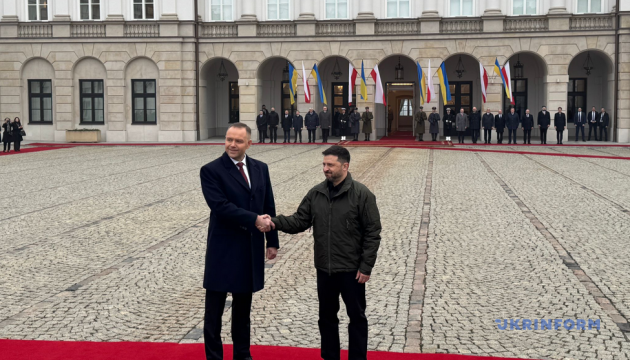
Ukrainian President Volodymyr Zelensky visited Warsaw for his first meeting with Polish President Nawrocki, holding one-on-one talks followed by full-delegation negotiations and a planned joint briefing; his program also includes meetings with the Marshals of the Sejm and Senate and talks with Prime Minister Donald Tusk. The visit, which began late on December 18, emphasizes ongoing diplomatic engagement between Poland and Ukraine and may inform future bilateral coordination on political and security matters that investors should monitor for regional risk implications.
Market structure: Zelensky’s Warsaw visit is a geopolitical signal that Poland will remain a major logistics and political hub for Ukraine, favoring European and US defense contractors (RTX, LMT, ITA ETF) and firms exposed to logistics/LNG imports (SHEL, E). Expect 3–12 month upside to defense orderbooks (2–6% backlog growth implied regionally) and episodic upside in European TTF gas pricing (10–30% shock range) if supply lines are threatened. Financials exposed to Central Europe (Polish banks) may see idiosyncratic flows while Russian-linked commodity revenues remain structurally impaired.
Risk assessment: Tail risks include escalation to NATO-border incidents or targeted strikes inside Poland (low probability, high impact), which would spike oil/gas +20–50% and bond volatility for EM/EU sovereigns in 24–72 hours. Near-term (days) expect elevated FX and volatility; short-term (weeks–months) political decisions (EU aid packages, sanctions) will re-price defense/energy sectors; long-term (2–5 years) persistent higher EU defense budgets and accelerated LNG infrastructure build-out are plausible. Hidden dependencies: EU gas storage levels, winter weather, and Polish coalition stability are critical catalysts.
Trade implications: Tactical: establish 2–3% long in ITA or RTX (6–12 month horizon) to capture defense capex, and a 1–2% long in GLD as a geopolitical tail hedge. Buy 3–6 month call spreads on LMT (5–10% OTM) to limit cost if risk premium rises; initiate a 1% position in LNG/shipping (GLOG) for disruption-driven freight spikes. Short small (0.5–1%) positions in Poland-focused cyclical ETFs (EPOL) only if Polish spreads widen >75bp vs Germany; exit on spread tightening below 40bp.
Contrarian angles: Consensus underprices multi-year EU defense budget reallocation—consider overweighting continental names often overlooked by US investors (RHM.DE, BAES.L) with 12–36 month horizons. The market may also overreact to short-term headlines: if TTF spikes >25% without infrastructure damage, fade into strength with short-dated gas futures or call overwrites. Unintended consequence: higher gas prices accelerate renewables/grid capex—identify 12–24 month beneficiaries (EPC/utility equipment vendors) for asymmetric opportunities.
AI-powered research, real-time alerts, and portfolio analytics for institutional investors.
Request DemoOverall Sentiment
neutral
Sentiment Score
0.00
