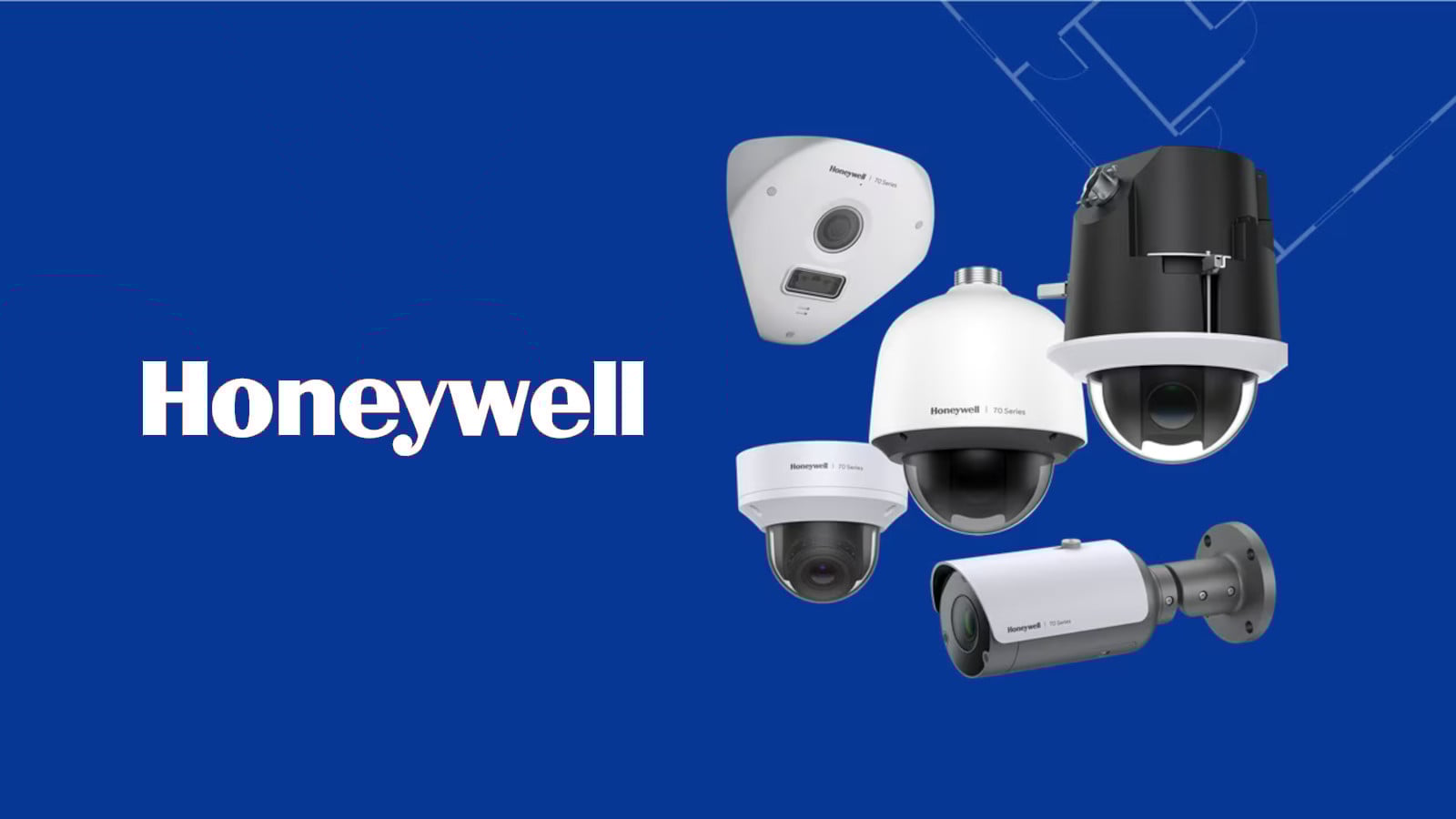
CISA has warned of a critical vulnerability (CVE-2026-1670, CVSS 9.8) in multiple Honeywell CCTV models that allows unauthenticated attackers to change a device account's recovery email and potentially takeover accounts and camera feeds. The advisory lists specific mid-level models used in SMB and some critical facilities, notes no known public exploitation as of Feb 17, and urges network isolation and secure remote access; Honeywell has not yet published a vendor advisory and users are advised to contact support for patch guidance. Financially, the issue poses reputational and potential remediation cost risks rather than immediate material impact to Honeywell's fundamentals, but could drive increased enterprise mitigation spending and procurement scrutiny for affected product lines.
Market structure: This vulnerability disproportionately pressures Honeywell (HON) mid-tier video hardware demand while creating a near-term pick-up for cybersecurity software, managed detection, and secure remote-access vendors (e.g., PANW, CRWD, FTNT). Expect hardware buyers in SMB/warehouse channels to delay purchases for 1–3 months pending patches; estimate <5% downside to HON security-segment revenue in next 12 months absent wider exploitation, but localized RFPs could reallocate 1–3% of TAM to software/services.
Risk assessment: Immediate risk (days) is headline-driven equity volatility; short-term (weeks–months) risk is procurement freezes and buyer audits; long-term (quarters) tail risk is federal procurement scrutiny or NDAA-style delisting that could remove government volumes and cause a multi-year replacement cycle. Hidden dependency: many customers bind cameras into cloud/identity stacks — a firmware patch lag or weak patch adoption could amplify breach risk and shift budgets to endpoint security and managed services.
Trade implications: Tactical: favor cyber-SaaS longs (PANW, CRWD) on 3–6 month horizon sized 1.5–3% each, and use HON equity/derivatives for event hedges. Pair trade: go long PANW and short HON equal notional 1:1 sized 1–2% net exposure to capture reallocation from hardware to software. Options: buy 3‑month ATM PANW calls (small size, 0.5–1% portfolio risk) and purchase 30–60 day 5% OTM puts on HON if price gaps down >3% within 10 trading days to monetize volatility spikes.
Contrarian angles: Market may overreact — HON is highly diversified and a single CVE with no active exploitation likely causes <10% drawdown in stock; consider a tactical buy-the-dip if HON falls >4% within 7 trading days, target 2–3% position with tight 8–10% stop. Conversely, underappreciated outcome: a credible exploit or federal action could accelerate multi-year migration to NDAA-compliant or cloud-native solutions, producing a 2–4% annualized spend shift in favor of cyber vendors over 12–36 months.
AI-powered research, real-time alerts, and portfolio analytics for institutional investors.
Request DemoOverall Sentiment
mildly negative
Sentiment Score
-0.25
Ticker Sentiment
