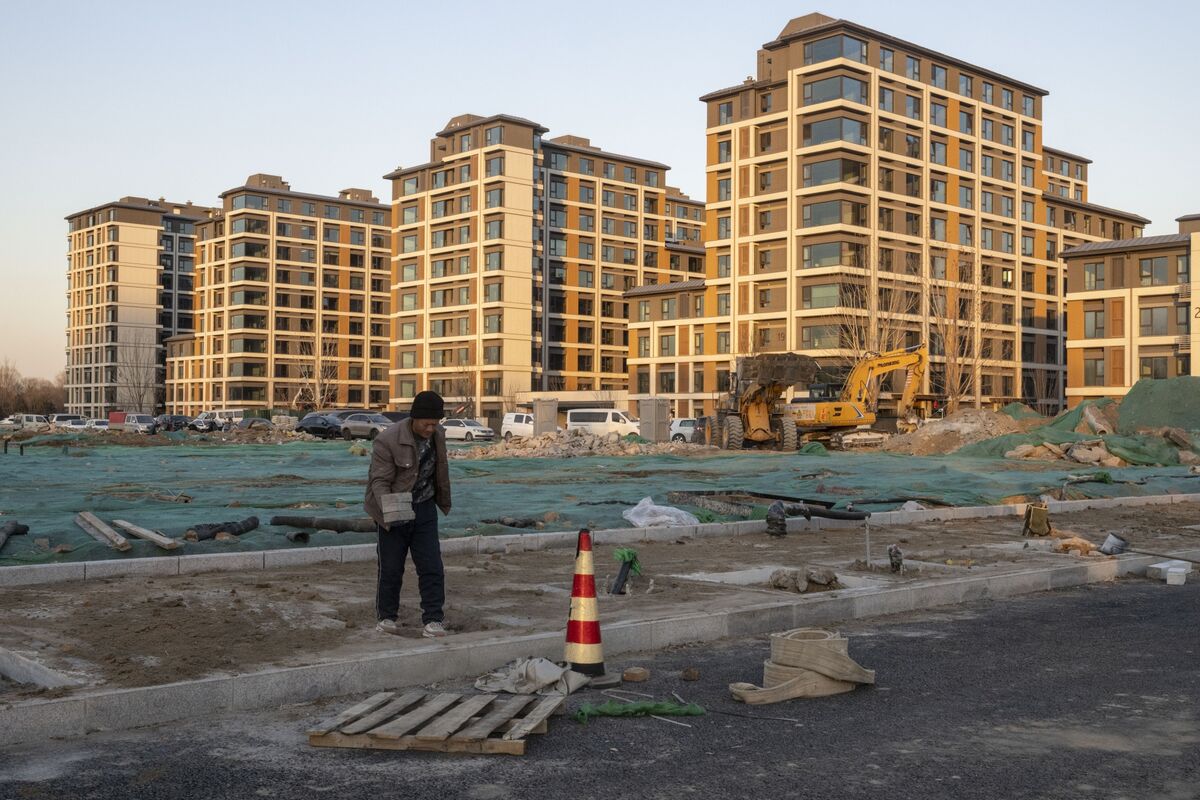
China Vanke has begun outreach to bondholders about delaying payment on a note due next month as it considers a broader restructuring. Persistent weakness in China’s housing market is expected to be the main drag when China Vanke, Country Garden and China Overseas Land & Investment report next week. Monitor bondholder negotiations and potential restructuring developments—these pose downside risk to developer credit spreads and sector equity performance.
The immediate signal is a near-term liquidity cliff for mid-to-high leverage private developers that will reprice both onshore and offshore credit spreads within days to weeks. Expect secondary effects: banks and trust lenders will tighten new developer exposures, driving higher short-term funding costs and triggering covenant stress for builders with upcoming maturities over the next 3–12 months, raising default probability non-linearly as rollover ability evaporates.
Across the supply chain, weaker developer cashflows will cascade into delayed payables for construction contractors, materials (steel, cement) suppliers, and property-services firms; this compresses working capital, elevates receivable default risk, and forces smaller contractors to seek bank support or government rescue, which will show up as asset-quality deterioration in regional commercial banks over quarters, not overnight.
Policy remains the dominant medium-term catalyst: targeted buyer incentives, mortgage-rate relief, or contingent support for project completion could stabilize housing sales within 3–6 months and materially improve recovery prospects for bondholders; absent that, expect restructurings with multi-year maturities and 30–60% recovery discounts on unsecured claims. The most overlooked point — social/political cost of mass project failures — means local authorities retain capacity to prioritize completing projects, so idiosyncratic balance-sheet strength and local-government linkages will determine who survives versus who’s sacrificed in restructurings.
AI-powered research, real-time alerts, and portfolio analytics for institutional investors.
Overall Sentiment
strongly negative
Sentiment Score
-0.60
