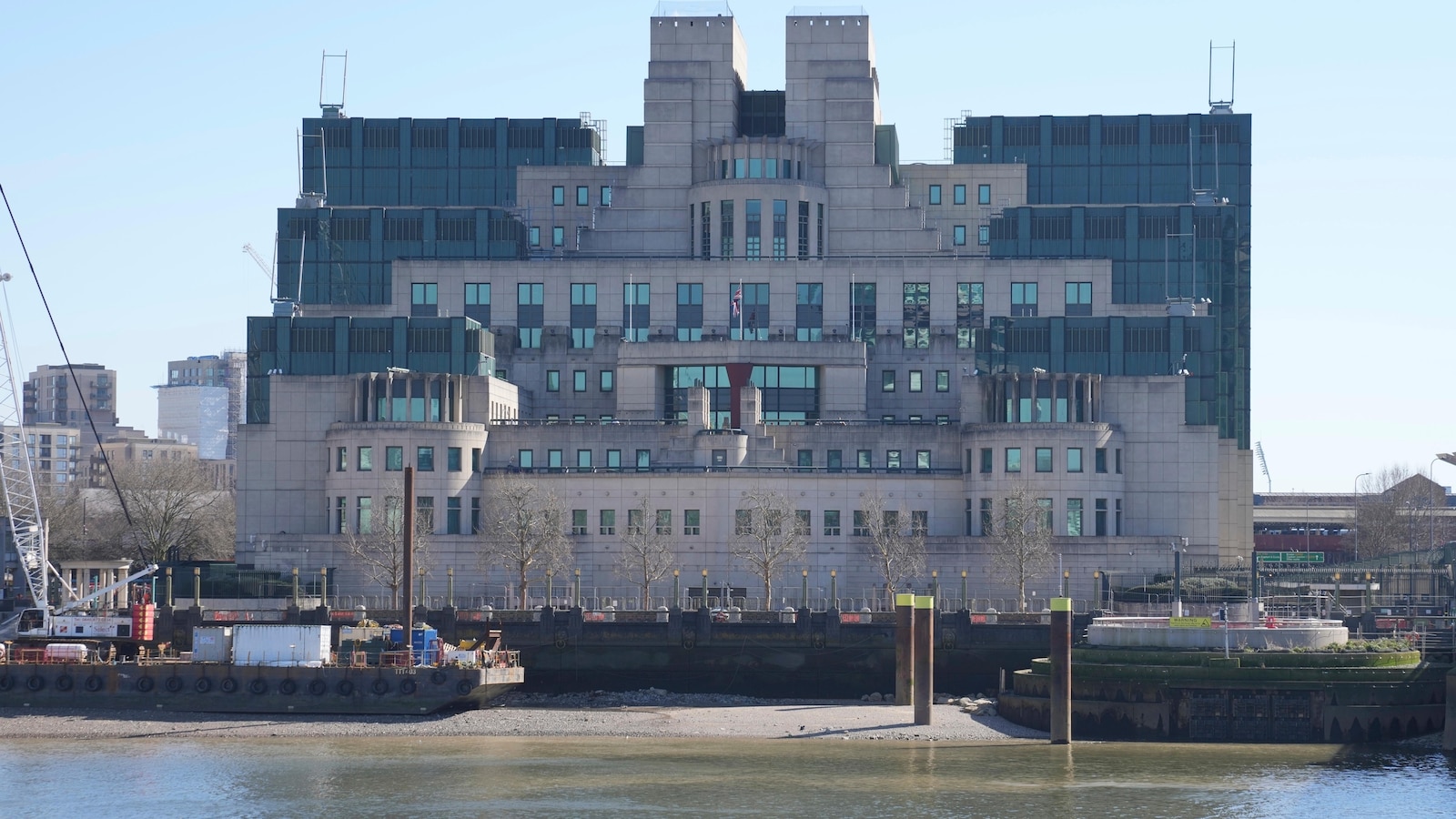
MI6 chief Blaise Metreweli used her first public speech to warn that Vladimir Putin’s deliberate 'export of chaos' is rewriting the rules of conflict and creating increasingly unpredictable, interconnected security challenges, singling out an "aggressive, expansionist" Russia. She said countering state-led hybrid threats will require equal emphasis on technological capability and human intelligence—MI6 officers must be as comfortable with lines of code and Python as they are with human sources and foreign languages. Metreweli, who took over from Richard Moore at the end of September and was previously MI6’s director of technology and innovation, is the first woman to lead the service since its 1909 founding; her remarks come amid recent UK sanctions on Russian media and two Chinese tech firms and broader Western concern about cyber, espionage and influence operations.
Blaise Metreweli, who took over as MI6 chief at the end of September, used her first public speech to warn that Vladimir Putin's deliberate "export of chaos" is rewriting the rules of conflict and creating increasingly unpredictable, interconnected security challenges. She described Russia as "aggressive, expansionist" and framed the export of chaos as "a feature not a bug," signalling an expectation of sustained destabilizing activity until strategic conditions change. Metreweli is the first woman to hold the post since 1909, underscoring a leadership change with symbolic and practical implications.
Metreweli, previously MI6 director of technology and innovation, emphasized that MI6 officers "must be as comfortable with lines of code... as fluent in Python as we are in multiple languages," indicating an institutional pivot toward cyber and tech-enabled intelligence. Her remarks come amid recent UK sanctions last week on several Russian media outlets and two Chinese tech firms for alleged information warfare and cyber activities, aligning intelligence posture with sanctions and counter-influence measures. The speech places focus on hybrid threats from Russia, Iran and China, and on combining human intelligence with technical capabilities.
External signals show moderately negative sentiment (-0.4) and a modest market impact score (0.35), implying elevated geopolitical risk but limited immediate market disruption. For investors this points to durable policy emphasis on cybersecurity, intelligence-related procurement and sanctions enforcement—supportive for defense and cyber vendors—while increasing event-driven downside risk for firms exposed to targeted state actors or supply-chain disruptions. Near-term indicators to monitor are additional sanctions, major cyber incidents and UK procurement or budget announcements affecting contract flow.
AI-powered research, real-time alerts, and portfolio analytics for institutional investors.
Request DemoOverall Sentiment
moderately negative
Sentiment Score
-0.40
