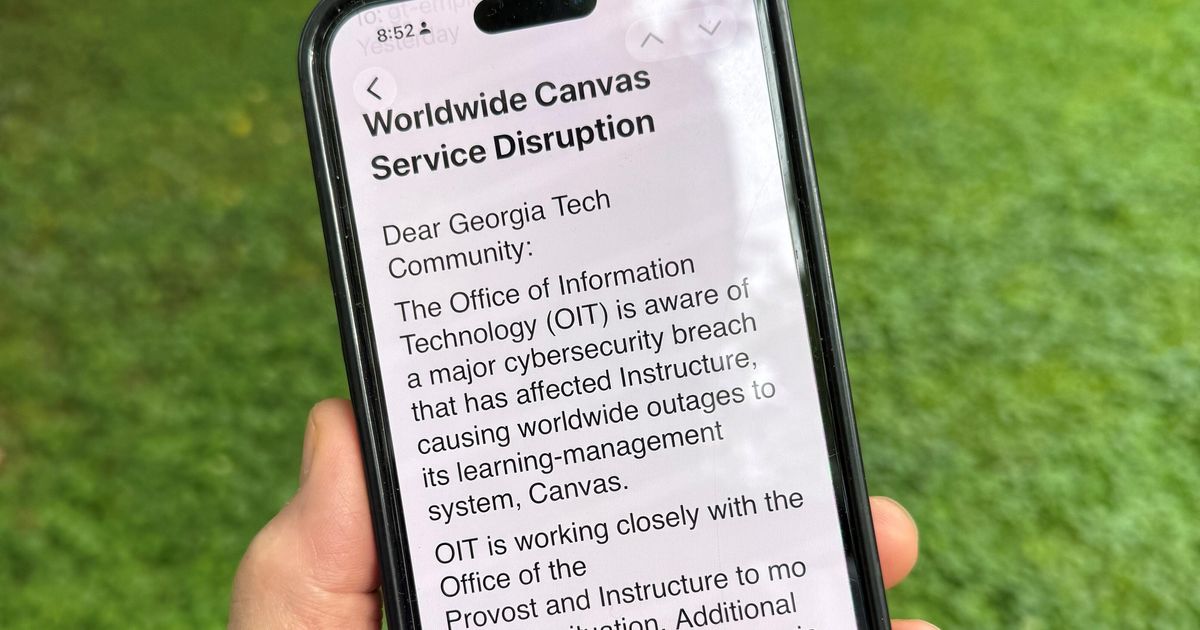
Instructure said it reached an agreement with the hacker behind the Canvas breach to delete stolen data, and received data back plus "digital confirmation" via shred logs, though it acknowledged there is no certainty the information was fully erased. The attack disrupted access for students and faculty during finals and may have exposed student IDs, emails, names and messages across Canvas, while the company said no passwords, DOBs, government IDs or financial data were compromised. The incident is a meaningful cybersecurity setback and could pressure customer trust, but it appears contained at the company level rather than posing broader market risk.
This is less a one-off breach story than a stress test of mission-critical SaaS resilience. The second-order loser is any education-technology vendor whose product is embedded deeply enough that uptime becomes a fiduciary issue; after this, procurement teams will likely demand stronger incident-response SLAs, segregation, and recovery guarantees, which raises switching costs for incumbents with better security budgets and punishes smaller vendors with thinner margins. The immediate economic damage is not just the event itself, but the likely elongation of sales cycles as institutions add legal/security review layers.
The more important medium-term risk is liability without a clean statutory ceiling. If student and faculty data is now treated as a class-action vector plus potential regulatory inquiry, the market may start discounting a recurring litigation reserve for SaaS platforms that aggregate sensitive identity and communications data. That matters because the marginal cost of defense and insurance can scale faster than revenue for high-penetration vertical software businesses, compressing operating leverage over the next 2-4 quarters.
Consensus may be underpricing the reputational tailwind for vendors that can credibly market zero-trust architecture, immutable backups, and rapid restoration. In an environment where customers are afraid of disruption as much as theft, reliability becomes a sales feature, not just a security one. That should widen the gap between enterprise software names with strong security posture and those where cybersecurity is still mostly a check-the-box function.
The contrarian view is that negotiated data deletion reduces the probability of the most severe downstream outcome: mass disclosure and immediate regulatory panic. If true, the market may be overestimating the permanence of the incident’s reputational damage and underestimating the speed with which institutions revert to business as usual once systems are stable. The key catalyst is not the breach headline itself, but the next earnings call: commentary on churn, renewal scrutiny, and security-related spending will determine whether this becomes a transient operational event or a multiple-compression story.
AI-powered research, real-time alerts, and portfolio analytics for institutional investors.
Request DemoOverall Sentiment
moderately negative
Sentiment Score
-0.45
