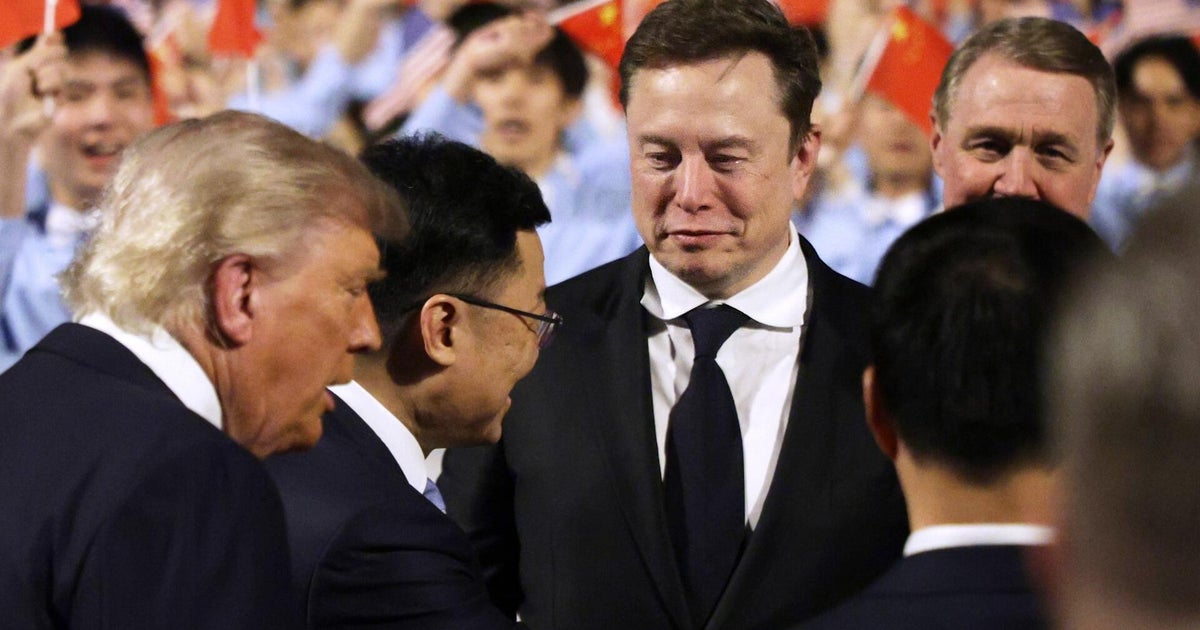
U.S. CEOs traveled with President Trump to China as Beijing signaled it will open further to American business, with talks centered on expanding market access and easing trade tensions. Reported outcomes include a potential China order for 200 Boeing 737 Max jets, more soybean purchases, and possible relief for sectors such as AI chips, autonomous driving, financial services, and biotech. The trip underscores ongoing dependence on China for growth across major U.S. multinationals, even amid tariffs and export controls.
The near-term market implication is less about diplomacy and more about selective de-risking of China revenue exposure. The most immediate beneficiaries are names with either scarce local positioning or high switching costs: NVDA on AI compute access, BA on aircraft backlog normalization, and AAPL on consumer premium share retention. The second-order effect is that any incremental easing in China is likely to be narrow and transactional, which helps incumbents with existing channels more than it creates a broad-based re-rating for all multinationals. The bigger asymmetry sits in export-control-sensitive supply chains. If China signals flexibility on AI and semis, it can delay domestic substitution efforts by 6-18 months while still preserving bargaining leverage; that is bearish for Chinese substitute ecosystems and mildly bullish for U.S. leaders whose China monetization is currently capped. However, this is not a clean upside catalyst for NVDA or QCOM because any concession can be reversed quickly, and Washington could tighten licensing again if the optics shift. Financials are the underappreciated derivative trade. Broader access for BLK, C, GS and payment rails like V/MA would expand fee pools, but the real catalyst is not asset gathering today; it is whether Beijing opens distribution, custody, and cross-border transaction plumbing over the next 2-4 quarters. If that happens, the multiple expansion could be larger for BLK than for the banks because incremental China AUM would drop through with higher operating leverage and lower credit risk. The contrarian view is that the headline may overstate durability of the thaw. Markets may be pricing a broad détente when the most probable outcome is a set of one-off purchases and symbolic gestures that do little to change structural tariff or technology frictions. That makes the risk/reward skew better in relative trades than outright longs: buy the names with direct, measurable benefit from incremental access and fade the rest of the basket that is trading on generalized China optimism.
AI-powered research, real-time alerts, and portfolio analytics for institutional investors.
Request DemoOverall Sentiment
neutral
Sentiment Score
0.15
Ticker Sentiment
