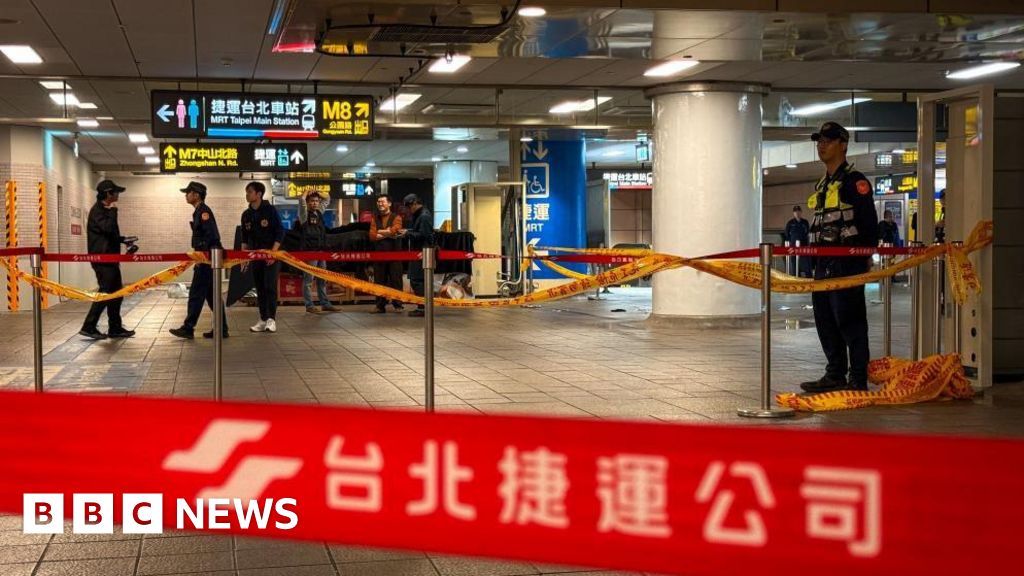
A knife attack during evening rush hour in Taipei killed at least three people and injured nine after a 27-year-old suspect set off smoke bombs at Taipei Main Station and then stabbed people near Zhongshan metro station; officials identified the suspect as Chang Wen, who later died after falling from a multi-storey building. Taiwanese Premier Cho Jung-tai ordered heightened security at rail and air hubs and launched an investigation into the suspect's background; the incident may temporarily depress foot traffic and consumer activity in affected transit-connected shopping districts and weigh on near-term travel sentiment, but is unlikely to have material macro or market-moving effects beyond localized security and tourism concerns.
Market structure: Immediate losers are Taipei-centric consumer-facing businesses (mall REITs, transit operators, local retailers) as evening footfall likely falls 5–15% for 2–6 weeks; Taiwan equity beta (EWT) could underperform APAC peers by 100–300bp in the near term. Winners: physical-security integrators, access-control vendors and private security firms (global names with transit exposure), which gain short-term pricing power as emergency procurements and patrol contracts accelerate procurement cycles by 1–3 months.
Risk assessment: Tail risks include copycat attacks or a travel advisory that trims inbound tourism >10% for a quarter, and a regulatory response raising transit operating costs 3–6% (higher policing, screening). Timeline: panic/volatility spike in days, footfall and consumer earnings hit in weeks, while structural electoral/political shifts or sustained tourism declines would be a quarters-to-years issue; catalysts to watch: government travel advisories, police procurement tenders, and metro ridership data (weekly).
Trade implications: Tactical actions favor short-duration protection on Taiwan exposure and selective longs in security/infra names. Buy 1-month puts on EWT or hedge concentrated TSM (TSM) positions with 1-month puts; initiate small (1–2% portfolio) longs in Honeywell (HON) or Johnson Controls (JCI) to capture 3–8% revenue upside over 3–12 months from increased transit contracts. Reduce airline/jets exposure (JETS) via short or 1-month puts to protect against near-term demand weakness.
Contrarian angles: The market may overprice persistent risk — the 2014 Taipei attack produced only a temporary drag; if EWT underperforms APAC by >150–200bp for two weeks, buying the dip can be profitable. Watch for procurement timelines and actual tender sizes (orders >USD 5–10m per contract validate security winners); avoid assuming a multi-year tourism shock absent repeated incidents.
AI-powered research, real-time alerts, and portfolio analytics for institutional investors.
Request DemoOverall Sentiment
moderately negative
Sentiment Score
-0.30
